
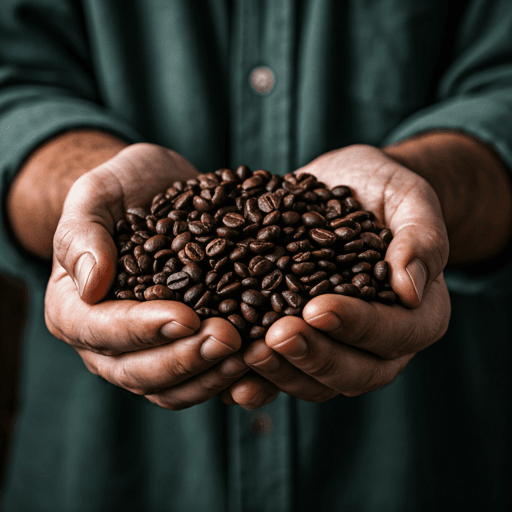
The best coffee beans for you are whole beans that are freshly roasted, match your brew method, and were roasted within the last few weeks. In India that usually means a single-origin Arabica or an Arabica-Robusta blend from Chikmagalur, Coorg or Araku, bought as whole beans with a printed roast date and ground just before you brew. Specialty bags run from around ₹400 to ₹700 for 250g (roughly ₹1,600 to ₹2,800 per kg); mainstream supermarket whole-bean packs sit lower, near ₹700 to ₹1,400 per kg.
This guide explains how to pick good coffee beans without overthinking it: what to check on the bag, which roast and origin fits your cup, the Indian grades worth knowing, and honest brand and price comparisons. It covers whole beans only. For ground and powder, see our best coffee powder buying guide, and for the species head-to-head read Arabica vs Robusta explained.
What makes the best coffee beans (the five things that actually matter)
Marketing aside, the difference between average and best rated coffee beans comes down to a short list. Get these right and almost any decent bag will taste good.
| What to check | Why it matters | What to look for |
|---|---|---|
| Roast date | Beans peak 5-30 days after roasting, then fade | A printed roast date, not just a "best before" |
| Whole bean vs ground | Ground coffee stales in days; whole beans hold for weeks | Buy whole, grind fresh |
| Origin / estate | Region drives flavour and body | A named estate or region (Attikan, Riverdale, Araku) |
| Roast level | Decides bitterness, acidity and brew fit | Match to your method (see below) |
| Species / blend | Arabica = smooth; Robusta = strong, more crema | Pick by taste, not status |
Roast date is the single biggest lever. A ₹450 bag roasted last week will beat a ₹900 bag that has sat on a shelf for six months. If a pack only shows a "best before" two years out and no roast date, treat it as a commodity product, not specialty.
Whole beans vs pre-ground
Whole beans are the right default. Coffee loses aroma fast once ground because more surface area meets air. Buy whole, keep a grinder, and grind per brew. If you have no grinder yet, see our coffee grinder buying guide and how to grind beans at home. The difference between beans, ground and powder is covered in ground coffee vs beans vs powder.
Match the roast and origin to your brew
The "best" bean is method-specific. The same beans coffee that shines in a French press can taste thin pulled as espresso. Here is a simple map.
| Brew method | Best roast | Why | Indian origin that fits |
|---|---|---|---|
| Espresso | Medium to dark | Body and crema, sweet not sour | Coorg/Kodagu, Baba Budangiri; Arabica-Robusta blends |
| French press / pour-over | Light to medium | Clarity, fruit, floral notes | Araku Valley, Chikmagalur single origins |
| Moka pot | Medium-dark | Strong, concentrated cup | Coorg Arabica or a blend with some Robusta |
| Cold brew | Medium-dark | Sweet, low-acid, dissolves easily | Coorg, Chikmagalur; Robusta-forward blends add punch |
| South Indian filter | Dark, with chicory | Bold decoction, thick body | Use filter powder, not whole specialty beans |
Quick rule: if you drink milk-based coffee (cappuccino, latte, filter kaapi), lean medium-dark and a blend with a little Robusta for body. If you drink your coffee black and want to taste origin character, go lighter and single origin. Roast levels themselves are explained in green vs roasted beans.
Single origin vs blend
Single-origin beans come from one estate or region and showcase that place's flavour, like Araku's chocolate-citrus or Chikmagalur's nutty smoothness. Blends mix beans for balance and consistency cup to cup, which is why most café and espresso bags are blends. Neither is "better" rated; single origin is for exploring, blends are for a reliable daily cup. For what "blend" means on a label, see what is blend coffee.
Indian coffee species, regions and grades to know
Almost all Indian whole beans you will buy are Arabica, Robusta, or a blend of the two. The growing region shapes the cup as much as the species.
- Arabica — smoother, more aromatic, milder acidity, grown at higher altitudes. The default for single-origin and pour-over.
- Robusta — stronger, more bitter, nearly double the caffeine, heavier crema. Great in espresso blends and South Indian coffee.
- Coorg / Kodagu — bold body, earthy, chocolatey; espresso-friendly.
- Chikmagalur — the birthplace of Indian coffee; nutty, chocolatey, mild, easy everyday beans.
- Baba Budangiri — high-altitude Arabica, clean and balanced.
- Araku Valley (Andhra) — bright, fruity, often organic; a specialty favourite.
- Wayanad (Kerala) — mostly Robusta, strong and full-bodied.
For the India-specific species lens, see types of coffee beans in India; for cultivars and processing (S795, monsooned malabar, peaberry, washed/natural) read coffee bean varieties explained.
Reading Indian grades on a bag
The Coffee Board grades beans largely by size. You will see these on premium and export-style bags:
| Grade / name | What it means | Notes |
|---|---|---|
| AAA / AA / A | Bean size, biggest to smaller | Bigger is usually evener roasting, not automatically "better tasting" |
| PB (Peaberry) | A single round bean instead of two flat halves | Often sweeter, more intense; commands a small premium |
| Plantation | Washed Arabica (parchment) | Clean, bright cup |
| Cherry | Natural/sun-dried Robusta | Heavier, fruity, used in strong blends |
| Monsooned Malabar | Beans exposed to monsoon winds for weeks | Bold, earthy, very low acidity; a love-it-or-not flavour |
Don't over-index on grade. A small-batch roaster's medium-roast AA Arabica and a careful PB lot can both be excellent. Roast freshness and roaster skill matter more than one letter.
Best coffee beans in India: brands compared by use
These are widely sold whole-bean brands and roasters, compared honestly so you can pick by need and budget. Treat this as neutral guidance, and check each brand's own site or Amazon for live prices and current line-ups.
| Brand / roaster | Best for | Style | Typical price (whole bean) |
|---|---|---|---|
| Blue Tokai | Single-origin exploring, pour-over, espresso | Specialty, named estates (Attikan, Riverdale), roast-dated | Around ₹400-700 / 250g |
| Black Baza | Organic, ethical, distinctive lots | Forest-grown, certified organic single origins | Around ₹450-650 / 250g |
| Sleepy Owl | Easy everyday, cold brew | Chikmagalur Arabica, approachable | Around ₹400-600 / 200-250g |
| Beanrove | Value specialty, daily espresso | Roasted blends and single origins | Around ₹350-550 / 250g |
| Lavazza | Italian-style espresso blends | Consistent, widely stocked | Around ₹1,200-2,200 / kg |
| Davidoff | Premium espresso whole bean | Smooth, dark, gift-friendly | Around ₹1,500-2,500 / 500g |
If you are new, the simplest path to the best coffee beans is a roast-dated single-origin Arabica from a specialty roaster like Blue Tokai or Black Baza, in a roast level that matches your machine. For imported espresso character, Lavazza and Davidoff are reliable. For brand-by-brand depth, see best coffee brands in India, the Lavazza beans guide, the Davidoff premium coffee guide, and our roundup of India's best roasters.
How much should good coffee beans cost in India?
Whole-bean prices span a wide band. Use these as rough, "from / around" ranges, not live quotes, and always compare per kilogram.
| Tier | What you get | Approx price |
|---|---|---|
| Supermarket whole bean | Generic blends, older roast dates | Around ₹700-1,400 / kg |
| Mainstream specialty | Roast-dated single origins and blends | Around ₹1,600-2,800 / kg |
| Premium / rare lots | Peaberry, micro-lots, awarded estates | ₹3,000+ / kg |
| Imported espresso (Lavazza/Davidoff) | Italian/European roasts | Around ₹1,200-3,000 / kg |
For deeper price breakdowns see coffee beans price in India and Arabica coffee price. For powder pricing, the 1kg powder cost guide covers ground and filter blends.
Where to buy good coffee beans near you
You don't need a fake "store near me" list to find great beans. Three reliable routes:
- Roaster websites — Blue Tokai, Black Baza, Beanrove and most specialty roasters ship roast-to-order across India, which is the freshest option.
- Amazon / quick-commerce — convenient for Lavazza, Davidoff, Sleepy Owl and supermarket brands; check the roast date on arrival.
- Local roasteries and cafés — many sell retail bags. Search by city using our roasters near you guide or roastery and bean cafés guide.
In a coffee city like Bengaluru, Mumbai or Chennai, independent roasteries are easy to find and often let you smell and taste before buying, which is the fastest way to learn your own preference.
Storing beans so they stay at their best
Even the best rated coffee beans go flat if stored badly. Keep them in an airtight, opaque container, away from heat, light and moisture. Do not refrigerate; condensation each time you open the jar dulls the beans. Buy in sizes you will finish in three to four weeks, and only grind what you need per brew. Bags with a one-way valve are designed for this, so squeeze out the air before resealing.