
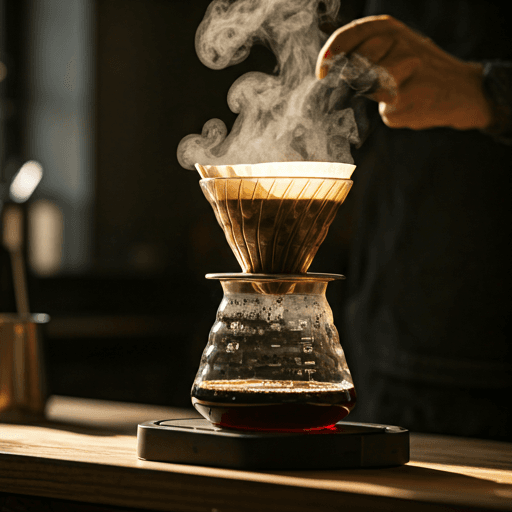
A roastery cafe is a coffee shop that roasts its own green beans on the premises, then brews and sells them in the same space. You walk in, you can often see (and smell) a drum roaster turning, and the coffee in your cup was likely roasted that week. In India this format has grown fast since 2013, led by names like Blue Tokai, Subko, Third Wave Coffee and Black Baza. This guide explains what a roastery cafe actually is, how the roasting works, which Indian roast cafes are worth a visit, and how to tell a genuine bean cafe from one that just buys beans in.
What is a roastery cafe?
A roastery cafe sits one step closer to the farm than an ordinary coffee shop. An ordinary cafe buys roasted beans or ground powder and brews them. A roastery cafe buys raw green coffee, roasts it itself, rests it for a few days, then grinds and brews it for you. The whole chain from green bean to cup happens under one brand, often under one roof.
You will see a few labels used loosely for the same idea. "Roast cafe", "beans cafe", "bean cafe" and "bean and brew" all point at the same thing: a place where roasting and brewing live together. The word "roastery" simply means the room or facility where coffee is roasted. When a roastery also serves espresso and pour-overs to walk-in customers, it becomes a roastery cafe.
Roastery cafe vs ordinary cafe vs chain
| Format | Where beans come from | Freshness | What you taste |
|---|---|---|---|
| Roastery cafe / roast cafe | Roasted in-house from green beans | Days to a couple of weeks old | Distinct origin character, lighter roasts, tasting notes |
| Specialty cafe (buys roasted beans) | Bought from a roaster, brewed on site | Usually fresh, depends on supplier | Good espresso, less control over roast |
| Big chain cafe | Central roastery, shipped to outlets | Consistent, often weeks old | Reliable, blended, milk-forward drinks |
| QSR / instant counter | Pre-ground or instant powder | Long shelf life | Familiar, strong, less nuance |
None of these is "wrong." A chain gives you the same flat white in every city. A roastery cafe gives you a coffee that changes with the season and the estate. If you want to understand the broader cafe landscape first, our guide to Indian cafe culture sets the scene, and the third-wave coffee shops guide covers the design-led side of the same movement.
How a roastery cafe actually roasts its beans
Roasting turns hard, grassy green beans into the brown, aromatic beans you grind. Most Indian roast cafes use a drum roaster, often a Probat or a similar machine. Green beans tumble inside a heated rotating drum for roughly 10 to 15 minutes. The roaster watches temperature and time, listens for the "first crack" (a popcorn-like snap as beans expand), and decides when to drop the batch.
That decision sets the roast level, which is where most of the flavour comes from:
- Light roast — dropped near first crack. Bright, fruity, acidic. Shows off single-origin character. Common for filter and pour-over.
- Medium roast — balanced sweetness and body. The everyday choice for espresso and milk drinks in most Indian roast cafes.
- Dark roast — roasted further, into or past second crack. Bold, smoky, lower acidity. Closer to a traditional South Indian filter or strong espresso style.
The same green bean roasted three ways tastes like three different coffees. That is the whole point of a bean cafe: control. To go deeper on the raw side of this, see green vs roasted coffee beans explained, which breaks down what changes during the roast.
Why fresh-roasted matters
Roasted coffee is best within about two to four weeks of roasting for filter and pour-over, and it keeps developing for the first few days as it "rests" and releases carbon dioxide. A roastery cafe sells coffee inside that window by default, which is hard for a supermarket pack that may have been roasted months earlier. Fresh beans also bloom more in your brewer — that puff of foam when hot water hits the grounds is a sign of freshness.
Roastery cafes worth knowing in India
India's roast cafe scene is young but serious. These are real, well-known examples to visit or compare — we are describing them, not stocking them, and none is necessarily near you. Treat this as a field guide, not a shop.
| Roaster | Base / known for | Style |
|---|---|---|
| Blue Tokai Coffee Roasters | Started 2013; roasteries in Delhi NCR, Mumbai, Bengaluru, Hyderabad, more | 100% Indian specialty arabica, single-estate and blends |
| Subko Coffee Roasters | Mumbai; multi-species roasting and a craft bakehouse | Arabica, robusta, liberica and excelsa; bread and cacao too |
| Third Wave Coffee Roasters | Bengaluru-born chain across several cities | Small-batch roasting, accessible specialty cafes |
| Black Baza Coffee | Bengaluru; biodiversity-friendly sourcing | Small-batch, conservation-led, varied Indian lots |
| Corridor Seven Coffee Roasters | Nagpur; award-winning, competition pedigree | Estate-led single origins, methodical roasting |
| Araku Coffee | Araku Valley beans; Mumbai cafe | Seed-to-cup, regenerative farming, clean profiles |
| Quick Brown Fox | Delhi-based roaster | Estate-specific lots, sampler packs |
Many of these source from India's classic growing regions — Coorg (Kodagu), Chikmagalur, Baba Budangiri, Wayanad and the Araku Valley in the Eastern Ghats. A good roast cafe will tell you the estate, the region, the variety and the process on the bag. If you want to dig into specific roasters and chains, our best coffee chains and roasters guide is the companion roundup.
"Beans cafe", "bean and brew", "groundup": what those names mean
Several search terms blur together here, so let us untangle them honestly.
- Bean cafe / beans cafe — generic descriptions of a coffee shop centred on whole beans, often one that roasts or grinds fresh. Not a single brand.
- Bean and brew — a common cafe naming style (and a US chain). In India the phrase usually just signals "we roast beans and brew them here."
- Ground up cafe / groundup coffee — names some independent cafes use to suggest "made from the ground up," meaning fresh grinding on the premises. Again, a naming style more than one fixed company.
- Green Beans Coffee / Green Bean Coffee Company — these are real US-based brands (Green Beans Coffee Company runs airport cafes in America). If you searched that name expecting an Indian outlet, you were likely looking for a local roast cafe that sells green (unroasted) beans, not that specific company. In India, green-bean buyers usually go direct to estates or specialty importers.
The lesson: do not assume a catchy name means a coffee was roasted fresh. The test is what happens in the room, not what is on the signboard. Look for a visible roaster, a roast date on the bag, and staff who can name the estate.
How to spot a genuine roast cafe (and order well)
Use this quick checklist when you walk into any "bean and brew" or beans cafe:
- Is there a roaster on site? A drum roaster, or a clear sign it roasts elsewhere under its own brand, is the first signal.
- Is there a roast date? Genuine roast cafes print or stamp it. "Best before" alone is a weaker sign.
- Can they name the origin? Estate, region, variety, process — a real bean cafe knows these.
- Is there a menu of brew methods? Espresso, pour-over, AeroPress, French press and South Indian filter all suit different roasts.
- Can you buy beans to take home? Most roastery cafes sell retail bags, and that is the easiest way to keep the experience going.
To order well, tell the barista how you drink coffee. Black and bright? Ask for a light-roast single origin as filter or pour-over. With milk? A medium-roast espresso blend will cut through better. Want it strong and traditional? Ask for the darkest roast they pour. If you are new to all this, our grinding-at-home guide and the buying coffee beans guide help you carry the cafe habit into your kitchen.
Finding a roastery cafe near you
There is no single national map, but the search works the same everywhere. Use Google Maps for "coffee roastery" or "specialty coffee" plus your area, then check photos for a visible roaster and reviews that mention roast dates or tasting notes. Bengaluru's Indiranagar, Koramangala and HSR, Mumbai's Bandra and Colaba, and pockets of Pune, Delhi NCR and Hyderabad are the densest. For city-specific cafe hunting, see coffee roasters near you or browse what is happening in Bengaluru and Mumbai.
Bringing the roast cafe home or to your workplace
You do not need to live next to a roastery to drink fresh-roasted coffee. Buy whole beans from a roast cafe, grind just before brewing, and you get most of the experience at home, in an office pantry or in a cafe of your own. The two things that matter most are a decent grinder and a brewer matched to your beans — an espresso machine for milk drinks, a pour-over or filter for lighter roasts.