
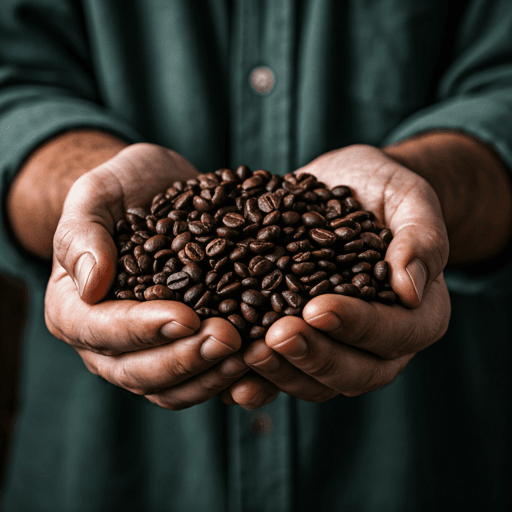
Green coffee beans are simply raw, unroasted coffee seeds. They are pale green, hard, grassy-smelling, and almost flavourless in the cup. Roasting is what turns them into the brown, aromatic beans you brew every morning. So the short answer: green and roasted are the same seed at two different stages, and roasting is the heat process that develops colour, aroma, body and the taste we call "coffee". This guide explains exactly what roasting does, how green coffee bean coffee differs from roasted, and which one makes sense for you in India.
Green coffee beans vs roasted coffee beans at a glance
Every roasted bean started as a green one. The grower picks the cherry, removes the fruit, and dries the seed, what trade calls "green coffee". Nothing is added or removed in roasting; heat just rearranges what is already inside the bean. Here is the practical contrast.
| Feature | Green (unroasted) coffee beans | Roasted coffee beans |
|---|---|---|
| Colour | Pale green to grey-green | Light brown to almost black |
| Smell | Grassy, hay-like, faint | Rich, toasty, caramel, chocolate |
| Texture | Hard, dense, slightly moist | Brittle, porous, snaps easily |
| Flavour brewed | Bitter, herbal, vegetal; not "coffee" | The full coffee taste we know |
| Chlorogenic acid | High | Much lower (broken down by heat) |
| Caffeine | Similar by weight, harder to extract | Similar, easier to extract |
| Main use in India | Trading, home roasting, green-coffee extract / weight-loss drinks | Daily brewing, espresso, filter coffee |
| Shelf life | Long, 1-2 years if dry | Best within weeks of roast |
What roasting actually does to the bean
Roasting is controlled cooking, usually between about 200°C and 230°C for 8 to 15 minutes. Several things happen at once, and the order matters.
1. The bean dries and turns yellow
Raw coffee holds roughly 10-12% moisture. In the first few minutes that water cooks off, the bean shrinks slightly, smells like toast or popcorn, and shifts from green to yellow. No real coffee flavour yet.
2. Browning: the Maillard reaction and caramelisation
As heat climbs, the amino acids and sugars inside the bean react together. This is the Maillard reaction, the same browning that gives roti and grilled food their flavour. It produces hundreds of aroma compounds and large brown molecules called melanoidins. These melanoidins do two jobs: they turn the bean brown, and they give brewed coffee its body and mouthfeel. Alongside this, the bean's natural sugars caramelise, adding sweetness and nutty, chocolatey notes.
3. First crack
Around 196-205°C the bean cracks audibly, like a quiet popcorn pop. Steam and gas pressure split the cell walls. This is "first crack", and it marks the point where coffee becomes drinkable. Stop roasting just after first crack and you get a light roast.
4. Second crack and oils
Keep going to roughly 224-230°C and a sharper, quieter "second crack" begins as the bean's structure breaks down further. Oils migrate to the surface, which is why dark roast coffee beans look shiny and feel slightly greasy. Push much past this and the bean chars and tastes burnt.
The takeaway: roasting trades acidity and origin character for body, sweetness and roast flavour. The longer you roast, the more the bean's own personality gives way to "roasty" taste.
Roast levels explained: light, medium and dark
Roasters describe where they stopped the roast as a "level". Indian brands map onto this scale too: most South Indian filter blends sit medium-dark, while specialty roasters like Blue Tokai and Black Baza offer light and medium roasts that show off a single estate.
| Roast level | Stops around | Look | Taste | Good for |
|---|---|---|---|---|
| Light | Just after first crack, ~196-205°C | Light brown, dry surface, no oil | Bright, fruity, floral, tea-like body, higher acidity | Pour-over, single-origin, AeroPress |
| Medium | Between cracks, ~210-220°C | Medium brown, dry to faint sheen | Balanced, caramel, nutty, chocolate, softer acidity | French press, drip, everyday cup |
| Medium-dark / dark | Into second crack, ~224-230°C | Dark brown to near black, oily | Bold, smoky, bittersweet, low acidity, full body | Espresso, South Indian filter coffee, milk drinks |
For a deeper breakdown of which roast suits which brew, see our whole-bean buying guide, and for the two species behind most Indian coffee, read arabica vs robusta explained.
Does green coffee have more caffeine?
This is the most common myth. By weight, green and roasted beans hold a similar amount of caffeine; caffeine is stable and survives roasting well. What changes is extraction. Caffeine is locked tighter inside a hard raw bean and is harder to brew out, so a cup of green coffee usually delivers less caffeine than the same weight of roasted beans, not more.
There is one real nutritional difference. Raw coffee beans are rich in chlorogenic acid, an antioxidant. Roasting heat breaks much of it down, which is why green-coffee extract is sold for weight-management drinks while roasted coffee has far less of it. If caffeine itself is your concern, our decaf coffee guide covers the low-caffeine route properly.
Green coffee for weight loss: what to actually expect
Green coffee bean extract is marketed hard in India for weight loss, and the active ingredient is that chlorogenic acid. Some small studies suggest it may help glucose handling and modest weight loss when paired with diet and exercise. But the research is limited, the studies are small, and effects are modest. Treat it as a mild supplement at best, not a fix. If you want to brew green coffee at home, soak the raw beans, simmer, then strain; expect a sour, herbal, tea-like drink rather than anything resembling your usual cup.
Green coffee beans price in India vs roasted
Green coffee is cheaper than roasted because it skips roasting, packaging freshness and brand markup. Use these as honest "around" bands; real numbers swing with grade, region (Coorg, Chikmagalur, Araku), arabica vs robusta, and order size. Never trust a single "today's price"; always check current quotes before you buy in bulk.
| Type | Typical India range (per kg) | Notes |
|---|---|---|
| Green robusta beans | around ₹400-650 | Cheaper, denser, more bitter |
| Green arabica beans | around ₹650-1,200 | Higher grade, smoother potential |
| Roasted whole beans (mainstream) | around ₹600-900 | Brand blends, ready to grind |
| Roasted specialty / single-origin | around ₹800-1,500+ | Estate-traceable, freshly roasted |
For deeper pricing, see our whole-bean price guide and the arabica coffee price guide. Green coffee is sold through commodity traders, estates in Karnataka and Kerala, and online marketplaces; roasted beans come from cafes, supermarkets and roasters like Blue Tokai, Sleepy Owl, Beanrove and Black Baza.
Should you roast green beans at home?
You can, and it is the cheapest way to drink very fresh coffee, but it takes practice and makes smoke. Two simple methods:
- Pan / kadhai: heat a heavy pan, add a single layer of green beans, and stir constantly for 8-12 minutes until you hear first crack and the colour deepens. Stir without stopping or they scorch unevenly.
- Oven: spread beans on a perforated tray, roast at 230-250°C, stirring every 3-4 minutes, for about 12-15 minutes. Watch for first and second crack to judge the level.
Run a fan and open a window; roasting smokes, and dark roast coffee smokes more. Let roasted beans rest 12-24 hours before brewing so trapped gas escapes. Then grind fresh, our grinding guide covers the right grind for each brewer. Honestly, for most people, buying freshly roasted beans is easier and more consistent than home roasting.
Which should you buy?
If you want to drink coffee, buy roasted beans, freshly roasted, in a roast level that matches your brewer. Buy green only if you plan to roast yourself, or you specifically want green-coffee extract for its chlorogenic acid. For most homes, offices and outlets, freshly roasted medium beans paired with a good grinder give the most reliable cup.