
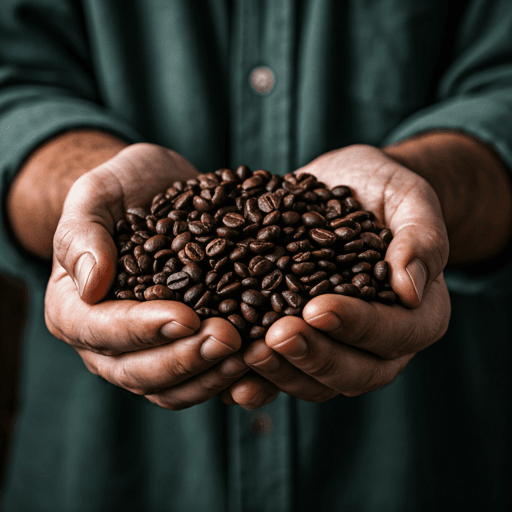
Arabica coffee is the sweeter, more aromatic, lower-caffeine bean, while robusta is bolder, more bitter and almost twice as strong. That single line answers most of the question, but the real difference between arabica coffee and robusta coffee runs deeper, into where each plant grows, how it tastes in the cup and which one belongs in your filter, espresso or instant. This is a plain explainer about the two beans themselves. If you are chasing today's rates, see our arabica vs robusta price guide instead.
Arabica coffee vs robusta coffee: the short version
Almost all coffee on earth comes from two species. Coffea arabica gives you arabica coffee beans, the refined, fruity, slightly acidic side of coffee. Coffea canephora, sold everywhere as robusta, gives you robusta coffee beans, the dark, heavy, punchy side. Most coffee you drink in India is a blend of both, plus chicory in many filter packs.
The quick way to hold the arabica and robusta distinction in your head: arabica is grown high and slow and tastes nuanced; robusta is grown low and hardy and tastes strong. Neither is "better" in absolute terms. They are tools for different cups, and the choice between arabica and robusta depends on what you want in the mug.
| Trait | Arabica (Coffea arabica) | Robusta (Coffea canephora) |
|---|---|---|
| Caffeine | ~0.8-1.5% | ~1.7-3.5% (roughly double) |
| Taste | Sweet, fruity, floral, nutty, mild acidity | Bold, bitter, woody, earthy, grainy |
| Body & crema | Lighter body, softer crema | Heavy body, thick lasting crema |
| Sugar & lipids | Higher (sweeter, smoother) | Lower (sharper, harsher) |
| Chlorogenic acid | Lower (~5.5-8%) | Higher (up to ~10%) |
| Growing altitude | High, ~1000-2000 m | Low, sea level to ~800 m |
| Hardiness | Delicate, prone to pests and disease | Tough, heat and pest resistant |
| Typical price | Higher | Lower |
How the beans actually taste
This is where the arabica robusta split matters most for everyday drinkers. Arabica carries more natural sugar and almost double the oils, which is why it reads as smooth, rounded and a little sweet. You will see tasting notes like chocolate, caramel, nuts, citrus and berries on good arabica, because the bean has the chemistry to express them.
Robusta does the opposite. Less sugar, less oil and far more chlorogenic acid give it a strong, bitter, sometimes rubbery or burnt-tyre edge when it is low grade. But that same intensity is a feature, not a flaw, in the right cup. Robusta brings the kick, the weight and the thick crema that a thin arabica cannot. A bit of bitterness is exactly what cuts through hot milk and sugar in a strong Indian coffee.
That is the core trade-off of arabica and robusta coffee: arabica for nuance, robusta for power. Most great commercial blends use both on purpose.
Caffeine: robusta wins, easily
If you drink coffee for the lift, robusta carries roughly twice the caffeine of arabica. The plant makes extra caffeine as a built-in pesticide, which is also why it survives at lower, hotter altitudes where arabica would struggle. So a strong morning instant or a heavy filter decoction usually leans robusta. A delicate single-origin pour-over leans arabica. For a low-caffeine route entirely, see our decaf coffee guide.
Where arabica and robusta grow in India
India is one of the few countries that grows both species well, almost entirely across the southern hills of Karnataka, Kerala and Tamil Nadu. Roughly speaking, robusta makes up the larger share of Indian output and arabica the rest, grown higher up. Around 80% of India's arabica comes from Karnataka, in belts like Chikmagalur and Coorg (Kodagu), often shade-grown under pepper vines and tall canopy.
Arabica needs that height. It wants cool, misty, well-drained slopes at roughly 1000-2000 m, and it rewards the patience with cleaner, more aromatic coffea arabica beans. Robusta is the workhorse: it thrives lower and hotter, shrugs off pests and disease, and yields more per acre. Wayanad in Kerala, for example, is known for full-bodied, low-acid robusta that espresso blenders prize.
| Region | Mostly grows | Known for |
|---|---|---|
| Chikmagalur, Karnataka | Arabica | High-altitude, aromatic beans |
| Coorg / Kodagu, Karnataka | Both | Shade-grown estates, the heart of Indian coffee |
| Wayanad, Kerala | Robusta | Full-bodied, low-acid espresso robusta |
| Nilgiris / Pulneys, Tamil Nadu | Arabica | Hill-grown, balanced cups |
| Araku / Koraput, Andhra-Odisha | Arabica | Single-origin tribal-grown coffee |
Curious about that last one? We have a separate piece on Koraput single-origin coffee.
Which bean for which brew
You rarely choose arabica vs robusta in the abstract. You choose it through whatever you are brewing. Here is the practical mapping.
South Indian filter coffee (kaapi)
Traditional South Indian filter kaapi is almost never single-origin. The classic decoction is a blend, commonly around 80% coffee to 20% chicory, and that coffee portion is usually a mix of arabica and robusta. Arabica brings aroma, robusta brings the dark body and thick decoction that stands up to boiling milk and sugar. Chicory deepens colour and adds a bittersweet roundness. That is why a good filter pack tastes nothing like a thin black arabica.
Espresso
Most café espresso worldwide is a blend, and a popular ratio is 70% arabica to 30% robusta. The arabica gives sweetness and complexity; the robusta adds the heavy crema, body and caffeine kick that make an espresso feel like espresso. Pure arabica espresso is cleaner but can lack crema; a touch of robusta fixes that. If you are setting up to pull shots, our espresso equipment guide walks through the gear.
Instant coffee
Mass-market instant leans heavily on robusta because it is cheaper, stronger and survives processing well. That is part of why a plain spoon of instant tastes bold and bitter rather than delicate. Premium instants now add more arabica for smoothness. For the full landscape, see our instant coffee buying guide.
Pour-over, French press and single origin
When you want to actually taste origin character, fruit, florals, a specific estate, you want arabica, and usually a single-origin one. This is the home of speciality coffee. Robusta's job here is minimal; its strength would flatten the subtlety you are paying for.
How to choose arabica or robusta when you buy
Packs do not always spell it out, so read the label with this lens.
- "100% arabica" signals a smoother, more aromatic, usually pricier cup. Good for black coffee, pour-over and milder lattes.
- Robusta-forward or unlabelled budget blends mean strong, bitter, high-caffeine coffee. Good for hard-hitting morning cups, filter and milky coffee.
- Arabica-robusta blends are the sweet spot for espresso and many filter packs, balancing aroma with body and crema.
- "With chicory" is standard for South Indian filter and is not a defect, it is the tradition.
- Roast level matters too. A dark roast mutes origin character, so cheap robusta is often roasted dark to hide harshness.
If you are picking an actual brand off the shelf, our best coffee powder buying guide compares real Indian options across both bean types, and the beans vs ground vs powder explainer covers form factor. For where prices sit right now, the arabica vs robusta price guide keeps the rupee figures so this page does not have to.
Common questions, settled
Is arabica always better than robusta? No. Arabica is more refined and usually more expensive, but a quality robusta can outperform a dull, stale arabica, and robusta is the right tool when you want body, crema and caffeine. "Better" depends on the cup you want.
Why is arabica more expensive? It grows at high altitude, takes longer to mature, yields less and is fussier about pests and weather. More cost and risk per kilo, so a higher price.
Does instant coffee use robusta? Mostly yes, especially budget instant, because robusta is cheaper, stronger and processes well. Premium instants blend in arabica for smoothness.