
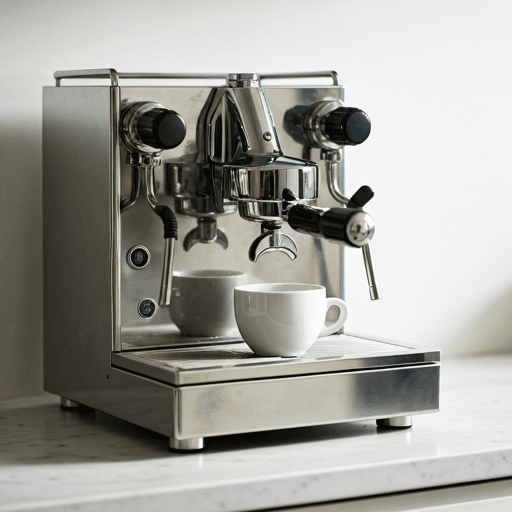
An espresso machine forces hot water through finely ground, tamped coffee at roughly nine bars of pressure to pull a concentrated shot in 25 to 30 seconds. Choosing the right one in India comes down to three things: who is drinking (home, office, or cafe), how much you want to do by hand, and the espresso equipment you pair with it. Get those right and great espresso becomes repeatable, day after day, on the same machine.
This is our cluster hub for everything home and small-business espresso. Below we cover the machine types sold in India, realistic INR price tiers, the supporting kit (grinder, tamper, scale, water), and how to match a setup to your space. We link out to deeper guides at each step, so use this page as your map.
What an espresso machine actually does
Espresso is not just strong coffee. It is a specific brewing method: about 9 bar of pressure pushing water at roughly 90-94°C through a compact "puck" of fine grounds. That pressure is what creates the syrupy body and the layer of crema on top. Everything else in your kitchen, from a moka pot to a French press, brews at atmospheric pressure and cannot replicate it.
One number worth decoding before you buy: the "bar" rating. You will see machines marketed as 15-bar or even 20-bar in India. That figure is the pump's maximum ceiling, not what reaches the coffee. A pressure-relief valve limits actual brew pressure to around 9 bar regardless. So a 20-bar machine is not "better" than a 15-bar one on pressure alone. Build quality, temperature stability, and your grinder matter far more. If you want the longer version, our explainer on espresso, the base of every coffee walks through the science in plain language.
Great espresso is repeatable. The goal isn't one lucky shot, it's the same good shot every morning, with the same grind, dose, and temperature.
Types of espresso machine sold in India
The single biggest decision is how much of the process you want to control yourself. There are four broad categories, and each suits a different buyer.
Manual / lever machines
You generate the pressure by hand with a lever. Beautiful, tactile, and capable of stunning shots, but unforgiving and rare in Indian homes. Skip these unless espresso is already a serious hobby.
Semi-automatic machines
The most popular enthusiast choice. The machine controls temperature and pressure; you grind, dose, tamp, and start and stop the shot. This is where control and shot quality peak for the money. Semi-autos reward a little practice and last well. Brands you will actually find in India include De'Longhi (the Dedica and Stilosa lines), Gaggia (the Classic), HiBREW, Agaro, and Wonderchef at the budget end.
Automatic and super-automatic machines
Automatics time the shot for you. Super-automatics go further: a built-in grinder and one button takes you from beans to cup, with milk frothing on many models. These are the right answer for most offices and busy households where consistency and zero training matter more than fiddling. They cost more and have more to go wrong, but a quiet morning queue stays moving.
Pod and capsule machines
Nespresso and compatible pod systems trade flexibility for absolute convenience and a tiny footprint. No grinder, no mess, predictable cup, higher per-cup cost. Excellent for a small office pantry, a guest area, or anyone who wants espresso without a learning curve. We compare the ecosystems in our guide to Nespresso vs other pod machines in India.
| Type | Best for | Skill needed | Typical INR range |
|---|---|---|---|
| Semi-automatic | Home enthusiasts, small cafes | Some | ₹7,000 – ₹60,000 |
| Super-automatic | Offices, busy homes | Minimal | ₹35,000 – ₹2,00,000 |
| Pod / capsule | Small pantries, guest areas | None | ₹8,000 – ₹30,000 |
| Commercial (multi-group) | Cafes, institutions, high volume | Trained barista | ₹1,50,000 – ₹6,00,000+ |
For a wider lens on the whole category, including non-espresso options, see our coffee machine buying guide for India and the focused list of the best espresso machines in India.
Espresso machine price tiers in India
Prices move, but the tiers are stable. Here is how to think about budget honestly, because the cheapest machine plus a good grinder beats an expensive machine plus a bad one almost every time.
- Entry (₹7,000 – ₹15,000): Agaro, Wonderchef, InstaCuppa-style semi-autos with a steam wand. A genuine way to learn. Build is the weak point; leaks and pump issues are reported after heavy use, so buy where returns are easy.
- Mid (₹18,000 – ₹45,000): De'Longhi Dedica, Gaggia Classic, HiBREW H10A. This is the value sweet spot for a home that takes coffee seriously. A 58mm portafilter, a real steam wand, and durability that lasts years.
- Premium home / prosumer (₹50,000 – ₹2,00,000): Dual-boiler semi-autos and capable super-automatics. For households or small offices that want cafe-grade shots with no compromises.
- Commercial (₹1,50,000+): Single, two, or three-group machines built for all-day use. Necessary once you are pulling dozens of shots a day. We touch on requirements in the office machine guide for high-traffic settings.
Want a number-by-number breakdown across categories? Our coffee machine price guide for India lays out current pricing and what each tier buys you.
The espresso equipment that surrounds the machine
A common mistake is to spend the entire budget on the machine. In reality, the espresso equipment around it decides cup quality just as much. Here is the supporting kit, roughly in order of importance.
1. A burr grinder (the most important upgrade)
Espresso needs a fine, uniform grind, and only a quality burr grinder delivers it. Blade grinders produce uneven particles that channel and taste sour or harsh. If you are choosing between a better machine and a better grinder, buy the grinder. Pre-ground coffee loses its aromatics within minutes, so grinding fresh, right before you brew, is the single biggest jump in quality most people can make. Our coffee grinder buying guide for India covers burr types and budgets.
2. The coffee itself
Fresh, properly roasted beans matter more than most buyers expect. Look for a roast date and aim to use beans within a few weeks. India grows excellent coffee; an espresso-friendly arabica-robusta blend gives body and crema, while single origins offer clarity. If you are unsure where to start, our notes on the best coffee brands in India and Indian single-origin coffee from Koraput are good jumping-off points. The right espresso for an espresso machine is freshly roasted whole bean, not stale pre-ground powder.
3. A tamper
A tamper compresses the grounds evenly so water flows through the puck uniformly instead of blasting a channel through the weakest spot. Match the diameter to your portafilter (commonly 51mm, 54mm, or 58mm). A flat, well-fitted tamper is inexpensive and essential.
4. A scale
An affordable kitchen scale that reads to 0.1g is the cheapest accuracy upgrade you can buy. Weighing your dose in and your shot out (a "brew ratio", often around 1:2) turns guesswork into a recipe you can repeat. This is what separates a setup that occasionally makes good coffee from one that always does.
5. Good water
Espresso is over 90% water, and India's hard water is a real factor. Scale buildup is the leading cause of premature machine failure here. Use filtered or appropriately treated water, descale on schedule, and your machine will last far longer.
6. Small but useful extras
- Milk jug (pitcher): needed for any latte or cappuccino microfoam.
- Knock box: for clean disposal of spent pucks.
- Distribution tool / WDT: evens the grounds before tamping to reduce channeling.
- Cleaning tablets and a group brush: daily and weekly hygiene that protects taste and the machine.
How to choose: home, office, or cafe
Match the setup to the room, not to the marketing.
For the home
If you enjoy the ritual, a mid-tier semi-automatic plus a burr grinder is the classic combination and the best value in espresso. If you want a great cup with zero fuss, a super-automatic or a pod machine fits better. Tight on counter space? A compact Dedica-class machine or a pod system wins. See our roundup of the best coffee machines for home in India, and if you want to actually pull shots well, how to make espresso at home is the step-by-step.
For the office
Consistency and uptime beat barista craft. A super-automatic (bean-to-cup) removes training and queue friction; a pod machine suits a smaller pantry. For larger headcounts, a commercial or vending solution makes more sense than a delicate home machine.
For the cafe or institution
You need a commercial multi-group machine paired with a commercial grinder, trained staff, and a maintenance contract. Volume, recovery time between shots, and serviceability are the deciding specs. Here the espresso equipment ecosystem (grinder, water treatment, workflow) is as important as the espresso machine itself.
Maintenance: making it last in Indian conditions
Two habits protect your investment. First, clean daily: backflush or rinse the group, wipe the steam wand immediately after every use, and empty the knock box. Second, descale on a schedule suited to your water hardness; in hard-water cities this may be monthly. Skipping descaling is the most common reason machines fail early in India.