
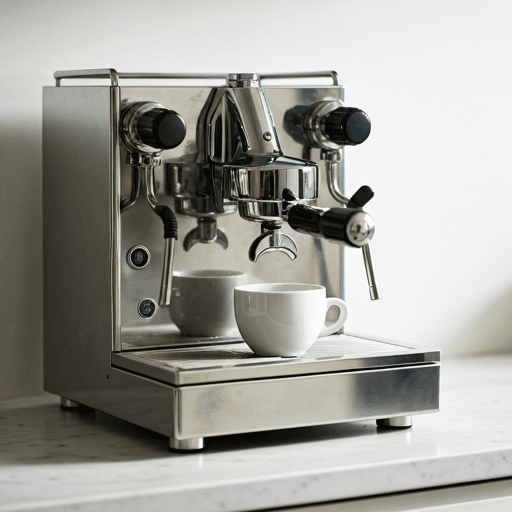
The best coffee machines for home in India fall into four practical families: drip filter makers, pod or capsule machines, semi-automatic espresso machines, and fully automatic bean-to-cup machines. For most Indian homes, a good drip machine (roughly Rs 1,500-4,000) or a pod machine (Rs 5,000-12,000) gives the easiest, most repeatable cup, while espresso and bean-to-cup machines reward people who want cafe-style coffee daily. This guide walks through every type, honest INR price bands, brands actually sold here, and how to match a machine to how you actually drink coffee.
Great coffee at home is repeatable. The right machine is not the most expensive one, it is the one you will happily clean and use every morning. Below we make that choice simple.
How to choose coffee machines for home: the 5 questions that matter
Before you compare models, answer these. They narrow the field faster than any spec sheet.
- What do you drink? Black coffee, americano and filter-style cups point to drip or pod machines. If you live on cappuccino, latte and flat white, you need a machine that pulls espresso and steams or froths milk.
- How many cups a day? One or two cups suits pod and single-serve. A family of four that drinks together is better served by a 6-cup drip coffee pot maker or a bean-to-cup machine.
- How much fuss can you tolerate? Semi-automatic espresso machines reward practice. Pod and fully automatic machines just work at the press of a button.
- What is your real budget, including running cost? Pods cost Rs 25-40 per cup forever. Beans and ground coffee are far cheaper per cup but need a grinder or pre-ground supply.
- What is your water like? Hard water is common across Indian cities and quietly kills machines. Plan for a filter and regular descaling from day one.
If you want a deeper, side-by-side decision framework, our coffee machine buying guide for India goes further on specs and warranties.
The 4 main types of home coffee machines in India
Each type is genuinely good at something. Here is the plain-English version of what they do, who they suit, and roughly what they cost in 2026.
1. Drip / filter coffee makers
A drip machine heats water and showers it over ground coffee into a glass or steel carafe, often on a warming plate. This is the classic coffee pot maker most Indian homes picture: simple, affordable, and great for brewing several cups at once. It makes clean, black, americano-style coffee, not espresso, so it will not produce a thick crema or a true cappuccino on its own.
- Price band: roughly Rs 1,500-4,000 for a solid 4-6 cup model.
- Best for: households that drink black coffee or large quantities, beginners, and offices on a budget.
- Brands in India: Morphy Richards, Philips, Prestige, Agaro, Bajaj.
If you prefer manual filter brewing, a French press or the traditional South Indian filter coffee setup gives similar cups with no electricity at all.
2. Pod / capsule machines
Pod machines (Nespresso, Dolce Gusto and compatible brands) use sealed capsules. Drop one in, press a button, and you get a consistent shot in under a minute with almost no cleanup. They are the most beginner-proof option and the most repeatable, because the dose is fixed for you.
- Price band: roughly Rs 5,000-12,000 for the machine; capsules add Rs 25-40 per cup.
- Best for: one or two coffee drinkers, busy mornings, and anyone who values zero mess over the lowest cup cost.
- Watch out for: long-term capsule cost and capsule availability for your specific system.
3. Semi-automatic espresso machines
This is where real cafe coffee starts. You grind, dose and tamp the coffee, the machine pulls the shot under pressure, and you steam milk with a wand. It has a learning curve, but it gives you full control over espresso, the base of every milk drink.
- Price band: entry models from around Rs 8,000-15,000; enthusiast machines like the Gaggia Classic Pro and De'Longhi run Rs 20,000-50,000+.
- Best for: cappuccino and latte lovers who enjoy the ritual and want to dial in their cup.
- Pair with: a decent grinder. See our coffee grinder buying guide, because a great machine with stale pre-ground coffee is a waste.
4. Fully automatic bean-to-cup machines
Bean-to-cup machines have a built-in grinder and brew unit. You add whole beans and water, press a drink, and it grinds, doses, brews and (on milk models) froths automatically. They combine cafe-grade coffee with push-button ease, which is why offices and serious home drinkers love them.
- Price band: roughly Rs 30,000-1,00,000+ for home and small-office models (Philips Saeco, De'Longhi).
- Best for: high-volume homes and offices that want variety and consistency with no skill required.
Coffee machine types compared at a glance
| Type | Typical price (INR) | Cup cost | Skill needed | Best for |
|---|---|---|---|---|
| Drip / filter maker | Rs 1,500-4,000 | Low | Very low | Black coffee, multiple cups |
| Pod / capsule | Rs 5,000-12,000 | High (pods) | None | 1-2 people, zero mess |
| Semi-automatic espresso | Rs 8,000-50,000 | Low-medium | High | Cappuccino lovers, hobbyists |
| Bean-to-cup automatic | Rs 30,000-1,00,000+ | Low-medium | Very low | Variety + volume, offices |
Best coffee machines for home by budget and need
Here is how we would match a machine to a real Indian household, rather than just listing the priciest options.
- Under Rs 4,000, first machine ever: a 4-6 cup drip coffee pot maker from Morphy Richards, Philips or Prestige. Easy, forgiving, family-sized.
- Rs 5,000-12,000, one-touch mornings: a Nespresso or Dolce Gusto pod machine. Best if you value speed and cleanliness over per-cup price.
- Rs 10,000-25,000, want real cappuccino: an entry semi-automatic espresso machine plus a basic grinder. Expect a few weeks of practice.
- Rs 30,000+, hands-off cafe at home: a bean-to-cup automatic. Whole beans in, fresh coffee out, multiple drinks, minimal effort.
Not sure which brands hold up over years of daily use? Our roundup of the best coffee brands in India and the dedicated best espresso machine in India guide go deeper on specific models.
India-specific things people forget (and regret)
Hard water will decide how long your machine lasts
Most Indian cities have moderately to very hard water. Calcium and magnesium scale up the boiler and pipes, ruin the taste and eventually kill the machine. Two simple habits fix this: brew with filtered or RO water, and descale on schedule, every 1-2 months in hard-water areas and every 3-4 months in soft-water areas. Use a manufacturer-approved descaler.
Look for BIS / ISI safety marks
Any electric coffee machine you buy in India should carry the BIS or ISI mark, which certifies it meets Indian electrical-safety standards. Skip uncertified grey-market imports, especially for high-wattage espresso machines.
Service and refills matter more than one extra feature
A machine is only as good as the support behind it. Before buying, check whether spares, descaler and (for pod or bean machines) capsules or beans are easy to get where you live. This is exactly where a supplier with all-India installation and service earns its keep, particularly for offices and cafes that cannot afford downtime.
Running costs: the number buyers underestimate
The sticker price is only half the story. Pods are convenient but cost Rs 25-40 a cup indefinitely. Ground coffee and beans cost a few rupees per cup, but you pay upfront for a grinder or buy fresh ground regularly. Drip machines have the lowest ongoing cost of all. If two people drink two cups a day, a pod habit can quietly cost more per year than a mid-range bean-to-cup machine. Factor in coffee, filters, descaler and electricity, not just the machine.
For a fuller breakdown of what you actually pay over time, see our coffee machine price guide for India.
Home vs office: the choice changes
For a home, ease and footprint win, so drip, pod or a compact bean-to-cup machine usually fit best. For an office, volume, reliability and self-service drive the decision, which is why bean-to-cup and vending machines dominate there. If you are equipping a workplace, our guide to the best tea and coffee vending machine for office is the right starting point, and the same logic scales up to cafes and institutions.
The bottom line
For most Indian homes, the best coffee machine is a good drip maker if you drink black coffee, a pod machine if you want effortless single cups, a semi-automatic espresso machine if you love the cappuccino ritual, and a bean-to-cup automatic if you want cafe variety with no skill. Buy for how you actually drink, plan for hard water from day one, and check that service and refills are easy where you live.