
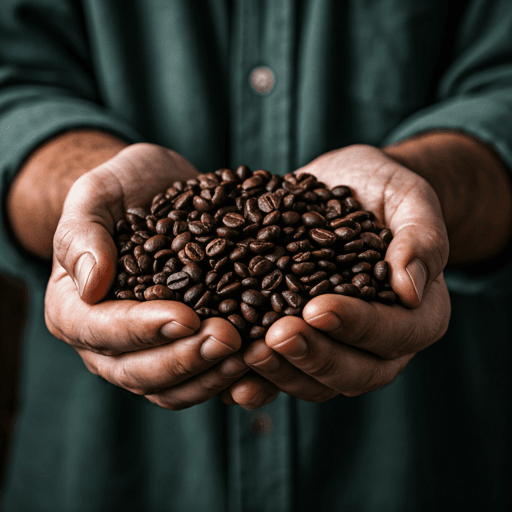
Blend coffee means a coffee made by mixing beans from more than one source so the final cup is balanced, consistent and repeatable. That source can be different farms, different growing regions, different countries, or different species (arabica with robusta). In India the word "blend" carries a second meaning too: the coffee-and-chicory mix that defines South Indian filter coffee and most mainstream instant brands. This guide explains both, shows how a blend differs from single origin, and helps you decide which one belongs in your cup.
What is blend coffee, exactly?
A roaster blend is a deliberate recipe. The roaster combines two, three or more component coffees because each one brings something the others lack. One origin adds sweetness, another adds body, a third lifts acidity or aroma. Put together, they make a rounder, more stable flavour than any single bean delivers on its own.
The point of a blend is consistency. A single-estate harvest changes a little every season with the weather and the soil. A blend lets the roaster swap and re-balance the components so that the "house blend" you buy in June tastes like the one you bought in December. That is why almost every cafe pulls its espresso from a blend, not a single origin.
Blends are also where roasters express style. The names you see on Indian shelves tell you the intent more than the exact recipe:
- House blend — the roaster's everyday all-rounder, usually medium roast, easy to drink black or with milk.
- Espresso blend — built to taste good under pressure and to cut through milk; often medium-dark, sometimes with robusta added for crema and body.
- Breakfast blend — typically lighter and brighter, made for filter, pour-over or a French press.
- Signature / estate blend — a roaster's flagship recipe, often kept the same year after year.
Blend coffee vs single origin
Single origin is the opposite idea. It comes from one place — one estate, one cooperative, sometimes one region — and it shows you exactly what that place tastes like. Indian single origins from Coorg (Kodagu), Chikmagalur, Baba Budangiri, Araku or Wayanad each have their own character, and the label usually names the estate and the processing method.
Neither is "better". They answer different questions. Single origin is for tasting a place; a blend is for a dependable, balanced cup you can brew the same way every day.
| Factor | Blend coffee | Single origin |
|---|---|---|
| Source | Multiple farms, regions or species | One farm, estate or region |
| Flavour goal | Balanced, rounded, consistent | Distinct, region-specific character |
| Season to season | Kept stable by re-balancing components | Naturally varies with each harvest |
| Best for | Espresso, milk drinks, everyday cup | Black filter, pour-over, exploring flavour |
| Label tells you | Roast level, "espresso/house" intent | Estate, region, varietal, process |
| Typical buyer | Wants the same cup daily | Wants to taste something new |
If you want the full head-to-head on the two main species inside many blends, read arabica vs robusta beans explained. For the cultivar and processing angle — washed, natural, honey, monsooned malabar, peaberry — see coffee bean varieties and types.
Why most blends mix arabica and robusta
The most common blend in India is arabica plus robusta, and the ratio is the recipe. Arabica brings sweetness, smoothness and finer aromatics. Robusta brings strength, a heavier body, more caffeine and the thick crema espresso lovers want. India grows large amounts of both, which is why Indian roasters lean on this pairing.
You will see ratios written as percentages — an 80:20 or 70:30 arabica-to-robusta blend, for example. More robusta means a stronger, more bitter, more full-bodied cup that also costs less; more arabica means a smoother, sweeter, pricier one. There is no single "correct" ratio, only the one that matches your taste and how you brew.
Rule of thumb: more robusta in the blend = stronger, cheaper, heavier crema. More arabica = smoother, sweeter, more aromatic, more expensive.
The other meaning of "blend" in India: coffee and chicory
In most of India, especially the South, "blend" usually refers to the ratio of coffee to chicory, not the mix of bean origins. Chicory is a roasted root, not a coffee bean. It adds a dark colour, a thick body and a slightly bitter-sweet edge to the decoction, and it stretches the coffee so a kilo goes further. This is the blend that defines traditional South Indian filter coffee, or kaapi.
You will see these chicory ratios on filter-coffee packs and at roasting shops:
| Coffee : Chicory | Character | Who it suits |
|---|---|---|
| 100:0 (pure) | Cleanest coffee flavour, lighter body | Purists who want no chicory |
| 80:20 | Classic balance — chicory adds colour and body, coffee still leads | Most home filter-coffee drinkers |
| 70:30 | Thicker, stronger, darker decoction; very cost-effective | High-volume serving, strong-coffee lovers |
| 53:47 / 50:50 | Boldest, most bitter, traditional kaapi style | Those who grew up on heavy decoction |
Mainstream instant coffees use this idea too. India's first instant coffee-chicory blend launched in 1968, and a typical mass-market pack is around a 70:30 coffee-to-chicory mix, which gives it that caramel-and-chocolate note many Indians grew up with. Some premium instant lines, by contrast, are 100 per cent coffee with no chicory and market themselves on that. If you are choosing filter powder, our best filter coffee powder guide and what is South Indian filter coffee (kaapi) go deeper, and the decoction how-to shows you the brew.
How to read a blend label
A good blend label tells you most of what you need before you buy. Look for these signals:
- Roast level — light, medium or dark. Dark suits milk and espresso; lighter suits black filter. See green vs roasted beans for what roast really changes.
- Arabica-to-robusta ratio — tells you strength versus smoothness.
- Chicory percentage — only on filter and instant; zero means pure coffee.
- Intended brew — "espresso", "filter", "moka", "French press" or "all-purpose".
- Roast date — freshness matters far more for whole-bean blends than a printed best-before. Buy what was roasted recently.
If you grind at home, match the grind to the brew rather than buying a fixed grind — coarse for French press, fine for filter and espresso. Our how to grind coffee beans at home guide walks through it, and ground coffee vs beans vs powder explains the formats.
Is a blend lower quality than single origin?
No. A blend is a recipe, not a downgrade. Some of the most respected coffees in the world are blends, and a well-made espresso blend can be more enjoyable, day to day, than a single origin that swings from harvest to harvest. The "blend equals cheap" idea comes from low-grade commercial blends padded with filler and heavy chicory — but a careful blend of good arabica and robusta, or two thoughtful single origins, is a craft in its own right.
What matters is the quality of the components and the freshness of the roast, not whether the bag says "blend" or "single origin".
Which should you choose?
Pick a blend if you want a reliable, balanced cup every day, you mostly drink coffee with milk, or you pull espresso at home or in a cafe. Pick a single origin if you like exploring distinct flavours and you usually drink your coffee black. Many people keep both: a house or espresso blend for the daily routine, and a rotating single origin for weekends.
For brand-by-brand picks, our best coffee beans buying guide covers whole-bean blends and single origins, and types of coffee beans in India puts it in the local context.