
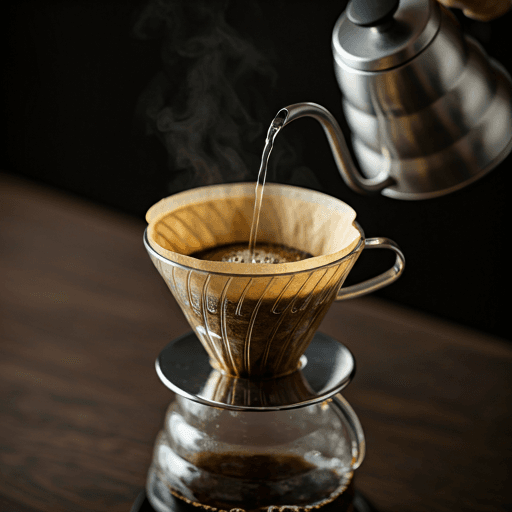
To make filter coffee decoction, load 4-5 tablespoons of medium-fine South Indian filter coffee powder into the top cup of a two-chamber filter, press it lightly, pour over near-boiling water (just off the boil, around 90-95 degrees Celsius), cover, and let it drip slowly for 15-20 minutes. The dark, concentrated liquid that collects in the bottom chamber is your decoction. Mix two to three tablespoons of it with hot milk and sugar, froth it between a tumbler and davara, and you have an authentic cup of kaapi.
That is the short version. Below is the full method, the ratios that actually matter, and the small habits that separate a weak, watery brew from the thick, aromatic decoction you get at a good South Indian home or darshini.
What filter coffee decoction is
Decoction (often spelled "dicoction" in older recipes) is the concentrated coffee extract brewed by slow gravity percolation through a traditional metal filter. You do not brew the final drink directly. You brew a strong base, then dilute it with hot milk and sugar at the cup. The decoction itself is intense, almost syrupy, and not meant to be sipped neat. Think of it as the espresso shot of South Indian coffee, made without any pressure or machine.
The whole character of filter coffee decoction comes from three things: the powder, the grind, and the time you let gravity do its work. Get those right and the rest is easy. If you want the background on the drink itself, the tradition, and the regional names, read our companion piece on what South Indian filter coffee (kaapi) is.
What you need before you start
- A traditional filter (davara filter / coffee filter): a two-part metal device with a perforated upper cup, a tamping disc (umbrella or plunger), a lower collecting chamber, and a lid. Brass or stainless steel both work.
- South Indian filter coffee powder: a medium-fine grind, usually a coffee-chicory blend. More on brands and ratios below.
- Hot water: filtered if you can, heated to just off the boil.
- Hot milk and sugar: full-fat milk gives the classic creamy body.
- A tumbler and davara (dabara): the steel or brass cup-and-bowl pair used for the signature pour and froth.
Filters come in three common sizes: small (around 270 ml), medium (around 370 ml), and large (around 470 ml). A small to medium filter is plenty for two to four cups. New to the metalware? Our brass vs steel coffee filter guide walks through which to buy and how to season a brass one.
Choosing the right powder and ratio
Decoction is only as good as the powder going in. Two factors decide the flavour: the coffee-to-chicory ratio and the grind.
Coffee to chicory ratio
Chicory is a roasted root that adds body, a faintly sweet bitterness, and the deep dark colour kaapi is known for. It also makes the decoction drip slower and feel thicker. Most South Indian households use a blend rather than pure coffee.
| Blend (coffee : chicory) | Character | Good for |
|---|---|---|
| 90 : 10 | Cleaner, more coffee-forward, lighter body | People who want to taste the bean |
| 80 : 20 | Classic balance, thick decoction, dark colour | The everyday default; most ready blends |
| 70 : 30 | Strong chicory note, very dark, heavy body | Roadside / darshini-style strength |
| 100 : 0 (pure) | Bright, aromatic, no chicory backbone | Single-estate beans, lighter drinkers |
Common ready blends sit around 80:20 or 85:15. To compare named brands like Cothas, Narasu's, Levista, Continental and Coffee Day Fresh & Ground, see our best filter coffee powder in India roundup and the South Indian coffee powder brands guide.
Grind matters
For a traditional filter you want a medium-fine grind: finer than drip filter paper coffee, coarser than espresso powder. Too coarse and the water rushes through, giving a weak, sour decoction. Too fine (espresso-fine) and the filter clogs, the drip stalls, and you get a bitter, over-extracted brew. If you grind at home, our guide to grinding coffee beans at home covers the right setting; a burr coffee grinder gives far more consistent particle size than a blade one.
How much powder
A reliable working ratio is roughly 1 part coffee to 4-5 parts water by feel. In practice:
- 2 cups: about 3 tablespoons of powder.
- 4 cups: about 4-5 tablespoons of powder.
- Filling a medium filter: roughly 5-6 tablespoons.
Adjust to taste. More powder and less water gives a thicker decoction you can stretch with more milk.
How to make filter coffee decoction step by step
Here is the full filter coffee decoction method, start to finish.
- Clean and warm the filter. Make sure the tiny holes in the perforated cup are clear of old grounds; blocked pores stall the drip. Rinsing the filter with a splash of hot water first warms the metal and helps extraction.
- Add the powder. Spoon your filter coffee powder into the upper perforated cup and level it out evenly with the back of the spoon.
- Tamp lightly. Place the pressing disc on top and press gently to make a flat, even bed. This is the most misunderstood step: do not compact it hard. You want a snug bed, not a brick. Press too firmly and you choke the drip; leave it loose and water channels straight through.
- Heat the water. Bring water to a boil, then let it sit for 20-30 seconds. You want it just off the boil (about 90-95 degrees Celsius), not violently boiling. Boiling water scorches the grounds and adds harshness.
- Pour over. Slowly pour the hot water into the upper cup until it is nearly full. Pour gently so you do not disturb the powder bed.
- Cover and wait. Put the lid on to keep the heat in, and leave it undisturbed. The decoction drips into the lower chamber by gravity. For a good, thick decoction allow 15-20 minutes. A loose, light brew can be ready in 10; a very thick, traditional one can be left up to 30-40 minutes. Do not rush it or stir it.
- Collect the decoction. When the dripping slows to a stop, lift off the top cup. The dark liquid in the bottom chamber is your decoction. It should look almost black and smell rich.
Quick check: good decoction is dark, glossy and concentrated, not thin or tea-coloured. If it looks weak, you either used too coarse a grind, too little powder, or too much water.
From decoction to the perfect cup of kaapi
The decoction is the base. Now build the drink.
- Heat the milk. Bring full-fat milk to a near boil. Hot milk is essential; lukewarm milk makes a flat cup.
- Mix in the cup. A typical ratio is 1 part decoction to 3-4 parts hot milk, but adjust to your strength. Start with 2-3 tablespoons of decoction per cup.
- Sweeten. Add sugar while everything is hot so it dissolves fully. Most people use 1-2 teaspoons per cup.
- Pour for froth. Pour the mix back and forth between the tumbler and the davara from a height. This cools it slightly, mixes it thoroughly, and whips up the airy froth that defines a good filter kaapi. Five or six confident pours is enough.
| Element | Target | Why |
|---|---|---|
| Water temperature | 90-95 degrees Celsius (just off boil) | Extracts without scorching |
| Decoction drip time | 15-20 min | Thick, concentrated base |
| Decoction : milk | 1 : 3 to 1 : 4 | Balanced strength and creaminess |
| Milk | Full-fat, near boiling | Body and proper froth |
Common mistakes and how to fix them
- Weak, watery decoction: grind too coarse, too little powder, or water poured too fast. Use more powder and a finer grind.
- Bitter, harsh decoction: grind too fine, water boiling, or left far too long. Coarsen slightly and use off-the-boil water.
- Drip stalls completely: powder tamped too hard or pores blocked. Loosen the bed and clean the holes.
- No froth: milk not hot enough, or you did not pour from a height. Use near-boiling milk and pour with confidence.
- Decoction tastes flat the next day: decoction is best fresh. You can refrigerate it for a day, but it loses aroma fast.
Storing and reusing
Brew decoction fresh whenever you can; it is at its best within an hour or two. If you must store it, keep it covered in the fridge and use within 24 hours, gently rewarming with the milk. Do not reuse the spent grounds for a second decoction; the second pass is thin and sour. Those used grounds are not waste, though, our guide on what to do with used coffee grounds has a dozen uses for them.