
Knowledge Base
Coffee & Tea Guides
Brew better and explore more — buying guides, how-tos, and explainers for every coffee and tea ritual.
Explainer
Coffee Soil: The Ground Behind Great Coffee
From slightly acidic volcanic andisols to the nitrogen and potassium a tree pulls from the ground, here is what makes good coffee soil — and how it quietly shapes the cup.
Explainer
Coffee Irrigation: Watering the World's Coffee
Most of the world's coffee is rain-fed, but irrigation can time an even bloom and carry crops through a harsh dry season — here is when, why, and how coffee farms water their trees.

Explainer
Resting Coffee: Why Fresh Roast Needs to Degas
Freshly roasted coffee is packed with carbon dioxide that muddies extraction and sours the cup; resting it a week or more lets the gas settle so it brews evenly and tastes sweeter.
Explainer
Coffee Polishing: The Final Green-Bean Finish
Polishing is the quiet final step of dry milling that buffs the last of the silverskin off green coffee beans, a mostly cosmetic finish that makes them cleaner and shinier without changing the cup.
Explainer
Water Activity in Coffee: The Number Beyond Moisture
Water activity measures the free, available water in green coffee — the metric that predicts mold, staling, and shelf life better than moisture content alone, and the one specialty buyers now check alongside it.
Explainer
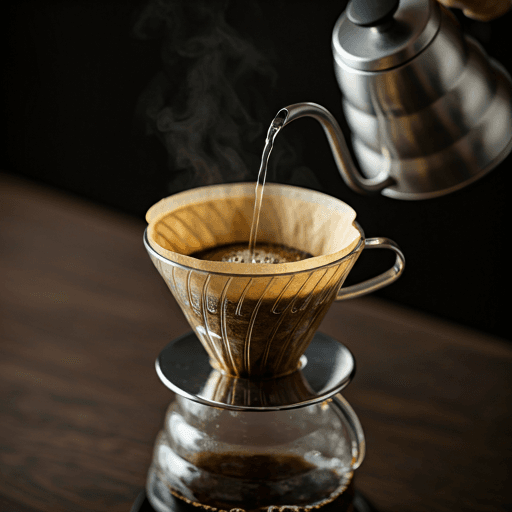
Green Coffee Storage: Keeping Raw Beans Fresh
Unroasted green coffee is a hygroscopic seed that slowly fades to flat and woody unless it is kept cool, dry, and sealed — here is how storage quietly makes or breaks a lot's quality.

Explainer
Green Scale: The Sap-Sucking Insect That Blackens Coffee
Green scale is a small, pale-green sap-sucking insect that clings to coffee leaves and shoots, tended by ants for its sugary honeydew — the same honeydew that fuels the black sooty mould smothering the tree.
Explainer
Pink Disease of Coffee: The Bark-Killing Fungus
Pink disease is a fungal bark blight that wraps coffee branches in a salmon-colored crust, girdling the wood until the growth beyond it wilts and dies back.
Explainer
Coffee Dieback: When Branches Wither From the Tip
Coffee dieback is the tip-down death of branches with many causes — but the most revealing is overbearing, where a huge crop drains the branch's reserves and kills the very wood that grew it.
Explainer
Coffee Red Spider Mite: The Dust-Season Leaf Pest
The coffee red spider mite is a tiny arachnid that bronzes leaves in hot, dusty, dry weather — and its worst outbreaks are often triggered by the very sprays meant to control other pests.
Explainer
Coffee Thrips: The Tiny Rasping Pest of Coffee Leaves
Coffee thrips are slender 1–2 mm insects that rasp young leaves, shoots, and cherries and drink the sap, leaving silvery scars — here is how to spot, monitor, and manage them the calm way.
Explainer
The International Coffee Organization (ICO) Explained
The International Coffee Organization is the London-based intergovernmental body that once ran coffee's global export quotas and today publishes the statistics and reference prices the whole trade relies on.
Explainer
Living Income for Coffee Farmers: Beyond Fair Trade
A living income is the net earnings a coffee-farming household needs for a decent life — a benchmark that reaches beyond market price and older fairness models, and one most growers still fall short of.
Explainer
Coffee Differentials: The Premiums Above the C-Price
A differential is the premium or discount stacked on the benchmark C-price, and it is where a coffee's origin, grade, quality, and scarcity quietly turn into the price it actually earns.
Explainer
Coffee Price Volatility: Why the C-Price Swings So Wildly
Coffee is one of the most volatile commodities on earth — this guide explains why the Arabica C-price swings so wildly, from Brazil's weather to fund bets, and how farmers try to cope.
Explainer
The Cost of Producing Coffee: Why Farmers Struggle
A clear breakdown of what it actually costs to grow a pound of coffee — from hand-picking to renovation — and why so many farmers sell below that cost into a single global benchmark price.
Explainer
Costa Rica 95 Coffee Variety: A Catimor Bred to Beat Rust
Costa Rica 95 is a compact, high-yielding Catimor (Timor Hybrid × Caturra) that ICAFE bred for leaf-rust resistance — a resistance that has since eroded.
Explainer
The Colombia Coffee Variety: A Landmark Rust-Resistant Cultivar
Released by Cenicafé in 1982, the Colombia coffee variety was Colombia's first rust-resistant cultivar and the multiline that seeded Castillo.
Explainer
Tabi Coffee Variety: Colombia's Tall Rust-Resistant Arabica
Tabi is a Colombian arabica from Cenicafé (2002): a Typica x Bourbon x Timor Hybrid cross pairing leaf-rust resistance with a tall plant and a specialty cup.
Explainer
Cenicafe 1: Colombia's Modern Rust-Resistant Coffee Variety
Cenicafe 1 is a 2016 Colombian arabica from the Caturra x Timor Hybrid (Catimor) line: a compact, rust- and CBD-resistant, big-bean, specialty-grade variety.
Explainer
K7 Coffee Variety: Kenya's Rust-Tolerant Bourbon Selection
K7 is one of Kenya's original arabica selections: a 1936 French Mission Bourbon pick with field tolerance to leaf rust and berry disease at lower altitudes.
Explainer
SL34 Coffee: Kenya's High-Altitude Scott Labs Selection
SL34 is a tall Kenyan arabica from Scott Labs, prized for its rich blackcurrant cup, surprising Typica genetics, and its contrast with sibling SL28.
Explainer
The Coffee Value Chain: Who Captures the Value From Bean to Cup
A clear map of the coffee value chain: every stage from grower to café, where value is added, and why farmers capture so little of a retail cup's price.
Explainer
The Coffee Futures Market: How the C-Price Is Set
How the coffee futures market works — the ICE "C" contract, the C-price, hedging, differentials, and what really moves the world price of arabica and robusta.