
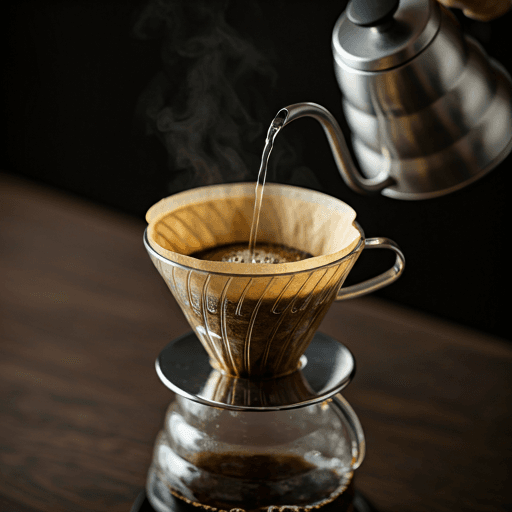
White coffee is one of those terms that means very different things depending on where you are standing. The most famous version by far is Ipoh white coffee, a Malaysian style in which the beans are roasted with palm-oil margarine instead of the heavier sugar coating used for a dark local roast, then served strong and sweet with condensed milk. But the same two words also describe a barely-roasted "white roast" bean, a caffeine-free Lebanese drink that contains no coffee at all, and, across much of the Commonwealth, simply coffee with milk.
Because the label travels so badly, ordering "a white coffee" can get you four completely different things. Here is what each one actually is, where it comes from, and how to tell which one a menu (or a friend) means.
The main meaning: Ipoh white coffee (kopi putih)
When most coffee people say white coffee, they mean the specialty of Ipoh, a city in the state of Perak, Malaysia. Known in the local kopitiam (coffee-shop) shorthand as kopi putih, or "white coffee," it is a heritage drink with roots in the early-20th-century migrant coffee shops of the tin-mining town.
The "white" has nothing to do with the colour of the cup, which is actually a deep caramel brown once the milk goes in. It refers to the roast. Traditional Malaysian "black" coffee (kopi-o) is made by roasting the beans hard with a generous dose of sugar and margarine, sometimes with wheat, until the sugar caramelises and the beans turn very dark and smoky. White coffee beans are roasted with palm-oil margarine and little or no sugar, so they never pick up that burnt caramel coating. The result is a lighter-coloured, lower-smoke roast with a rounder, nuttier, less bitter character. Exact recipes are closely guarded trade secrets and vary from roaster to roaster, so treat the "margarine, no sugar" description as the general idea rather than a fixed formula.
The brew itself is anything but pale in flavour. It is pulled strong, then finished with plenty of sweetened condensed milk (and sometimes a little evaporated milk), which gives it a thick, creamy body and a toffee sweetness. Served hot in a heavy cup or poured over ice, it is one of Malaysia's signature drinks.
Chang Jiang and the sachets that went global
Two forces carried Ipoh white coffee from a handful of shophouses to supermarket shelves around the world: heritage cafes and instant powder. Among the best known is Chang Jiang white coffee, which traces back to a 1988 Ipoh coffee shop and a factory opened around 1990; the brand is named after the Yangtze (Chang Jiang), the longest river in China, a nod to the Hainanese roots of many kopitiam families. Alongside long-running Ipoh institutions, roasters like this one turned a local ritual into a packaged export.
The bigger accelerant was the 3-in-1 sachet: a single-serve blend of instant coffee, creamer, and sugar that recreates the sweet, milky white-coffee profile with just hot water. These sachets put "Ipoh white coffee" on shelves from Singapore and Hong Kong to Australia and North America. They are convenient rather than identical to a freshly pulled cup, and they behave like any other instant blend, so if you want the mechanics of that format, see our guide to instant coffee.
The other "white coffees," decoded
Outside the Malaysian meaning, three unrelated drinks share the name. None of them is Ipoh white coffee, and one of them is not even coffee.
1. White roast beans (the very light roast)
In parts of the specialty world, especially some cafes in the United States, "white coffee" means a bean taken to an extremely light roast: pulled much earlier than a normal light roast, at a lower temperature, so it stays pale, dense, and hard. The flavour is nutty, grassy, and noticeably more sour and tea-like than a browned bean, with none of the roasted-caramel notes most people expect from coffee.
You will often hear that white roast has "more caffeine." The truth is more modest: roast level changes caffeine only slightly, but because the denser beans lose less mass, a scoop of them can carry a touch more than the same scoop of dark roast. Treat any dramatic caffeine claim with caution. These rock-hard beans also resist grinding, so they are usually ground commercially and frequently pulled as espresso. If light roasting itself interests you, we cover the whole spectrum in coffee roast levels explained, and the pale espresso style specifically in blonde espresso.
2. Lebanese white coffee (cafe blanc)
The most surprising "white coffee" contains no coffee and no caffeine. Lebanese white coffee, known in French as cafe blanc and in Arabic as ahweh bayda, is simply hot water infused with a spoonful of orange-blossom water, sometimes lightly sweetened with sugar or honey. Said to have been popularised in Beirut, it is served as a calming, fragrant after-dinner drink, and offered to guests who do not want caffeine. It is "white coffee" only in the sense that it takes coffee's place at the end of a meal.
3. "White coffee" as coffee with milk
In much of the United Kingdom and across many Commonwealth countries, "white coffee" is the plainest meaning of all: ordinary coffee with milk added, as opposed to "black coffee" taken without. Ask for "a white coffee" in a British cafe or workplace and you will get a regular filter or instant coffee with a splash of milk, nothing to do with roast colour or Malaysian technique.
A quick decoder: which white coffee is which
| "White coffee" | What it actually is | Where | Has coffee / caffeine? |
|---|---|---|---|
| Ipoh white coffee (kopi putih) | Beans roasted with margarine and little/no sugar, brewed strong, served with condensed milk | Ipoh, Malaysia | Yes |
| White roast beans | An extremely light roast: pale, dense, nutty, often pulled as espresso | Specialty cafes (notably the US) | Yes |
| Lebanese white coffee (cafe blanc) | Hot water with orange-blossom water, no beans | Beirut, Lebanon | No, caffeine-free |
| "White coffee" = with milk | Ordinary coffee served with milk | UK and much of the Commonwealth | Yes |
White coffee vs black coffee
The white-coffee-vs-black-coffee contrast also shifts with the setting. In a Malaysian kopitiam, white coffee (kopi putih) and black coffee (kopi-o) are two different roasts: the white is roasted with margarine and finished with condensed milk, while the black is roasted hard with sugar and traditionally taken without milk. In a British cafe, the same pairing just means "with milk" versus "without." Either way, "black coffee" is the version served plain; for what that plain cup is and how to make it well, see cafe noir.
How to tell which one someone means
Context does almost all the work. A few quick tells:
- Menu says "Ipoh" or "kopi," lists condensed milk, or offers hot and iced versions: the Malaysian drink.
- A specialty roaster or espresso bar describing a very light, nutty roast: white roast beans.
- An after-dinner offer in a Levantine home or restaurant, described as caffeine-free or fragrant: Lebanese cafe blanc.
- A British or Commonwealth cafe simply asking "black or white?": coffee with milk.
When in doubt, ask one question: "Does it have coffee in it, and is there milk?" That single answer separates all four.
The bottom line
"White coffee" is less a single drink than a shared name pulling in four directions. The version worth seeking out is Ipoh's kopi putih, a genuinely distinctive roast-and-condensed-milk ritual that earned its global following on its own merits. The rest, from a pale espresso bean to a milk order to a Beirut orange-blossom infusion, are reminders that in coffee, the same two words rarely travel without changing their meaning along the way.