
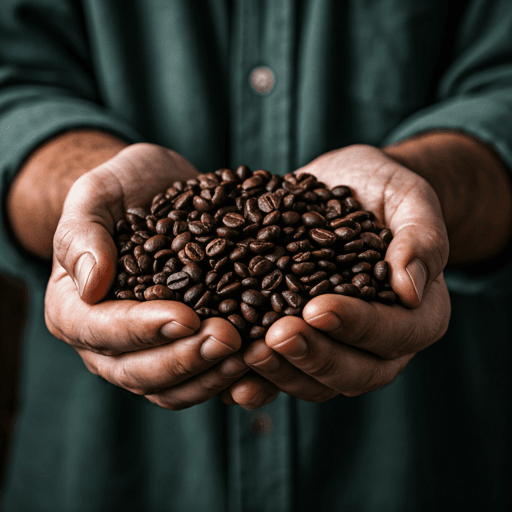
Coffee roast levels run along a single spectrum, from pale, bright light roast coffee, through balanced medium roast coffee, to bold, smoky dark roast coffee. The roast level is decided in the roasting drum, not in the field. The same green beans can become any of them depending on how long and how hot they are roasted. This guide explains what actually changes as beans travel from light to dark, the named stages along the way, and how to choose a roast that suits how you brew.
If you want the bigger picture of how green beans turn brown in the first place, see what is coffee roasting. This page is about the destinations on that journey, not the journey itself. It sits beside the broader coffee roasters guide as the roast-levels spoke.
What coffee roast levels actually mean
Roasting is controlled heat over time. As beans heat up they lose moisture, swell, change colour from green to tan to brown to near-black, and develop hundreds of new flavour compounds. The roaster judges progress partly by sound, listening for two audible milestones called the cracks.
The first crack happens around 196C (385F). It is a sharp popping sound, a bit like popcorn, as steam and pressure split the bean open. A coffee pulled at or just after first crack is a light roast. As roasting continues the beans quiet down, then enter a second, softer, crackling phase, the second crack, around 224C (435F) and above. Going into and past second crack produces dark roasts. Everything in between is medium territory. That is the whole map: light lives at first crack, dark lives at second crack, medium sits in the gap.
Worth clearing up early: roast level is a separate idea from bean species or origin. Arabica and robusta can both be roasted light or dark, and a Kenyan and a Brazilian bean can each take any roast. For the raw material before any of this happens, see what are coffee beans.
Light roast coffee
Light roast coffee is stopped early, at or just after first crack, before the beans have spent long in the heat. The beans look tan to light brown, feel dry, and show no oil on the surface. Names you will see include cinnamon roast, Half City and Light City, and in specialty circles the umbrella term "light roast" covers a lot of pour-over coffee.
Because the beans spend the least time roasting, they keep the most of their original character: the flavours that come from where and how the coffee was grown. Light roasts taste bright and lively, with noticeable acidity, a lighter body, and often fruity, floral or tea-like notes. This is why single-origin coffees meant to show off a specific farm or region are usually roasted light to medium. The trade-off is that a light roast can taste thin, sour or grassy if it is brewed badly or roasted carelessly.
Medium roast coffee
Medium roast coffee is taken past first crack but stopped before second crack really gets going. The beans are a medium brown, still dry on the surface with little to no oil. Common names are American roast, City roast and breakfast roast.
Medium is the all-rounder. Holding the beans a little longer trades some of the bright, sharp acidity of a light roast for more sweetness and body. You get caramel and nutty notes, a rounder mouthfeel, and still a reasonable amount of origin character. This balance is why so much everyday coffee, from supermarket bags to diner drip, lands in the medium band, and why it is a safe pick if you are not sure what you like. It works well across a wide range of brewers without demanding much fuss.
Dark roast coffee
Dark roast coffee is pushed into and beyond second crack, so the beans spend the longest under heat. They turn deep brown to almost black, and crucially they develop a visible oily sheen as oils are driven out to the surface. Names climb in intensity: Full City (right at the edge of dark), then Vienna, French and Italian roast as you go darker still.
At this point the roast itself becomes the dominant flavour. Origin character largely burns away and is replaced by bold, roasty, smoky, sometimes bittersweet or charred notes. Acidity drops to almost nothing and the body feels heavy. Dark roast is the classic choice for espresso, for milk-based drinks like lattes and cappuccinos where the coffee has to cut through milk, and for anyone who likes a strong, no-nonsense black cup. The risk at the far dark end is that the coffee tastes ashy or burnt, with the roaster's hand louder than the bean.
The roast level comparison table
| Roast level | Colour and surface | Crack stage | Flavour profile |
|---|---|---|---|
| Light (cinnamon, Light City) | Tan to light brown, dry, no oil | Start to end of first crack (~196C / 385F) | Bright, acidic, fruity or floral, light body, strong origin character |
| Medium (American, City) | Medium brown, dry surface | After first crack, before second | Balanced sweetness and acidity, caramel and nut notes, fuller body |
| Medium-dark (Full City) | Rich brown, first hint of oil | Into the start of second crack (~224C / 435F) | Bittersweet, heavier body, lower acidity, some roast character |
| Dark (Vienna, French, Italian) | Dark brown to near-black, oily sheen | Through and past second crack (225C+ / 435F+) | Bold, smoky, bitter, roasty, little origin character |
Does roast level change the caffeine?
This is the most stubborn myth in coffee, so it is worth getting right. Roasting does not burn off much caffeine; the molecule is fairly stable at roasting temperatures. So light and dark roast coffee contain roughly the same amount of caffeine. The small differences come entirely from how you measure your coffee.
Dark roasting drives off more moisture and puffs the beans up, so a dark bean is lighter and larger than a light one. Measure by scoop or volume and a scoop of denser light roast packs in slightly more bean, and so slightly more caffeine. Measure by weight, gram for gram, and dark roast can edge marginally higher because it takes more (lighter) beans to hit the same weight. Either way the gap is only a few percent, not the dramatic difference people imagine. For real numbers on how much caffeine ends up in your cup, see how much caffeine in a cup of coffee. The practical takeaway: weigh your coffee for consistency, and do not pick a roast hoping for a bigger jolt.
Which roast level should you choose?
There is no "best" roast, only the roast that fits your taste and your brewer. Use these as general leans, not rules:
- Light roast shines in pour-over, filter and other clean brew methods that show off brightness and a specific origin. Reach for it if you like fruit, florals and a livelier, more acidic cup.
- Medium roast is the flexible middle, comfortable in drip machines, French press, pour-over and most home setups. A sensible default if you want balance and are not chasing extremes.
- Dark roast leans toward espresso, moka pots, and milk drinks, plus anyone who wants a bold, low-acid black coffee. It carries flavour through milk and stands up to fast, pressurised brewing.
Two practical notes. First, freshness matters more than roast level for taste, so buy whole beans, grind just before brewing, and use them within a few weeks. Oily dark roasts in particular stale faster. Second, your grind and ratio do more heavy lifting than most people expect, so dial those in before blaming the roast.
Roast level is one of the most useful labels on a bag of coffee once you know what it is telling you: light keeps the bean's personality, dark hands the stage to the roast, and medium splits the difference. Taste across the spectrum, note what you reach for again, and let that guide your next bag rather than the marketing on the front. To go deeper on the craft and the people behind it, browse the coffee roasters guide or wander the rest of our coffee guides.