
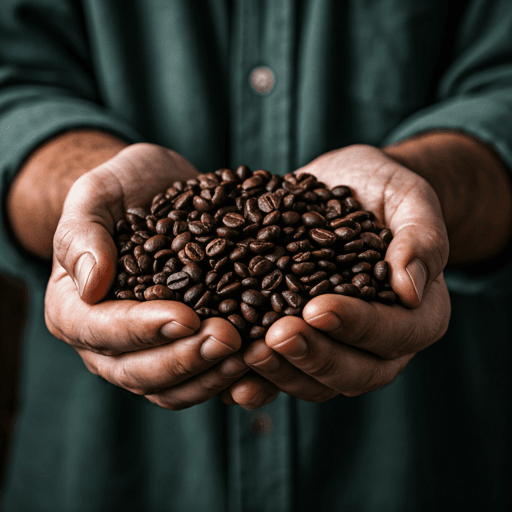
Coffee roasting is the process of applying controlled heat to raw green coffee beans until they develop the color, aroma and flavor we recognize as coffee. Green beans are grassy, dense and almost tasteless. Roasting drives off moisture, triggers browning reactions, and unlocks hundreds of flavor compounds. The longer and hotter a bean is roasted, the darker and bolder it tastes. This guide explains exactly what happens during coffee roasting and what each roast level means in your cup.
What is coffee roasting?
At its simplest, coffee roasting is cooking. A roaster heats green beans in a rotating drum or a bed of hot air, usually somewhere between roughly 195°C and 230°C (about 385°F to 445°F), and watches them transform. The green bean is firm, vegetal and packed with moisture, acids and sugars locked in a tight cellular structure. Heat breaks that structure open. Sugars caramelize, acids form and then degrade, and aromatic oils develop. By the time a coffee roast is finished, the bean has lost weight, nearly doubled in size, turned brown, and become brittle enough to grind.
If you want the raw material first, see our guide to what coffee beans are and the difference between green and roasted coffee beans. This page is about the process and the roast spectrum itself, not the business of roasting (for the role and the people, read what a coffee roaster does).
What happens inside the roaster
A coffee roast moves through recognizable stages. They blend into one another, but understanding them makes the whole process clear.
1. The drying phase
Green coffee holds around 10 to 12 percent moisture. The first job of any roast is to drive that water off. During this phase the beans shift from green to pale yellow and give off a smell like toast or grain. Nothing tastes like coffee yet. This stage typically takes several minutes and lays the groundwork for even roasting.
2. The Maillard phase (browning)
As the bean heats past roughly 150°C, the Maillard reaction kicks in: amino acids and sugars react to create brown color and a huge range of aroma compounds. This is the same reaction that browns bread crust and seared meat. As temperatures climb further, caramelization of the bean's sugars adds sweetness and deeper color. The bean turns from yellow to light brown and starts to smell genuinely coffee-like.
3. First crack
Around 196°C you hear a sharp, popcorn-like snapping: first crack. Pressure and steam built up inside the bean force it to expand and split audibly, expelling carbon dioxide and chaff. First crack is the gateway to drinkable coffee. A bean pulled right at or just after first crack is a light roast. Many specialty roasters finish here or soon after to preserve a coffee's bright, origin-driven character.
4. Development
The window between first crack and the end of the roast is called development time. This is where the roaster fine-tunes the balance of acidity, sweetness and body. A short development keeps the cup bright and complex; a longer one rounds it out and builds body. Small changes here make a large difference in the finished coffee roast.
5. Second crack
Push further, to around 224°C, and you reach second crack, a quieter, crackling sound caused by the bean's cellulose structure breaking down. Oils migrate to the surface, acidity drops sharply, and bitterness and body rise. Roasts taken into or past second crack are dark roasts. Beyond this point the bean's origin flavors fade and roast character dominates.
The coffee roast spectrum, from light to dark
Roast level is a continuum, but the industry uses familiar names. Lighter roasts taste brighter, more acidic and more like where the coffee grew. Darker roasts taste bolder, smokier and more uniform. Here is how the main levels compare.
| Roast level | Other names | Color & surface | Taste profile | Acidity / body |
|---|---|---|---|---|
| Light | Cinnamon, New England, Light City | Light brown, dry surface | Bright, fruity, floral, origin-forward | High acidity, light body |
| Medium | City, American, Breakfast | Medium brown, dry surface | Balanced, caramel sweetness, smooth | Moderate acidity, medium body |
| Medium-dark | Full City, Vienna | Rich brown, first oil specks | Fuller, chocolatey, light roast tones | Lower acidity, fuller body |
| Dark | French, Italian, Espresso | Dark brown to near-black, oily | Bold, smoky, bittersweet, roast-driven | Low acidity, heavy body |
Light roast
Pulled at or just after first crack, a light roast has a dry surface and the highest acidity. It showcases a coffee's origin: a Kenyan might taste like blackcurrant, an Ethiopian like jasmine and citrus. Light roasts are the favorite of single-origin and pour-over drinkers who want to taste the bean, not the roaster.
Medium roast
Finished between first and second crack, medium roast is the most popular level for everyday drinking. It balances acidity with caramelized sweetness and a rounder body, giving you a forgiving, crowd-pleasing cup that works in almost any brewer.
Medium-dark roast
Taken to the edge of second crack, medium-dark roasts (often called Full City) trade brightness for chocolatey richness and a heavier body. A few oil specks appear on the surface. This level suits drinkers who like a bolder cup without full dark-roast smoke.
Dark roast
French and Italian roasts go into or past second crack, leaving the bean dark, shiny with oil, and tasting of dark chocolate, smoke and bittersweetness. Origin character largely disappears, replaced by roast flavor. Dark roasts are classic for traditional espresso and for anyone who wants an unmistakably bold, low-acid cup.
Light vs dark in plain terms
If you find a coffee too sour, sharp or tea-like, you probably have a light roast. If you find it too bitter, smoky or ashy, you probably have a dark roast. Light roasts emphasize the fruit and floral notes of the origin; dark roasts emphasize the deep, toasty flavors the roasting itself creates. Neither is better. Choose by taste, and let your brewing method guide you too: light roasts shine in pour-over and filter brewing, while darker roasts hold up beautifully in a moka pot or as classic espresso.
The dark-roast caffeine myth
A stubborn myth says dark roast is "stronger" and therefore higher in caffeine. It is not. Caffeine is remarkably stable under roasting heat, so the difference between roast levels is tiny. The real wrinkle is how you measure: roasting burns off mass, so dark beans are lighter and slightly larger. Scoop by volume and dark roast can give marginally less caffeine; weigh by the gram and the levels are nearly identical. "Strong" describes flavor intensity, not a caffeine dose.
A note on home roasting
You can roast coffee at home, and many enthusiasts do. The simplest tools are a popcorn-style air popper or a heavy skillet; dedicated home roasters and modified hot-air machines give far more control. The basics are the same as commercial roasting: heat the green beans evenly, listen for first crack, decide how far past it to go, then cool the beans quickly to stop the roast. Expect smoke and chaff, and rest freshly roasted beans for a day or two so they can release carbon dioxide before brewing. Home roasting is rewarding, but it has a learning curve, and consistency is the hard part that professional roasters spend years mastering.
Putting it together
Coffee roasting is where a green, flavorless seed becomes the aromatic bean in your grinder. Drying, browning, first crack, development and second crack each shape the final cup, and the roast level you choose, from bright light to bold dark, decides how much of the origin versus the roast you taste. Once you know your roast, the next step is grinding it well. Read how to grind coffee beans to get the most from any roast, then keep exploring.