
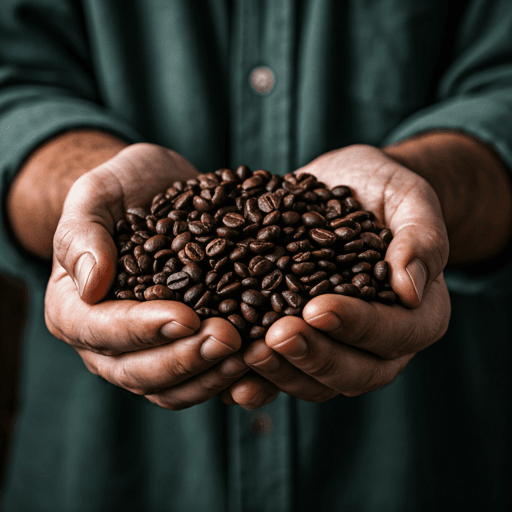
A coffee roaster takes raw green coffee beans and applies controlled heat until they transform into the aromatic brown beans you grind and brew. The word means two things in coffee: the person or company who roasts, and the machine they roast on. Both shape almost everything you taste in the cup. This guide explains what a coffee roaster does, what actually happens inside the bean during roasting, and how the choices a roaster makes turn one green seed into hundreds of different flavors.
What is a coffee roaster?
So, what is a coffee roaster? In the broadest sense it is whatever turns green coffee into roasted coffee. Green coffee beans are dense, grassy and barely drinkable. They have all the potential of a finished cup locked inside, but none of the flavor is accessible yet. Roasting unlocks it by driving off moisture and triggering chemical reactions that build sweetness, acidity, body and aroma.
When people say "coffee roaster," they usually mean one of two things:
- The roaster as a person or business — the skilled operator (and the company) who sources green beans, designs roast profiles, runs the machine and tastes the results. This is a craft job that blends sensory skill with engineering.
- The roaster as a machine — the equipment that supplies and controls the heat, from a tiny home unit to a multi-batch commercial drum. We cover the main types lower down.
Both senses matter, because a great roast needs a skilled person and a capable machine working together. If you want to understand the raw material first, our explainer on what coffee beans are is a good starting point, and the difference between unroasted and roasted seeds is covered in green vs roasted coffee beans.
What happens inside the bean during coffee roasting
Coffee roasting is a fast, carefully managed cooking process. A typical roast runs anywhere from about 6 minutes in a hot-air machine to roughly 15 to 20 minutes in a traditional drum. Across that time the bean passes through three broad phases.
1. The drying phase
Green coffee holds a lot of internal moisture. The first part of the roast — often around the first 40% of the time — gently drives that water out. The beans shift from green to pale yellow and smell grassy, then bready. Nothing tasty has formed yet; this phase is about preparing the bean so the flavorful reactions that follow happen evenly rather than scorching the outside while the center stays raw.
2. The browning (Maillard) phase
As the beans heat further, the Maillard reaction begins. This is the same browning chemistry that gives seared bread crust and toasted nuts their flavor. Amino acids and sugars in the bean combine under heat to create hundreds of new aromatic compounds — chocolatey, nutty, malty, savory and floral notes all begin here. Caramelization of the bean's natural sugars overlaps with this stage, adding sweetness and color. This is where a coffee's character really starts to take shape.
3. First crack and the development phase
Keep heating and you reach first crack: a clear popping sound, a bit like popcorn. It happens because steam and carbon dioxide build up pressure inside the bean until it fractures open. First crack is a milestone every roaster listens for, because it marks the start of the development phase — the window where the roaster decides how far to take the flavor.
The time spent after first crack, relative to the whole roast, is often called the development time ratio. Roasters track it closely; a common target is roughly 20 to 25% of total roast time. Stop just after first crack and you get a bright, light roast. Push on and the sugars caramelize further, the acidity softens, and the body grows heavier. Go far enough and you reach a second, quieter crack, which signals dark-roast territory.
The roaster's real job is to manage heat and time so the bean develops fully — sweet, balanced and free of underdeveloped grassy or baked flavors — without tipping into burnt, smoky bitterness.
Roast levels: from light to dark
Once you understand the phases, roast levels make sense. They simply describe how long and how hot the beans were taken, and each level tastes different. Lighter roasts preserve more of the bean's origin character — its "terroir" — while darker roasts trade that for bolder, roastier flavors.
| Roast level | Where it stops | Typical flavor |
|---|---|---|
| Light | At or just after first crack | Bright, fruity, floral, acidic; clear origin character. Favored for cupping. |
| Medium | Between first and second crack | Balanced, sweeter, fuller body; milk chocolate, nuts, gentle fruit. |
| Medium-dark | At or just into second crack | Rich, bittersweet, heavier body; caramel and dark chocolate, some smoke. |
| Dark | Well past second crack | Bold, smoky, low acidity; roast flavor dominates the origin. |
Neither end is "better" — it depends on the bean and the goal. A delicate, high-grown washed coffee often shines as a light or medium roast, where its fruit and florals survive. A coffee meant for espresso or milky drinks may be roasted darker for body and a consistent crema. Roasting too dark, though, means losing the unique characteristics from origin, elevation, soil and processing.
The craft: what a coffee roaster actually decides
Pressing "start" on a machine is the easy part. A skilled coffee roaster makes a chain of decisions long before and during the roast, and that is where the craft lives.
Sourcing green coffee
It starts with the raw material. Roasters choose green coffee by variety, origin and processing method — and the species matters too, since the two dominant ones, Arabica and Robusta, behave and taste very differently in the roast. Many specialty roasters focus on high-quality Arabica beans and build relationships with farms and importers. You cannot roast quality into a poor bean, so sourcing is half the job.
Profiling the roast
For each coffee, the roaster designs a roast profile: a planned curve of temperature and time that aims to bring out that bean's best. They adjust how fast the bean heats, how long it dries, when first crack lands, and how long development runs. The same green bean roasted on two different profiles can taste like two different coffees.
Cupping and quality control
After roasting, roasters taste their work using cupping — a standardized tasting method where ground coffee is steeped and slurped to evaluate aroma, acidity, sweetness, body and flavor. Cupping tells the roaster whether the profile worked or needs adjusting, and it keeps batches consistent over time. This taste-and-refine loop is the difference between coffee that is merely cooked and coffee that is genuinely delicious.
The machines: drum vs hot-air roasters
The other meaning of "coffee roaster" is the equipment. Most machines fall into two families, and they transfer heat to the bean in different ways.
- Drum roasters. A rotating heated metal cylinder tumbles the beans while a burner heats the drum. Heat reaches the beans by both conduction (contact with the hot metal) and convection (hot air moving through). Drums are the classic workhorse of cafes and commercial roasteries. They tend to produce a deeper, more caramelized, heavier-bodied cup and roast a batch in roughly 15 to 20 minutes.
- Hot-air (fluid-bed) roasters. Instead of a tumbling drum, a strong stream of hot air lifts and suspends the beans, roasting them through pure convection while they float and circulate. These roast faster — often 6 to 8 minutes — and blow away the papery chaff as it separates. They tend to highlight brightness and aromatic clarity, which is why many lighter, more delicate roasts suit them.
Neither type is universally superior; they are tools that emphasize different qualities, and a good roaster picks the approach that flatters the bean. If you want a closer look at machines and roasting companies as a category, our coffee roasters guide covers the equipment-and-brands landscape in detail, while this page stays focused on the process and the craft.
Why roasting matters to the cup you brew
Roasting is the bridge between farm and cup. A farmer grows the cherry and a producer processes the seed, but the roaster decides which of the bean's flavors come forward and which fade. That is why the same green coffee can appear as a fruity light roast in one bag and a chocolatey medium-dark in another. When you notice a coffee tasting bright and tea-like, or rich and bittersweet, you are largely tasting roasting decisions.
Understanding what a roaster does also makes you a better shopper and brewer. Knowing your roast level helps you pick beans you will actually enjoy, dial in your grind, and match a coffee to your brew method.
The takeaway
A coffee roaster — whether you mean the person, the company or the machine — exists to transform raw, grassy green beans into flavorful roasted coffee by carefully managing heat and time through drying, browning and development. The science of first crack and the Maillard reaction is consistent, but the artistry lies in sourcing good green coffee, designing a profile, choosing a roast level, and cupping to confirm it sings. Next time you open a fresh bag, you will know exactly who and what got it there. To keep exploring, see how unroasted and roasted seeds compare in green vs roasted coffee beans and start from the basics with what coffee beans are.