
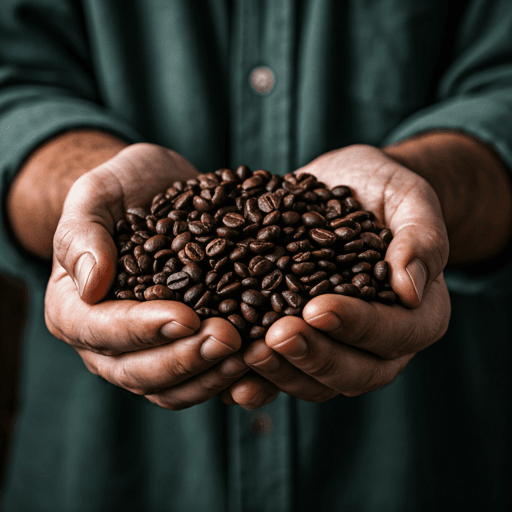
"Coffee roasters" is a phrase that quietly means three different things at once, and most confusion about coffee starts right there. It can describe a roast level (the light-to-dark scale on a bag of beans), a roasting machine (the drum or air device that turns green seeds into brown coffee), or a company (the artisan coffee roasters whose name is on the label). This pillar guide covers all three plainly, so you can read any bag of beans, pick a roast you will actually enjoy, and recognize a good roaster wherever in the world you happen to shop.
If you only remember one thing, remember this: roasting is where most of coffee's flavour is created. The same green bean can taste like lemon and jasmine or like dark chocolate and toast, depending entirely on how it was roasted. Understanding that gives you far more control over your morning cup.
What roasting actually does to the bean
Green coffee beans are dense, grassy and almost flavourless. Roasting applies heat over several minutes and triggers chemical reactions, mostly the Maillard reaction and caramelisation, that build the hundreds of aromatic compounds we recognise as coffee. As the beans heat, moisture drives off, sugars caramelise, acids break down, and the bean expands and darkens.
Two audible milestones guide every roaster. First crack is a popcorn-like pop as the bean expands and releases steam; this is roughly where a light roast finishes. Second crack is a quieter crackle as the bean's structure breaks down further and oils migrate to the surface; this marks the territory of dark roasts. The longer the roast runs past first crack, the more the bean's bright, origin-driven character is traded for deeper, roast-driven flavour. To see the raw material this all starts from, our explainer on green vs roasted coffee beans is a useful companion.
Coffee roast levels, light to dark
When people ask about "coffee roasters" in the supermarket sense, they usually mean roast level. There are four broad tiers, and the differences are real, not marketing.
| Roast level | Bean appearance | Typical flavour | Acidity and body |
|---|---|---|---|
| Light | Light brown, dry surface, no oil | Bright, floral, fruity, tea-like; origin character shines | High acidity, lighter body |
| Medium | Medium brown, dry surface | Balanced; caramel, brown sugar, nutty notes | Moderate acidity, rounder body |
| Medium-dark | Richer brown, faint oil sheen | Bittersweet; chocolate, baking spice, light smoke | Lower acidity, fuller body |
| Dark | Dark brown to near-black, oily surface | Bold, smoky, roast-forward; dark chocolate, toast | Low acidity, heavy body |
A few honest truths the bag rarely tells you. First, roast level and "strength" are not the same thing; a dark roast tastes intense but is not necessarily higher in caffeine. Second, lighter roasts preserve the differences between origins, so a light-roast Ethiopian and a light-roast Colombian will taste worlds apart, while a very dark roast tends to taste similar regardless of where the beans came from. Light roasts highlight the arabica bean's delicate, region-driven flavours; dark roasts lean on the roast itself.
Which roast suits which brew
Roast level interacts with how you brew. Lighter and medium roasts reward methods that showcase clarity and acidity, such as pour-over and the AeroPress. Darker, fuller roasts often suit espresso, the French press and the moka pot, where body and lower acidity are an advantage. If you mostly drink filter coffee, our guide to the best coffee for drip and French press gets specific. None of this is a rule, though; the best roast is simply the one you enjoy.
Types of coffee roasting machines
The second meaning of "coffee roasters" is the equipment. Two designs dominate, and they genuinely taste different in the cup.
Drum roasters
A drum roaster tumbles beans inside a rotating metal cylinder heated from below, much like a clothes dryer with a flame under it. Heat transfers through the drum's hot surface and the surrounding air. The slower, conductive heat tends to develop deeper, rounder, more layered flavours with a fuller body. Nearly all commercial and cafe roasting is done on drum machines, partly because they scale up to large batches and partly because roasters value that control over development.
Air (fluid-bed) roasters
An air or fluid-bed roaster suspends the beans in a powerful stream of hot air, so they tumble and roast in the airflow rather than against a hot drum. Air roasting is usually faster and tends to produce a cleaner, brighter cup with a lighter mouthfeel; it also blows away chaff efficiently. Most small home roasters are air or fluid-bed designs, because they are compact, affordable and easy to use. Current technology has not produced a practical fluid-bed roaster at full commercial volume, which is why cafes overwhelmingly use drums.
| Feature | Drum roaster | Air / fluid-bed roaster |
|---|---|---|
| Heat source | Hot drum surface plus air (conductive) | Stream of hot air (convective) |
| Roast speed | Slower, more developed | Faster |
| Typical cup | Bold, rich, fuller body | Cleaner, brighter, lighter body |
| Common scale | Cafes and commercial | Home and small batch |
Beyond these two, you will also see small sample roasters used by buyers to test green coffee, and even improvised home setups such as a popcorn-style air popper or a pan on the stove. They all do the same fundamental job, applying controlled heat over time.
Artisan coffee roasters: the companies
The third meaning is the one most people care about day to day: the businesses that roast and sell beans. These range from giant industrial operations to the small, independent artisan coffee roasters that define the specialty scene, the kind of place with a single drum machine in the corner and roast dates handwritten on the bag.
So what separates a great roaster from a forgettable one? A few signals are reliable wherever you are in the world.
- A roast date on the bag. This is the single most telling sign. Specialty roasters print when the coffee was roasted because freshness matters and they have nothing to hide. A vague "best before" date a year out usually means the brand is hiding how old the coffee already is.
- Freshness window. Coffee is generally at its best from roughly a few days to about three weeks after roasting. After three to four weeks it starts losing aromatics. Good roasters work in small batches so beans reach you fresh, not after months in a warehouse.
- Origin transparency. Quality roasters tell you the country, region, farm or cooperative, the variety, the processing method (washed, natural, honey) and often the altitude. Detail signals care from the start of the supply chain.
- Single origin vs blends. A single-origin coffee comes from one place and showcases that origin's character; a blend is built for balance and consistency. Neither is better, but a roaster who clearly labels both knows what they are doing.
- Whole bean and a recent roast. Whole beans hold their flavour far longer than pre-ground. Pair a recent roast date with a good burr grinder at home and you get most of the way to a great cup before you even brew.
Industrial roasters trade traceability for scale, low cost and shelf stability, which is why a tin of supermarket coffee rarely carries a roast date. That is a legitimate product; it simply answers a different question than a small artisan roaster does. As for cost, single-origin and freshly roasted specialty coffee generally sits at a premium tier compared with commodity tins, because traceability and small batches cost more to produce. Prices vary widely by country and retailer, so judge value by freshness and information rather than by a number.
Putting it together when you buy
Next time you pick up a bag, read it in this order. Find the roast date first; aim for something roasted within the last few weeks. Check the roast level against how you brew and what you like. Look for origin information, a region, a process, maybe a farm. And note whether it is whole bean. Those four checks, applied anywhere from a corner roastery to an online shop, separate genuinely good coffee from filler. To go deeper on what is inside the bag, see our guides to coffee bean varieties and arabica vs robusta.
The bottom line
"Coffee roasters" is really three ideas wearing one name: the roast level that shapes flavour, the machine that does the work, and the people behind the label. Once you can tell them apart, the whole subject gets simpler. You will know why a light roast tastes nothing like a dark one, why a drum-roasted cafe blend feels rounder than an air-roasted home batch, and why a roast date matters more than almost anything else on the bag. From here, explore how roast meets brewing in our roundup of the notable coffee chains and roasters, and keep tasting your way through the roast spectrum until you find your own favourite.