
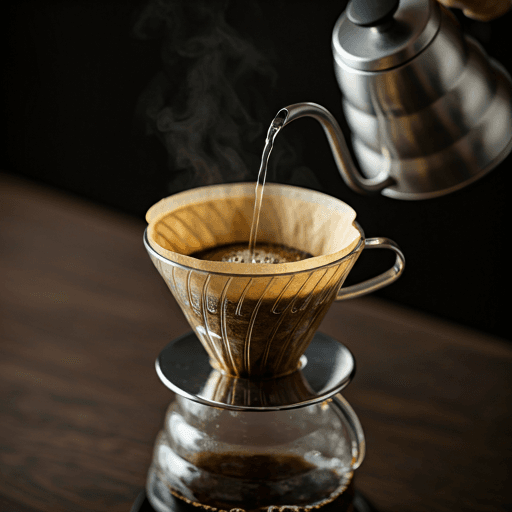
Café noir is the French phrase for black coffee — coffee served plain, with no milk or cream. Order a "café noir" at a French or European café and you will usually get a small, strong, espresso-style black coffee in a little cup. The phrase is a menu and recipe term more than a separate drink: it is simply how French speakers say "make mine black."
That makes café noir the opposite of the milky options beside it — café crème and café au lait — and it explains why you see the words on dessert menus, old recipe books, and the coffee section of a brasserie list. Below is what the term means, what lands in your cup, and how it fits the rest of the French coffee menu.
What "café noir" means
In French, café means coffee and noir means black. Put together, café noir is literally "black coffee." It entered English usage in the 1830s and still appears in dictionaries as a straightforward translation: a cup of coffee taken without milk or cream. Some sources also use it loosely to mean a small after-dinner coffee served in a demitasse, the little cup you see at the end of a meal.
There is nothing exotic in the cup. Café noir is the same idea as ordering a coffee "black" anywhere in the world — the French phrase just carries a bit of menu polish. If you want the full breakdown of what black coffee is and how to make a good one at home, our guide on what is black coffee covers brewing, strength, and taste. This page is about the term and where it shows up, not the recipe.
What you actually get when you order one
Here is the part that surprises first-time visitors. In France, the default "un café" is not a big American-style mug of drip coffee. It is a short shot of espresso in a small cup. So when a French menu lists café noir — or when someone orders their coffee noir — what arrives is almost always an espresso-style black coffee: concentrated, intense, and small.
That espresso base matters, because nearly every coffee on a French café menu is built from it. A café noir is that base with nothing added. A café crème or café au lait is the same coffee softened with milk. If you have never looked closely at how espresso underpins all of these drinks, our explainer on espresso, the base of every coffee shows why one small shot turns into a whole menu.
A few practical notes for ordering:
- Say it simply. "Un café, noir" or just "un café" gets you a small black espresso in most French cafés.
- Expect it small. If you want something longer and more diluted, you would ask for a café allongé (espresso lengthened with hot water), which is closer to what many people elsewhere think of as a regular black coffee.
- Don't expect a refill culture. French café coffee is served as a single, deliberate cup rather than a bottomless mug.
The phrase "black coffee, French" in recipes and menus
You will also meet cafe noir outside France. Cookbooks and cocktail guides use "café noir" as shorthand for strong black coffee — for example as the base of a coffee dessert, a digestif, or a spiked after-dinner drink. When an old recipe calls for "black coffee, French" or "café noir," it generally means a small, strong, unsweetened black coffee, not a watery cup. Brew it stronger than your usual mug and you will be in the right range.
On restaurant menus, "café noir" often appears at the very end of the meal, listed as the plain after-dinner coffee — the quiet, unmilked counterpoint to a dessert or a glass of something. That placement is part of why the phrase feels elegant: it signals a small, focused black coffee meant to close the table, not a breakfast drink.
How café noir sits beside café crème, café au lait and noisette
The easiest way to understand café noir is to line it up against the milky options. They all start from the same coffee — the difference is how much milk goes in.
| Term | What it means | Milk? | Typical serving |
|---|---|---|---|
| Café noir | Black coffee, plain | None | Small espresso-style cup |
| Café noisette | Espresso "stained" with a dash of milk | A teaspoon or two | Demitasse; nut-brown color |
| Café crème | Espresso topped with foamed/steamed milk | A good amount | Larger cup; morning drink |
| Café au lait | Coffee with plenty of hot milk | Roughly equal milk | Often a bowl, at home, at breakfast |
So café noir is the "no milk at all" end of the scale. Add the smallest splash and it becomes a noisette (the word means hazelnut, a nod to the color, not a flavor). Add a generous pour of foamed milk and it is a café crème, the drink most people actually order in a French café in the morning. Add a lot of hot milk — traditionally in a wide bowl at the breakfast table at home — and it is a café au lait.
For more on that milkiest member of the family, see our explainer on what a café au lait is. And if the word café itself is the confusing part — because it means both the drink and the place — our piece on what a café is untangles the two meanings.
Why French menus bother with the word "noir"
If the default café is already black, why specify noir? Partly clarity and partly tradition. On a menu that lists café crème, café au lait, and noisette side by side, "café noir" makes the plain black option explicit so nothing is ambiguous. It also carries history: the phrase has long been the polite, slightly formal way to name the after-dinner black coffee, and menus keep it for that timeless feel.
One more "Cafe Noir": the biscuit
Quick disambiguation, because it trips people up. Café Noir is also the name of a well-known coffee-flavored biscuit, a crisp cookie topped with coffee icing that has been made in Europe by brands such as Verkade, Delacre, and McVitie's. It is meant to be eaten with coffee, not instead of it.
So if you see "Cafe Noir" on a supermarket shelf next to the tea and biscuits, that is the cookie brand — a trademark of its makers — and not the French coffee term. Context makes it obvious: on a café menu, café noir is your black coffee; in the biscuit aisle, Café Noir is something to dunk in it.
Café noir at home
You do not need to be in a Paris café to drink café noir — you just need black coffee brewed a little stronger than a big mug of drip. An espresso machine gives you the most authentic small, intense cup, but a moka pot or a strong filter brew get you close. The only rule that makes it "noir" is the one in the name: nothing added.
If café noir has you curious about the wider world of plain black coffee, keep exploring. The companion guide on what black coffee is walks through brewing and taste, and the espresso explainer shows how that one small shot becomes café crème, café au lait, and everything in between. Café noir is simply the most honest version of all of them — coffee, and nothing else.