
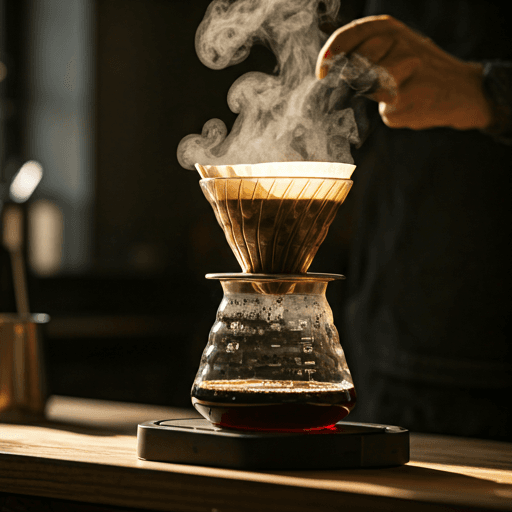
A cafe au lait is French for "coffee with milk," and that is exactly what it is: freshly brewed coffee combined with hot or scalded milk in roughly equal parts. Unlike a latte, it starts from drip, French press or moka coffee rather than espresso, which makes it lighter, smoother and easy to make in any kitchen. It is one of the oldest and most universal ways to drink coffee, with close cousins all over the world.
If you have ever seen the spelling drift to "cafe au latte," "cafe o lait" or simply "au lait coffee," they all point to the same idea. Below we explain what a real cafe au lait is, how au lait coffee differs from a latte and a flat white, how the Spanish cafe con leche compares, and how to make each one at home.
What is a cafe au lait?
A cafe au lait is brewed coffee and hot milk poured together in about a one-to-one ratio. The phrase translates literally to "coffee with milk," and the drink lives up to its plain name. There is no foam art, no pressure-brewed shot and no special machine required. You brew a strong cup of coffee, heat your milk until it is steaming, and combine them.
The result is a mug that tastes clearly of coffee but is rounded and softened by milk. Because the coffee is brewed rather than concentrated, the flavor is broad and gentle rather than intense. It is the everyday "milky coffee" that many people picture when they think of a relaxed morning at the table.
The classic French version
In France, a cafe au lait is a breakfast staple. It is traditionally served in a wide bowl rather than a mug, generous enough to dip a croissant or a slice of bread. The coffee is usually strong drip or press coffee, and the milk is heated until just steaming, then poured in alongside the coffee so the two arrive in equal measure. The wide bowl is not just charming; it cools the drink slightly and makes dunking easy.
The New Orleans version with chicory
The most famous American cafe au lait comes from New Orleans, where Cafe du Monde has served it since the stand opened in 1862. The local twist is chicory. During the Civil War, when coffee was scarce, New Orleans Creoles stretched their supply by blending in roasted chicory root, and the habit stuck. Chicory adds a faintly chocolatey, slightly bitter depth to the cup.
At Cafe du Monde, the dark-roasted coffee and chicory is served either black or "au lait," mixed half and half with scalded milk. Scalded means the milk is heated in a pan to just below boiling, which gives it a rounder, almost cooked sweetness. It is the classic partner to a plate of powdered-sugar beignets, and it remains a defining New Orleans ritual.
Cafe au lait vs latte: the key difference
People mix up cafe au lait and latte constantly, but the difference is simple once you know it. It comes down to the coffee base and the amount of milk.
- The coffee base. A cafe au lait uses brewed coffee (drip, French press, pour-over or moka pot). A latte is built on espresso, a concentrated shot pulled under pressure.
- The milk ratio. A cafe au lait is roughly one part coffee to one part milk. A latte is milk-forward, usually around one part espresso to two or more parts milk.
- The milk texture. A cafe au lait uses plain hot or scalded milk with little or no foam, so it blends evenly and tastes smooth. A latte has steamed, micro-foamed milk and a thin foam cap, which makes it velvety and gives baristas a canvas for latte art.
- The flavor. A cafe au lait tastes broadly of coffee, light and easy. A latte tastes creamier and milder because all that milk mellows the espresso.
| Feature | Cafe au lait | Latte |
|---|---|---|
| Coffee base | Brewed coffee | Espresso |
| Milk ratio | About 1:1 | About 1:2 or more milk |
| Milk texture | Hot or scalded, little foam | Steamed with micro-foam |
| Equipment | Any brewer plus a pan or frother | Espresso machine |
| Taste | Smooth, coffee-forward | Creamy, milk-forward |
If you want to go deeper on the espresso-and-milk family specifically, our guide on latte versus cafe latte untangles those overlapping names. A cafe au lait sits just outside that family because of its brewed-coffee base.
What about a flat white?
A flat white is another espresso drink, not a brewed-coffee one. It is essentially a smaller, more concentrated latte: espresso topped with a thin layer of steamed milk and very little foam, served in a small cup. Compared with a cafe au lait, a flat white is stronger, denser and far more espresso-driven. The two only resemble each other in that both lack a thick foam cap.
Cafe con leche: the Spanish cousin
If cafe au lait is the French take on coffee with milk, cafe con leche is the Spanish one, and it is the most important variation to know. The name also means "coffee with milk," but the build is different.
A cafe con leche is usually espresso (or very strong stovetop coffee) combined with scalded milk in about a one-to-one ratio. Because it leans on espresso rather than drip coffee, it is bolder and more robust than a French cafe au lait, with a stronger coffee punch in the same amount of milk. The milk is scalded — heated almost to a boil — which gives it a slightly sweet, comforting roundness.
You will find versions of this drink across the Spanish-speaking world, from Spain to Latin America to Cuban-American kitchens, each with its own habits around sweetness and strength. The shared thread is simple: strong coffee, hot milk, equal parts.
Both "cafe au lait" and "cafe con leche" literally translate to "coffee with milk." The difference is the coffee base and how the milk is heated, not the idea behind the drink.
How to make a cafe au lait at home
This is one of the easiest cafe-style drinks to make because it needs no espresso machine. Any brewing method works, as long as the coffee is on the stronger side so the milk does not wash it out.
Ingredients
- About 1 cup (240 ml) of strong brewed coffee
- About 1 cup (240 ml) of milk (whole milk gives the roundest texture)
- Optional: a pinch of sugar, or a little chicory-blend coffee for the New Orleans style
Steps
- Brew a strong cup of coffee. French press, drip and pour-over all work well; brew it a touch stronger than you would for a black cup. New to brewing? Start with our how to make coffee guide.
- Heat the milk in a small pan over medium heat until it steams and you see tiny bubbles at the edge — just below a boil. Do not let it reach a rolling boil.
- For a little froth, whisk the hot milk briskly or use a handheld frother, though a true cafe au lait does not need foam.
- Pour the coffee and the hot milk into a wide mug or bowl at the same time, in roughly equal parts.
- Stir, sweeten to taste, and serve. A croissant or piece of toast for dipping is the traditional French move.
Make a New Orleans-style cup
To approximate the Cafe du Monde experience, use a dark roast blended with a little roasted chicory, brew it strong, and combine it half and half with milk you have scalded in a pan. The chicory brings that signature gentle, cocoa-like bitterness.
Make a cafe con leche
For the Spanish-style cup, pull a shot or two of espresso — or brew very strong coffee in a moka pot — and pour it into an equal amount of scalded milk. Add sugar if you like; many traditional versions are lightly sweetened. The build is the same as a cafe au lait, but the espresso base makes it noticeably stronger.
So which "coffee with milk" should you make?
If you want something gentle, warming and effortless to brew, make a French cafe au lait with whatever brewer you already own. If you crave a bolder cup with a real coffee kick, go for a cafe con leche built on espresso or moka coffee. And if you want the dessert-like, chicory-tinged version, the New Orleans style is worth recreating at home. They are all the same simple, generous idea — coffee with milk — dressed in different traditions.
Once you are comfortable here, it is a small step to the espresso-based drinks. Read our guide to what a latte is next, and keep exploring more of our coffee guides to find your everyday cup.