
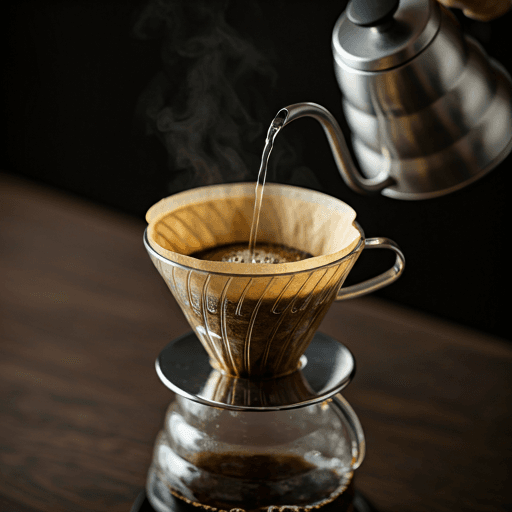
Here is how to make coffee, step by step: grind fresh beans, combine them with hot water in a brewer, let the water extract the flavour, then separate the grounds from the liquid. Almost every method follows that same shape — the differences are mostly grind size, water contact time, and ratio. Once you understand four fundamentals, you can brew a good cup with any tool in your kitchen.
This is a beginner's master guide. We will cover the core ideas first, then take a quick tour of the main methods and point you to the deep-dive guide for each one.
How to make coffee: the four fundamentals
If you are wondering how do I make coffee that actually tastes good, the answer almost always comes down to these four levers. Get them roughly right and any brewer will reward you.
1. The ratio (the single most important number)
Coffee-to-water ratio is the amount of ground coffee compared to the amount of water. It is written like 1:16, meaning one gram of coffee for every sixteen grams (or millilitres) of water. The widely used "golden ratio" sits between 1:16 and 1:18. The Specialty Coffee Association's Golden Cup standard centres on around 55 grams of coffee per litre of water (close to 1:18), with a little room either side.
- Start at 1:16 for a fuller cup, or 1:17–1:18 for a lighter, more tea-like cup.
- Too weak or sour? Use more coffee (move toward 1:15).
- Too strong or bitter? Use less coffee (move toward 1:18).
A simple, scale-free starting point: about two level tablespoons of ground coffee per cup (roughly 240 ml) of water. A cheap kitchen scale makes this far more repeatable, and weighing is the fastest way to fix a cup you do not like.
2. Grind size (matched to the method)
Grind size controls how fast water pulls flavour out of the coffee. Finer grounds slow the water down and extract more; coarser grounds let water through faster and extract less. The trick is matching the grind to how long your method keeps water in contact with the coffee.
- Coarse (like coarse sea salt) — French press, cold brew.
- Medium (like granulated sugar) — drip machines, AeroPress.
- Medium-fine — pour-over cones such as the V60.
- Fine (between table salt and flour) — moka pot.
- Extra-fine (powdered-sugar texture) — espresso.
A burr grinder gives even grounds and the most consistent results, but you can grind to order in many ways. For the full size-by-method ladder, see our guide to how to grind coffee beans, and to choose a grinder read the coffee grinder guide.
3. Fresh beans, ground just before brewing
Coffee is freshest in the first few weeks after roasting and loses aroma quickly once ground. Buy whole beans, store them in an airtight container away from light and heat, and grind only what you need for that brew. If you want to understand what is in the bag, our explainers on Arabica coffee beans and coffee bean varieties are good next reads.
4. Water — temperature and quality
Coffee is about 98% water, so water matters more than people expect. Aim for water just off the boil, around 90–96°C (195–205°F). Boiling water straight off a rolling boil can scorch the grounds and add bitterness; water that is too cool brews flat and sour. Use clean, fresh water that tastes good on its own — heavily chlorinated or very hard water dulls the flavour. An electric kettle, ideally one with a temperature setting, makes this easy; see the electric kettle guide.
How can I make a coffee? A quick tour of the main methods
So how can I make a coffee with what I have? Below is a short survey of the most popular brewers, what each one tastes like, and where to learn the full technique. Pick the one that matches your kitchen and the cup you want.
| Method | Grind | Roughly how long | What you get |
|---|---|---|---|
| French press | Coarse | 4 min steep | Full-bodied, rich, a little sediment |
| Pour-over (V60) | Medium-fine | 2.5–3.5 min | Clean, bright, aromatic |
| Drip machine | Medium | Hands-off | Easy, consistent, great for a crowd |
| AeroPress | Medium / medium-fine | ~1.5–2 min | Smooth, low-acid, forgiving |
| Moka pot | Fine | ~5 min on the hob | Strong, espresso-like, intense |
French press (immersion)
Coffee steeps directly in hot water, then a mesh plunger separates the grounds. It is forgiving and needs no filters or electricity — just coarse coffee, hot water, and a four-minute wait. Great if you like a heavier, fuller cup. Full method in the French press guide.
Pour-over / V60 (drip by hand)
You pour hot water over a bed of medium-fine coffee in a cone-shaped filter, controlling the flow yourself. It rewards a little practice with a clean, bright, aromatic cup that shows off a good single-origin bean. Learn the pour in how to brew with a V60.
Automatic drip machine
The most hands-off route: add medium-ground coffee and water, press a button, and the machine does the rest. It is the easiest way to brew several cups at once and the workhorse of most kitchens. See the drip coffee maker guide.
AeroPress (pressure-assisted immersion)
A compact plunger device that steeps coffee briefly, then pushes it through a paper filter with gentle pressure. It is fast, easy to clean, very forgiving of grind inconsistency, and produces a smooth, low-acid cup. Details in the AeroPress guide.
Moka pot (stovetop)
The classic Bialetti-style stovetop "moka" pushes pressurised steam up through fine coffee for a strong, espresso-like brew without a machine. It is a kitchen icon across much of the world. Full walkthrough in how to use a moka pot.
A simple step-by-step you can use today
Here is a beginner-proof routine using a French press, the most forgiving starting point. Adapt the same logic to any brewer.
- Boil the kettle and let it sit for about 30 seconds so it drops to roughly 92–95°C.
- Weigh or measure your coffee. For a single mug, use about 15 g of coffee to 250 g of water (1:16). Grind it coarse.
- Add the grounds to the press and pour in the hot water, making sure every ground is wet.
- Stir gently once, pop the lid on (do not plunge yet), and set a timer for 4 minutes.
- Plunge slowly and steadily when the timer goes, then pour straight away so it does not keep extracting.
- Taste. Sour or weak? Grind a touch finer or add more coffee next time. Bitter or harsh? Grind coarser or use a little less coffee.
Common beginner mistakes (and easy fixes)
- Using stale, pre-ground coffee. Switch to whole beans ground fresh — this is the single biggest upgrade most people can make.
- Guessing the amount. Eyeballing scoops gives a different cup every time. A scale fixes it instantly.
- Pouring boiling water. Let the kettle rest 30 seconds off the boil.
- Wrong grind for the method. Coarse for French press, fine for moka pot — mismatches cause most "bad" coffee.
- Letting it sit on a hot plate. Coffee keeps cooking and turns bitter; brew fresh, or decant into a flask.
Where to go from here
Making good coffee at home is really just four habits — a sensible ratio, the right grind, fresh beans, and clean water just off the boil — applied through whichever brewer you enjoy. Start with one method, dial it in until you love the cup, and only then branch out. When you are ready to explore drinks beyond a plain brew, browse types of coffee drinks or wander over to our coffee hub. And if tea is calling too, the companion how to make tea guide gives the same friendly, fundamentals-first treatment.