
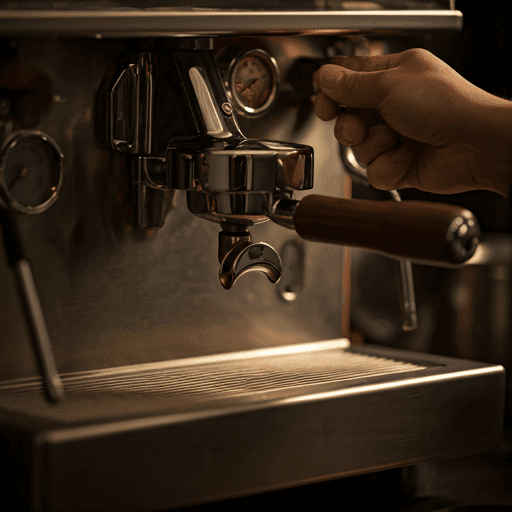
A cafe is a casual, public place where people go to drink coffee or tea, eat light food and spend unhurried time alone or together. The word comes from the French cafe, which means both the drink (coffee) and the place that serves it. So the simplest cafe meaning is a coffee place that also welcomes you to sit, talk, read or work — not just buy a cup and leave.
That sounds obvious, but the idea behind it is surprisingly old and surprisingly important. For more than four centuries, the cafe has been one of the few public rooms where strangers could share a table, swap news and argue ideas over a cheap drink. This guide explains what a cafe is, where the word comes from, how a cafe differs from a coffee shop or a coffeehouse, and how cafe culture grew into the global ritual it is today.
What is a cafe, exactly?
At its core, a cafe is a small hospitality business built around hot drinks and a relaxed atmosphere. The fixtures are familiar almost everywhere: a counter, an espresso machine or a row of brewers, a pastry case, a few tables, and the unspoken permission to stay a while. A cafe usually serves coffee, tea, and a light menu — pastries, sandwiches, cakes, sometimes a proper breakfast or lunch — but the drink and the room are the point.
What separates a cafe from a restaurant or a bar is its rhythm. You can drop in for two minutes or two hours. You can come to meet a friend, to read, to work on a laptop, to people-watch, or simply to not be at home. The Viennese, who built one of the world's most famous cafe traditions, describe their coffee houses as places "where time and space are consumed, but only the coffee is found on the bill." That line captures the whole idea: you are paying for a drink, but what you are really buying is a seat in public life.
What a typical cafe offers
- Coffee drinks — espresso and milk drinks like the cappuccino, latte and flat white, plus filter or drip coffee, cold brew and iced options.
- Tea — black, green and herbal teas, and increasingly chai and matcha lattes.
- Food — pastries, cakes, toast and light meals, ranging from a single croissant to a full brunch menu.
- A place to be — tables, Wi-Fi, power outlets and an atmosphere designed for staying, not just for takeaway.
Where the word "cafe" comes from
The etymology runs straight through the history of coffee itself. The Arabic word qahwa gave rise to the Turkish kahve and the Italian caffe, and from there came both the English word "coffee" and the French word cafe. Curiously, qahwa originally referred to a kind of wine; after wine was forbidden under Islam, the name shifted to the new stimulating drink that kept worshippers and scholars awake.
English speakers borrowed the French cafe in the late nineteenth century to name an establishment that served coffee. In British and American usage the accent is often dropped, so you will see "cafe" and "cafe" used interchangeably. The drink and the place share a name in many languages precisely because, historically, you could not easily have one without the other.
Cafe vs coffee shop vs coffeehouse
These three words overlap heavily, and in everyday speech people use them as synonyms. There are, however, useful shades of meaning — especially in the industry — that explain why a place calls itself one thing rather than another.
| Term | Main focus | Typical feel | Food |
|---|---|---|---|
| Cafe | Coffee or tea plus light dining; lingering | Casual, social, anywhere from cosy to elegant | Often a real menu — pastries, snacks, sometimes full meals |
| Coffee shop | Coffee craft first; the drink is the star | Modern, often quick or grab-and-go, can be specialty-focused | Small, designed to pair with coffee (a pastry, a cookie) |
| Coffeehouse | Gathering, conversation, community | Traditional, unhurried, often historic or literary | Varies, but the social space matters more than the food |
In practice, a coffee shop tends to put the coffee itself front and centre — good beans, careful extraction, food kept simple. A cafe is the broader term and usually implies a wider food offering and a stronger sit-and-stay culture. A coffeehouse is the oldest word of the three and carries the most history: it suggests a place built around community and conversation, the kind of room where ideas get exchanged. None of these definitions are strict. A cosy independent spot might call itself any of the three, and a chain might use "coffeehouse" purely for the romance of the word.
A short history of the cafe
The cafe was not invented in Europe. It came out of the coffeehouses of the Islamic world. Coffee drinking spread from Arabia through Egypt and Iran and into the Ottoman Empire during the sixteenth century. The first coffeehouses in Constantinople (modern Istanbul) opened around the 1550s, and they became something genuinely new: the first non-religious public spaces where ordinary city dwellers could gather, talk, play games, listen to music and trade news. They were nicknamed places of social and intellectual life long before Europe had anything like them.
From the Ottoman lands the idea travelled west. The first coffeehouse in Western Europe is generally dated to Venice in 1629, and the format then spread quickly through the 1600s to cities like Oxford, London, Paris and Vienna. In London, early coffeehouses earned the nickname "penny universities," because for the price of a penny — the cost of a cup of coffee — anyone could sit in on the debates, hear the latest news and learn from the conversation around them. They became engines of commerce, journalism and Enlightenment thought; some famous institutions, including insurance markets and learned societies, grew out of coffeehouse gatherings.
The coffeehouse gave Europe something it had lacked: a sober, public room where strangers of different ranks could meet as equals over an affordable drink.
Vienna and Paris: cafes as culture
Two cities turned the cafe into a cultural institution. In Vienna, the coffee house became a second living room for writers, artists, musicians and thinkers — a place to read newspapers on wooden holders, sit at marble-topped tables for hours and write whole books over a single cup. Viennese coffee house culture is so distinctive that it was added to Austria's national inventory of UNESCO Intangible Cultural Heritage in 2011. In Paris, the cafe became the stage for literary and philosophical life, the spot where writers and artists argued, watched the street and made the cafe terrace an icon of the city itself.
Cafe culture around the world
Today, almost every culture has its own version of the cafe, shaped by its own drinks and habits. The shared thread is the same one the Ottomans and the Viennese understood: a cafe is a "third place," a spot that is neither home nor work, where public life happens.
- Italy — the espresso bar, where a quick shot is often taken standing at the counter rather than sat down.
- Austria and central Europe — the grand coffee house, built for lingering, reading and conversation.
- France — the pavement cafe, with its terrace tables turned out toward the street.
- Australia and New Zealand — a celebrated specialty-coffee scene that helped popularise the flat white worldwide.
- East Asia — Japan's meticulous "slow coffee" tradition, plus a wave of design-led cafes across Seoul, Bangkok and Singapore.
- Modern specialty cafes everywhere — the "third wave" movement treats coffee like fine wine, with single-origin beans, careful roasting and minimalist, community-minded spaces.
The modern specialty or "third-wave" cafe deserves a note of its own. Beginning in the early 2000s, a new generation of roasters and baristas began treating coffee as a craft product worthy of the same attention as wine — sourcing beans from specific farms, roasting to highlight each origin, and brewing with precision. These cafes doubled as community hubs and workspaces, and their clean, minimalist look spread around the globe. You can read more about that shift in our guide to third-wave and aesthetic coffee shops, and explore the wider story of cafe life in our look at cafe culture.
What to order at a cafe
If you are new to cafes, the menu can look intimidating, but most of it is built from a few simple ideas: espresso, milk and water in different ratios, plus tea-based drinks. A short orientation:
| Drink | What it is |
|---|---|
| Espresso | A small, concentrated shot of coffee — the base of most cafe drinks |
| Americano | Espresso lengthened with hot water |
| Cappuccino | Espresso with steamed milk and a thick layer of foam |
| Latte | Espresso with lots of steamed milk and a thin foam cap |
| Flat white | Espresso with steamed milk and a thin, velvety microfoam |
| Filter / drip | Coffee brewed by passing hot water through ground beans |
| Tea, chai, matcha | Black, green and herbal teas, spiced chai and whisked matcha |
If you want the full menu decoded, our guide to types of coffee drinks walks through every cafe classic from cortado to mocha. Cost varies enormously by country, city and the kind of cafe you choose — a quick neighbourhood spot and a specialty roaster are very different propositions — so prices are best judged locally rather than by any single figure.
Why cafes still matter
For all the talk of takeaway cups and laptop tables, the cafe endures for the same reason it always has: it gives people a comfortable, low-cost place to be in public. It is where first dates happen, where writers write, where freelancers escape their flats, where friends catch up and where a stranger might strike up a conversation. The drink is the ticket in; the room is the real product. From a sixteenth-century coffeehouse in Constantinople to a minimalist specialty bar today, the cafe has always been, at heart, a place to think, talk and belong.
Ready to go deeper? Explore the drinks themselves in our coffee and tea hubs, learn what defines a great coffee shop or cafe, or start with the most beloved cafe order of all in our explainer on what a cappuccino is.