
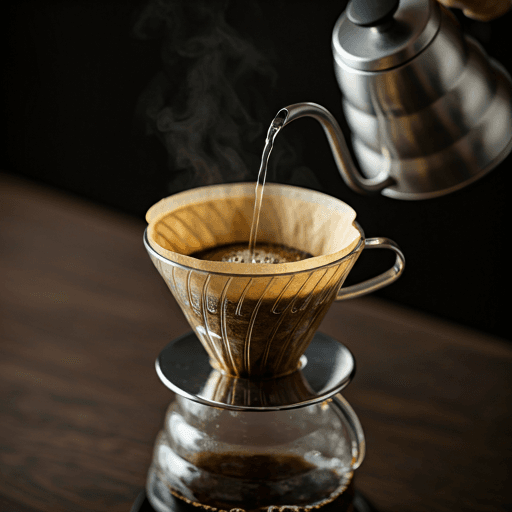
The best water temperature for coffee is roughly 90-96°C (195-205°F) — just off a rolling boil. That window is hot enough to pull sweetness, body and aroma out of the grounds, yet gentle enough that it will not scorch them into something bitter and ashy. Get this range right and almost every other part of brewing becomes easier to control.
Temperature is one of the quietest levers in coffee. Most people obsess over beans and grind, then pour boiling water straight onto the grounds and wonder why the cup tastes harsh. Below is the why and the how — the ideal range, the numbers by method, and how to land the right heat even without a thermometer.
What Is the Best Water Temperature for Coffee?
As a single figure, the best water temperature for coffee sits around 93°C (200°F), at the centre of that 90-96°C band. This is the range most specialty roasters, competition brewers and standards bodies converge on, because it dissolves the compounds you want — sugars, fruit acids, pleasant oils — before it starts dragging out the bitter, astringent ones. Water temperature is really a proxy for extraction: hotter water extracts faster and further, cooler water extracts slower and less.
The reason a range matters more than one magic number is that the ideal coffee brew temperature shifts slightly with your beans. A dark, oily roast is more soluble and can taste burnt near the top of the range, so it often shines a touch cooler (around 88-92°C). A dense, lightly roasted single origin resists extraction and usually wants the hotter end (94-96°C) to open up. Grind size, brew time and your coffee-to-water ratio all interact with heat, which is why dialing in one variable at a time is the sane way to improve a cup.
Too Hot: Over About 96°C
Water at or near a full boil (100°C / 212°F) over-extracts. It rips out the bitter, dry, ashy compounds along with the good ones, and it can literally scald delicate grounds. The tell-tale signs are a harsh, burnt edge, a drying astringency on the sides of your tongue, and a hollow finish. Pouring straight from a kettle the instant it clicks off is the most common cause of a bitter home brew.
Too Cool: Under About 90°C
Swing the other way and you under-extract. Below roughly 90°C the water simply cannot dissolve enough of the coffee, so the cup comes out sour, thin, weak and salty, with a sharp acidity that never resolves into sweetness. Under-extraction is easy to mistake for “not enough coffee,” but adding grounds rarely fixes it — raising the temperature usually does. This is also why a mug made with water that has sat and cooled too long tastes flat and lifeless.
Coffee Brew Temperature by Method
The target heat barely changes across brew styles — almost everything lives inside that 90-96°C window. What changes is how the water contacts the grounds and how long it stays there, so the practical sweet spot nudges up or down a little. Use the table below as a quick reference for coffee water temperature by method, then read the notes underneath.
| Brew method | Water temperature | Notes |
|---|---|---|
| Pour-over / drip | 90-96°C (195-205°F) | The classic specialty range; 93°C is a safe default. |
| French press | 93-96°C (200-205°F) | Full immersion loses a little heat, so aim slightly hotter. |
| AeroPress | 80-92°C (175-198°F) | Short contact tolerates cooler water; good for lighter cups. |
| Espresso | 90-96°C (195-205°F) at the group | The machine holds this; 92-94°C suits most blends. |
| Moka pot | Just below boiling | Start with pre-heated water to avoid a stewed, bitter brew. |
| Cold brew | Room temperature or cold | Uses long time, not heat, to extract. |
Pour-Over and Drip
Manual pour-over and automatic drip machines both live in the 90-96°C range, with 93°C a reliable default. Pour-over gives you the most control because you are handling the kettle yourself, which is exactly why a stable, well-poured stream matters so much; the technique itself is covered in our pour-over coffee guide. Cheaper drip machines are worth watching — many struggle to reach 90°C at all, which is a hidden reason a lot of countertop brewers taste weak and sour.
French Press
Because the grounds sit fully submerged and the glass or steel body draws heat away, French press works best a hair hotter, around 93-96°C. The long, gentle immersion is forgiving, so precision matters less here than with pour-over — but starting near a boil and letting it settle for a few seconds is still smarter than dumping in rolling water.
Espresso
For espresso the number that matters is the temperature at the group head, and quality machines hold roughly 90-96°C, with 92-94°C suiting most blends. Because espresso is so concentrated and fast, even a degree or two shifts the shot — hotter tends toward bitter and heavy, cooler toward sour and sharp. This is why temperature stability, not just peak heat, is a headline feature on serious espresso equipment.
Cold Brew: Time Instead of Heat
Cold brew is the exception that proves the rule. It skips heat entirely and steeps coarse grounds in cold or room-temperature water for 12-24 hours. Time replaces temperature as the extraction driver, which is why the result is smooth, low in acidity and mellow rather than bright. If you have ever wondered why the same beans taste so different iced-and-slow versus hot-and-fast, the brew temp for coffee is most of the answer.
How to Hit the Right Temperature Without a Thermometer
You do not need a fancy gooseneck with a built-in gauge to get this right, though a good kettle helps. The simplest trick works with any kettle:
- Bring the water to a full boil, then take it off the heat. Boiling first guarantees a known starting point.
- Let it rest for about 30-45 seconds. In that short pause an open kettle sheds a surprising amount of heat, landing you in the mid-90s Celsius.
- Roughly a minute off the boil lands around 90-95°C in a typical kitchen — right in the target zone. In a cold room or with a metal kettle it cools faster, so lean toward the shorter wait.
A rough visual cue: water at a rolling, noisy boil is too hot; water that has just gone quiet, with only a few small bubbles and a wisp of steam, is about right. If you brew often and want to stop guessing, a variable temperature-control kettle lets you dial an exact figure and hold it, which removes the timing game entirely. Either way the goal is the same target every time — consistency is what turns a lucky good cup into a repeatable one.
Why Water Quality Matters as Much as Temperature
Coffee is about 98% water, so what you heat matters as much as how hot you heat it. Water that is too hard (heavy in minerals) can leave scale, mute flavour and clog machines; water that is too soft or distilled extracts poorly and tastes flat, because a little dissolved mineral content actually helps pull flavour from the grounds. The sweet spot is clean, filtered water with balanced minerals — roughly the character of decent, not-too-hard tap water run through a basic filter.
Chlorine and off-odours are the other quiet killers; if your tap water smells of anything, your coffee will taste of it too. A simple carbon filter usually fixes both taste and odour. You do not need lab-grade brewing water to enjoy a great cup, but pairing balanced, filtered water with the right coffee brew temperature is the combination that does the most work for the least effort.
Putting It Together
If you remember one thing, make it this: aim for 90-96°C, keep water off a rolling boil, and let a freshly boiled kettle rest for half a minute before you pour. That single habit fixes more bitter-and-burnt or sour-and-weak home brews than any gadget. From there, the finer craft — ratio, grind and pour — is covered in the basics of how to make coffee. Dial in the water temperature for coffee first, and everything else has room to shine.