
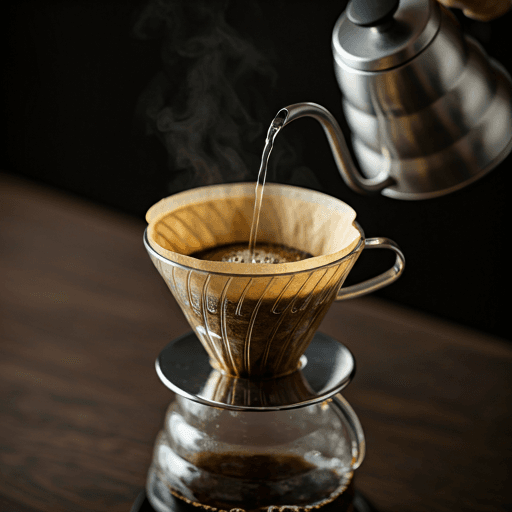
Cold brew concentrate is a strong, undiluted cold brew coffee brewed with a high coffee-to-water ratio and designed to be cut with water, milk, or ice before you drink it. Think of it as a coffee base rather than a finished cup: one batch stretches into many servings, keeps for days in the refrigerator, and lets you dial each glass to your own taste. Sipping it straight is possible, but most people find it intense and a little syrupy on its own.
If you have ever made a jug of cold brew and found it either watery or overpoweringly strong, concentrate is the fix. You brew deliberately strong, then dilute on demand. That one decision changes how much fridge space you need, how long the coffee stays fresh, and how many different drinks you can build from a single steep.
What Is Cold Brew Concentrate?
Cold brew concentrate is simply cold brew taken to a higher strength. All cold brew is made by steeping coarsely ground coffee in cold or room-temperature water for many hours, never with heat. Concentrate is not a different drink or a different method, just a stronger steep. The thing that separates it from a ready-to-drink batch is the ratio of coffee to water: concentrate uses far more coffee per unit of water, so the finished liquid is dense, dark, and meant to be diluted before it reaches your glass.
As a rough guide, concentrate is brewed somewhere around 1:4 to 1:8 coffee to water by weight, while a ready-to-drink cold brew that you pour and sip as-is usually lands around 1:8 to 1:16. Those numbers are flexible and shift with your beans, grind, and steep time, so treat them as starting points rather than rules. For the underlying definition of the drink, see our explainer on what cold brew coffee is, and for a deeper look at strength, our guide to the cold brew coffee ratio breaks the math down.
Because the extraction happens slowly and without heat, cold brew of any strength tends to taste smooth, low in acidity, and gently sweet compared with hot-brewed iced coffee. Concentrate keeps those traits but delivers them in a much smaller volume, which is exactly why it is so handy to keep on hand.
Why Make Concentrated Cold Brew?
The appeal of concentrated cold brew comes down to three practical wins.
- It saves space. A small jar of concentrate can hold the equivalent of many full glasses of coffee. If your refrigerator is crowded, a compact bottle beats a bulky pitcher of finished drink.
- It lasts longer. Undiluted concentrate generally keeps better and fresher than pre-diluted cold brew, because there is less water sitting in contact with the coffee. More on shelf life below.
- It is flexible. This is the big one. With concentrate on hand you can pour a quick black iced coffee, build a rich iced latte, sweeten and spice a slow evening drink, or add a splash to a cocktail, all from the same jar and each diluted differently to taste.
In short, ready-to-drink cold brew is a finished product, while concentrate behaves more like a versatile ingredient you reach for and adapt.
How to Dilute Cold Brew Concentrate
The most common starting point is roughly 1:1: one part concentrate to one part water, milk, or a milk alternative, poured over ice. From there, adjust to taste. If it drinks too strong or bitter, add more water; if it tastes thin and washed out, add less. Ice melts as you sip and dilutes the drink further, so many people mix a touch stronger than 1:1 to keep the last mouthfuls from going watery.
A few pointers help:
- Stir or shake after diluting, because concentrate is dense and can settle.
- For milk drinks, cut it with cold or steamed milk instead of water for a creamier iced latte.
- Remember that a concentrate ratio also concentrates the caffeine, so a small undiluted pour packs a punch; start with more dilution than you think you need and taste as you go.
The table below shows how concentrate and ready-to-drink cold brew compare, and roughly how to serve each.
| Style | Typical coffee-to-water ratio | How to serve |
|---|---|---|
| Cold brew concentrate | ~1:4 to ~1:8 | Dilute about 1:1 with water, milk, or ice before drinking |
| Ready-to-drink cold brew | ~1:8 to ~1:16 | Pour over ice and drink as-is |
| Undiluted "shot" of concentrate | Same concentrate, straight | Small pour added to cocktails, desserts, or a glass of milk |
How to Make Cold Brew Concentrate
The method is the same gentle steep used for any cold brew, just at a higher coffee-to-water ratio. In outline:
- Grind coffee coarse, roughly the texture of raw sugar or coarse breadcrumbs, so the brew does not turn muddy.
- Combine the grounds and cold or room-temperature water at a concentrate ratio, starting near 1:5 by weight if you are unsure.
- Steep for about 12 to 24 hours, in the refrigerator for a cleaner, milder result or at room temperature for a slightly faster, bolder one.
- Filter out the grounds through a fine mesh, cloth, or paper filter, twice if you want a clearer cup.
That is the short version. For a full, step-by-step walkthrough with troubleshooting, follow our dedicated guide on how to make cold brew coffee, then simply brew at a stronger ratio to finish with concentrate rather than a ready-to-drink batch. Everything else about the process stays the same.
Storage and Shelf Life
Kept in a sealed container in the refrigerator, cold brew concentrate typically stays good for around one to two weeks, noticeably longer than diluted cold brew, which is best within a few days. The higher strength and lower water content are part of why concentrate holds up: with less water in the mix, the coffee is slower to taste flat and stale.
Flavor does fade over time even while the coffee is still safe to drink, so trust your senses. The brightest, most balanced flavor is in the first several days. Store it away from strong-smelling foods so it does not pick up odors, keep the lid tight, and give an older batch a sniff and a small taste before you commit to it. A useful habit is to dilute only what you plan to drink and keep the rest as concentrate, which stretches its useful life.
Ways to Use Cold Brew Concentrate
The flexibility of concentrate is where it earns its place in the fridge.
- Iced coffee and iced lattes. Dilute with water for a black iced coffee, or with milk for an iced latte. Top it with cold foam for a cafe-style finish.
- Quick coffee "shots". A small undiluted pour adds a coffee kick to a glass of milk or a smoothie without watering it down.
- Cocktails and mixed drinks. Concentrate carries coffee flavor into a glass without adding much liquid, so it slots neatly into coffee cocktails and slow evening drinks.
- Desserts. Spoon it over ice cream for an affogato-style treat, stir it into milkshakes, or use it to flavor whipped toppings and baked goods.
- Hot coffee in a pinch. Dilute concentrate with hot water for a fast, low-acid hot cup, though it will taste different from freshly brewed hot coffee.
Concentrate or Ready-to-Drink: Which Should You Brew?
If you drink your cold brew the same way every day and have the fridge space, a ready-to-drink batch is the simplest choice, because there is nothing to measure or dilute. If you want fewer trips to the brewer, longer keeping time, and the freedom to make a different drink each time, concentrate wins. Many home brewers settle on concentrate precisely because it behaves like a pantry staple: brew once, then decide drink by drink how strong and how large you want each cup.
Whichever route you take, the fundamentals do not change, patient steeping, a coarse grind, and good coffee. Get comfortable with strength by tasting as you dilute, and you will quickly land on the ratio that suits your own palate, whether that means a bold, near-espresso intensity or a long, easygoing glass over ice.