
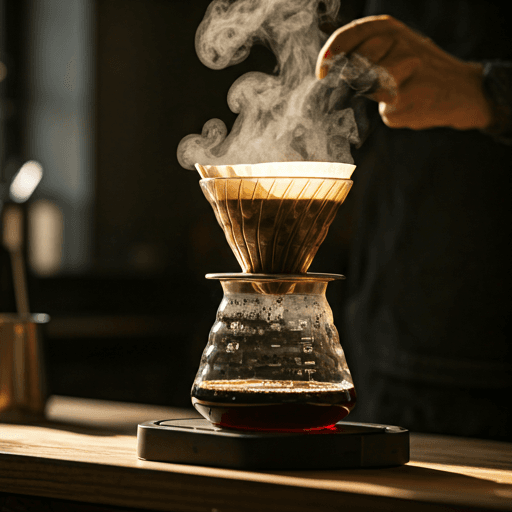
Cold brew is coffee made by steeping coarse grounds in cold or room-temperature water for a long time, usually 12 to 24 hours, and then filtering out the grounds. There is no heat at any stage. That slow, cool extraction is the whole trick: it pulls out the sweet, chocolatey, low-acid flavors while leaving behind much of the sharp, bitter, and sour compounds that hot water draws out quickly. The result is a smooth, mellow, naturally sweeter coffee that most people drink cold.
The word that trips people up is "cold." Cold brew does not mean cold coffee in general, and it does not mean iced coffee. It refers to one specific method defined by temperature and time. Get that distinction clear and the rest of the category falls into place.
What is cold brew, exactly?
Cold brew starts with coarsely ground coffee, similar to the grind you would use for a French press. The grounds soak in cool water for many hours, typically somewhere between 12 and 24. Because cold water extracts coffee far more slowly than hot water, the long contact time is what makes a strong, balanced brew possible. Steep too briefly and the cup is weak and watery; steep within that window and you get full flavor without the harshness.
When the steep is done, you separate the liquid from the spent grounds, usually through a paper filter, a fine mesh, or a dedicated cold brew vessel. What you are left with is often not a ready-to-drink cup but a concentrate. We will come back to that, because it is one of the most misunderstood parts of cold brew coffee.
Why slow, cold extraction tastes different
Heat speeds up chemistry. When hot water hits coffee, it rapidly dissolves oils, acids, and bitter compounds all at once. That is great for a fast cup, but it also extracts the sharp notes. Cold water works gently and selectively over hours, favoring the sugars and smooth flavors while leaving many of the acidic and bitter molecules behind.
This is why cold brew is famous for being low in acidity. Research comparing the two methods has found that cold brew tends to have a higher pH and lower titratable acidity than the same coffee brewed hot, which is part of why it tastes rounder and less sour. Many drinkers with sensitive stomachs prefer it for exactly this reason. It also tends to taste naturally sweeter, so a lot of people enjoy it with little or no added sugar.
Cold brew vs iced coffee vs cold coffee
This is where most confusion lives, so here is the clean version. "Cold coffee" is the umbrella term for the whole category of chilled coffee drinks. Within it, cold brew and iced coffee are two distinct things made in completely different ways.
- Cold brew is brewed cold from the start: coarse grounds steeped in cool water for 12 to 24 hours, then filtered. Smooth, low-acid, often a concentrate.
- Iced coffee is brewed hot, the normal way, and then chilled or poured over ice. It keeps the brighter, more acidic profile of hot coffee. It is also far faster to make.
- A frappe (or a blended frappuccino-style drink) is a different animal entirely: coffee, ice, and usually milk and sugar whipped or blended into a thick, frothy, dessert-like drink.
| Feature | Cold brew | Iced coffee | Cold coffee (category) |
|---|---|---|---|
| How it is made | Steeped cold, 12-24 hours | Brewed hot, then chilled | Any chilled coffee drink |
| Brew time | Many hours | Minutes | Varies |
| Acidity | Low, smooth | Brighter, more acidic | Varies |
| Taste | Mellow, naturally sweeter | Closer to hot coffee, chilled | Anything from black to blended |
| Often served as | Concentrate, diluted to taste | Ready to drink over ice | Black, milky, or blended |
| Typical caffeine | Can be high (concentrated) | Moderate | Depends on the drink |
If you want the deep dive on the whole chilled category, see our pillar on what cold coffee is, and for the hot-brewed-then-chilled side, read what iced coffee is. They are siblings, not synonyms.
Cold brew is usually a concentrate
Here is a fact that surprises newcomers: a lot of cold brew, especially the kind sold in bottles or made with a high coffee-to-water ratio, is a concentrate. It is not meant to be sipped straight from the steeping vessel. You dilute it to taste with water, milk, or a milk alternative, often roughly one part concentrate to one part liquid, though that is a starting point, not a rule.
This matters for two reasons. First, it explains why homemade cold brew can taste shockingly strong if you drink it undiluted. Second, it is why cold brew has a reputation for being high in caffeine. The concentrate packs a lot of coffee into a small volume, so an undiluted or lightly diluted serving can carry more caffeine than a regular cup. The long steep also pulls out plenty of caffeine, so diluting to taste is what brings a serving back to a more typical strength.
What about nitro cold brew?
Nitro cold brew is plain cold brew that has been infused with nitrogen gas and served on tap, like a stout beer. The nitrogen creates a cascade of tiny bubbles and a creamy, velvety texture with a foamy head, no milk required. It often tastes slightly sweeter and smoother than still cold brew and is usually served straight from the tap without ice. It is the same cold-steeped coffee underneath; the nitrogen is a finishing flourish, not a different brewing method.
How cold brew is served
Once you have your cold brew, the serving options are wide open:
- Black over ice. Dilute the concentrate with cold water, pour over ice, and drink it as is. The low acidity shines here.
- With milk or cream. Cut it with dairy or a plant milk for a smoother, cafe-style drink.
- Sweetened or flavored. Add a simple syrup, vanilla, or a splash of cream. Because cold brew is already mellow, a little goes a long way.
- Nitro. Served creamy and foamy from a tap, usually without ice.
One practical bonus: cold brew concentrate keeps well in the fridge for several days, so a single batch can fuel a week of quick drinks. That makes it a favorite for people who want good iced coffee at home without brewing every morning.
Should you make it or buy it?
Cold brew is one of the easiest coffee methods to do at home because it forgives almost everything except time. You do not need special gear, just a jar, coarse grounds, water, patience, and a filter. The only real commitment is planning ahead, since it takes the better part of a day. When you are ready to try it, follow our step-by-step recipe on how to make cold brew coffee, which covers ratios and timing in detail.
Prefer to let someone else do the steeping? Plenty of cafes and roasters make excellent cold brew and nitro on tap. To track some down wherever you are, use our finder for cold brew and iced coffee near you.
The bottom line
Cold brew is defined by its method, not its temperature when you drink it: coarse coffee, cold water, a long slow steep, and a filter. That process delivers a smooth, low-acid, naturally sweet concentrate that you dilute and serve however you like, from black over ice to creamy nitro on tap. Once you understand that it is a brewing technique rather than just "cold coffee," the whole iced category gets a lot easier to navigate. Keep exploring the difference between this and its hot-brewed cousin, and you will always know exactly what is in your glass.