
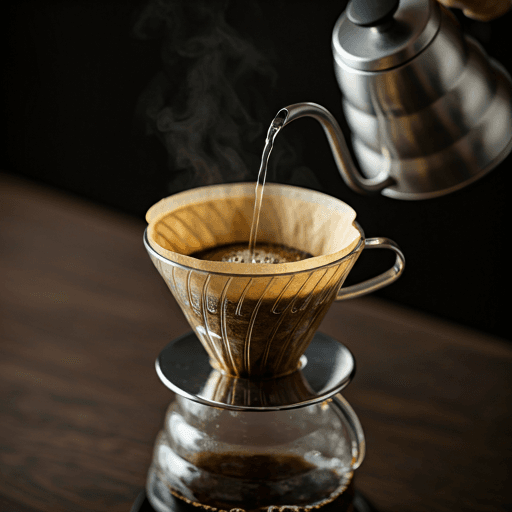
Bite into a slice of toast, sear a steak, or brew a cup of freshly roasted coffee and you are tasting variations on the same chemistry: a family of heat-driven reactions between amino acids and sugars that food scientists group under a single name. In coffee roasting, this browning chemistry is the engine that turns a grassy, bean-like green seed into something aromatic, sweet, and deeply brown. Much of what we recognize as "roasted coffee" — the color, the weight on the palate, the toasty and caramel-like aromas — is built during this stage.
Roasters talk about it constantly, often in shorthand as the "Maillard phase" of a roast. Understanding what is happening in those minutes helps explain why two roasters can take the same green coffee to a similar color yet end up with cups that taste worlds apart. This guide walks through the science in plain terms: where the reaction sits in a roast, how it differs from caramelization, and how roasters steer it to shape sweetness, body, and complexity.
What the Maillard reaction actually is
The Maillard reaction is named after Louis-Camille Maillard, a French physician and chemist who described it in a series of papers around 1912 while investigating how amino acids and sugars behave when heated together. He was not studying coffee — his interest was in how proteins form — but the browning chemistry he documented turned out to underpin flavor across an enormous range of cooked and roasted foods, from bread crust to seared meat to the beans in your grinder.
At its core, the reaction is an interaction between reducing sugars (such as glucose and fructose) and amino acids (the building blocks of proteins), driven by heat. It is not a single tidy step but a cascade. The sugar and amino group first join and rearrange — a stage known as the Amadori rearrangement — then branch down several pathways that generate hundreds of new molecules. A related side route, Strecker degradation, breaks amino acids down further, releasing carbon dioxide and producing some especially potent aroma compounds. The upshot is a moving target of color and flavor rather than one fixed product.
Green coffee happens to carry exactly the raw ingredients this chemistry needs: proteins and free amino acids on one side, sugars on the other. Apply enough heat over enough time and the reactions proceed on their own. For the wider picture of how heat transforms the bean from start to finish, see our overview of what happens during coffee roasting.
Where the Maillard phase sits in a roast
A roast is often described in three loose stages: a drying phase, a browning or Maillard phase, and a development phase after first crack. Early on, the bean sheds most of its moisture and stays green to yellow. As it dries and the temperature climbs, browning accelerates and the bean shifts from yellow through tan to brown — the stretch roasters call the Maillard phase, running from roughly the end of drying up to first crack and into the development stage.
Any temperature figures here are best treated as a continuum rather than hard thresholds. Browning is commonly described as becoming vigorous once bean temperature reaches somewhere around 140–165°C (roughly 285–330°F), intensifying as the roast continues toward first crack near 196–205°C (around 385–400°F). The exact numbers depend on the bean, the roaster, how temperature is measured, and how fast heat is applied, so treat them as a rough window rather than a recipe. What is dependable is the sequence: drying first, then browning, then the audible pop of first crack.
Melanoidins, color, body, and aroma
The most visible product of the Maillard reaction is a class of large brown polymer molecules called melanoidins. They are responsible for much of the brown color that deepens as a roast progresses, which is why color is such a useful — if imperfect — proxy for roast degree; our guide to roast levels covers that spectrum in detail. Melanoidins also add weight and texture to the brewed cup, contributing to perceived body and mouthfeel, and they carry some of coffee's antioxidant content.
Where the aromas come from
Just as important as color are the volatile aroma compounds the reaction throws off — a large and varied set of molecules described with words like malty, bready, nutty, toasty, chocolatey, and caramel-like. These are central to the smell and flavor we identify as roasted coffee; strip them away and coffee would taste closer to a boiled bean. Many of the roasty and sweet-aromatic notes you find on a coffee flavor wheel trace back to this chemistry. For more on how those volatiles reach your nose and shape what you "taste," see our guide to coffee aroma.
Maillard reaction vs. caramelization
The two are frequently lumped together, but they are different chemistry. Caramelization is the thermal breakdown of sugars alone — no amino group is involved. When sugars are heated hard enough, they fragment and recombine into their own brown, sweet-aromatic compounds. The Maillard reaction, by contrast, requires both a reducing sugar and an amino acid, and it tends to get going at lower temperatures than caramelization does.
| Feature | Maillard reaction | Caramelization |
|---|---|---|
| Reactants | Reducing sugars plus amino acids | Sugars only |
| Onset | Lower — browning begins earlier | Higher — needs more heat |
| Main products | Melanoidins and a wide range of aroma compounds | Caramel-type color and sweet-aromatic notes |
| Flavor character | Complex: nutty, malty, roasty, savory | Simpler, sweeter, toffee-like |
In a real roast, the two overlap rather than taking strict turns. Browning chemistry dominates the middle of the roast, and as temperatures rise toward and past first crack, sugar caramelization and further breakdown contribute too. Both add color and both add flavor; they are simply different routes to getting there. Treating them as rival "phases" oversimplifies what is really a gradual handoff.
Managing the length of the Maillard phase
Because so much color and flavor is built during browning, roasters pay close attention to how long the Maillard phase lasts and how quickly heat is applied through it. A common lever is the rate of rise — how fast bean temperature is climbing — which a roaster raises or lowers to compress or stretch this section of the roast.
Push through too fast and there may not be enough time for sweetness and body to develop, leaving a cup that can taste sharp, grassy, or thin. Drag it out too long, or apply too little heat, and the coffee can turn flat, dull, and bready with muted aromatics — a fault roasters often call baking. Somewhere in between, a well-judged browning phase builds sweetness, rounds out body, and layers in complexity.
Because these reactions consume acids and generate new compounds, the length of the Maillard phase also shifts perceived acidity and sweetness in the cup. That is why it is treated as central to overall roast development rather than a mere warm-up: small changes to how a roaster moves through browning can pull a coffee toward brighter and more delicate or toward rounder and heavier. There is no single correct duration — it is a balance dialed in for each coffee and each intended style.
Frequently asked questions
What is the Maillard reaction in coffee roasting?
It is the heat-driven browning reaction between amino acids and reducing sugars that dominates the middle stage of a roast, after drying and before first crack. It produces melanoidins, which give roasted coffee its brown color and much of its body, along with a large array of aroma compounds that define roasted flavor.
How is the Maillard reaction different from caramelization?
The Maillard reaction needs both a reducing sugar and an amino acid, while caramelization is the thermal breakdown of sugars alone, with no amino group involved. Maillard browning tends to begin at lower temperatures and yields more complex, nutty-to-savory flavors; caramelization needs more heat and leans sweeter and more toffee-like. In a roast the two overlap rather than happening strictly in turn.
At what temperature does the Maillard reaction occur in coffee?
There is no single trigger temperature; it is best thought of as a continuum. Browning is commonly described as becoming vigorous once bean temperature reaches somewhere around 140–165°C (about 285–330°F) and intensifying toward first crack near 196–205°C. Exact figures vary with the bean, the roaster, and how temperature is measured, so treat them as a rough window.
What are melanoidins?
Melanoidins are the large brown polymer molecules formed by the Maillard reaction. They account for much of the brown color that deepens as a roast progresses and contribute to the body and texture of the brewed cup. They are also associated with part of coffee's antioxidant content.
Why does the length of the Maillard phase matter?
Because so much sweetness, body, and aromatic complexity is built during browning, the time a coffee spends in this phase strongly shapes the cup. Rush it and coffee can taste sharp, grassy, or thin; drag it out and it can turn flat or bready. Roasters adjust heat and rate of rise to find a balance suited to each coffee.