
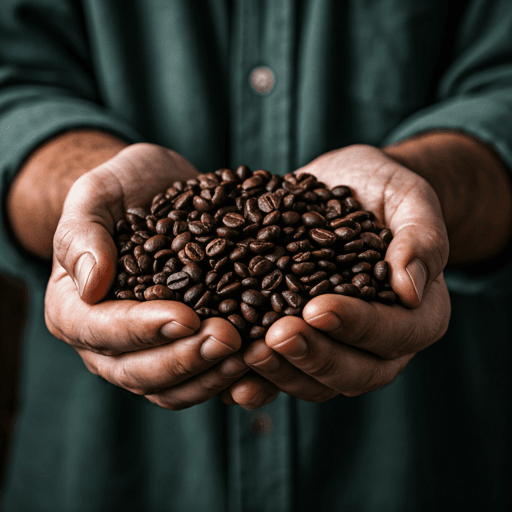
The coffee flavor wheel is a circular tasting chart that helps you put words to what you taste in a cup. It starts with broad flavor families — fruity, nutty, chocolatey, floral — at the center and fans outward to ever more specific notes, like blueberry, hazelnut, or jasmine, at the rim. The best-known version comes from the Specialty Coffee Association (SCA) working with World Coffee Research, and its whole job is to give tasters a shared vocabulary so that one person's vague "this is fruity" can become a note everyone recognizes.
If you have ever picked up a bag that promised "notes of cherry and dark chocolate" and wondered whether anyone actually tastes that, the wheel is where those words come from. It is less a rulebook than a menu of possibilities — a map you use to travel from a fuzzy first impression to a precise description.
What the coffee flavor wheel is (and where it comes from)
Think of the wheel as a shared tasting map. Rather than everyone inventing their own language for a coffee, the flavor wheel lays out an agreed set of descriptors arranged in rings, so a roaster in one country and a drinker in another can compare notes and mean roughly the same thing.
The original coffee tasting wheel was published by the trade body now known as the SCA back in the mid-1990s. In 2016 it was redrawn from scratch alongside World Coffee Research, this time built on a formal Sensory Lexicon — a reference list of flavors that trained panels calibrated against real, tastable samples. That is why the modern wheel feels rigorous rather than poetic: each descriptor traces back to something you can actually smell and taste, not just a nice-sounding word. The chart is freely available, and you will see printouts of it pinned up in roasteries and coffee bars everywhere.
How to read the coffee flavor wheel
The single most useful thing to know about how to read the coffee flavor wheel is this: work from the center outward. The middle holds nine broad families. As you move toward the rim, each family branches into sub-groups and then into very specific descriptors.
- Center ring — the big families (for example "fruity" or "nutty/cocoa"). This is where almost everyone can land on their first sip.
- Middle ring — a step more specific. "Fruity" splits into berry, dried fruit, citrus fruit, and so on.
- Outer rim — the precise notes: blueberry, raisin, lemon, jasmine, hazelnut, brown sugar.
The wheel is also color-coded, so families read at a glance, and the wedges are spaced to hint at how related the flavors are — descriptors that trained tasters found similar sit closer together. You do not need to memorize any of that. You just need the habit of starting broad and narrowing down, one ring at a time.
The main flavor families
The modern wheel is anchored by nine families. Here is a quick decoder of each one, with example notes and the kind of thing that tends to drive that character in the bean.
| Flavor family | Example notes | What often drives it |
|---|---|---|
| Fruity | Blueberry, cherry, raisin, lemon, apple | Origin and variety; high-grown and washed lots often read cleaner and brighter |
| Floral | Jasmine, rose, chamomile, black tea | Certain varieties and delicate light roasts; prized in some East African coffees |
| Sweet | Brown sugar, honey, caramel, vanilla | Ripe cherries and balanced roasting; a sign of good development |
| Nutty / Cocoa | Almond, hazelnut, peanut, chocolate, cocoa | Common in medium roasts; a comforting, familiar backbone |
| Spices | Cinnamon, clove, nutmeg, pepper | Variety and processing; often more noticeable in medium-to-dark roasts |
| Roasted | Toast, tobacco, smoky, burnt | Darker roast levels push a coffee toward this side |
| Green / Vegetative | Fresh grass, hay, herb-like, peapod | Underripe beans or under-roasting; usually a flaw when strong |
| Sour / Fermented | Winey, overripe, boozy, vinegary | Natural or fermented processing in small doses; excess is a defect |
| Other | Papery, chemical, rubbery, medicinal | Storage issues, staleness, or off-flavors — the notes you hope to avoid |
Notice that a few families — green/vegetative, sour/fermented, and "other" — are mostly there so you can name faults. A little fruity ferment can be lovely; a lot usually means something went wrong. The wheel gives you words for both the delights and the defects.
How to use the coffee flavor wheel while you taste
Using the wheel is a three-move loop, and it gets faster with practice:
- Sip and pay attention. Slurp a little air in with the coffee so it sprays across your palate. Much of "flavor" is actually smell picked up through the back of the throat — the same retronasal path we lean on when tasting anything. If you want to go deeper on that side, see our guide to coffee and aroma.
- Ask the broad question first. "Overall, what is this?" Fruity? Chocolatey? Floral? You are only trying to land in the right family in the center of the wheel. Do not reach for "wild strawberry" on sip one.
- Narrow down. If it read fruity, was it berry or citrus? If berry, more like blueberry or blackcurrant? Follow the ring outward until the word clicks — and if it never gets more specific than "fruity," that is a perfectly honest tasting note too.
Taste again as the coffee cools, because different notes surface at different temperatures. A cup that seems flatly "chocolatey" while hot can reveal a citrus lift as it drops toward room temperature.
Why the notes are not added flavorings
This trips up almost everyone at first: when a coffee is described as tasting of blueberry or caramel, nothing is added to the coffee. These are naturally occurring flavor compounds in a roasted seed of a fruit. The beans really can taste of berries, cocoa, or flowers all on their own. Four things shape which notes show up:
- Origin — where it grew: soil, climate, and especially altitude. Higher, cooler farms tend to yield brighter, more acidic, more complex cups.
- Variety — the specific type of coffee plant, much like grape varieties in wine.
- Processing — how the fruit was removed and the seed dried. Washed, natural, and honey methods each nudge the flavor differently; our coffee processing methods guide covers how.
- Roast — lighter roasts preserve more of the origin's fruit and acidity, while darker roasts trade that for deeper, more roasty tones. The coffee roast levels guide breaks this down.
A "flavored coffee" with syrups or oils added is a completely different thing. The flavor wheel is about the intrinsic taste of the bean itself.
Pairing the wheel with cupping
The wheel truly shines when it rides along with a tasting session. Professionals evaluate coffees through a standardized ritual called cupping — same grind, same water, same steep — precisely so the only variable is the coffee. The flavor wheel supplies the vocabulary; cupping supplies the level playing field. You do not need the full protocol to enjoy the wheel, but if you want to taste like a pro, read what coffee cupping is and try tasting two coffees side by side. Contrast is the fastest teacher: one cup's brightness is much easier to name when a mellow, nutty cup sits right next to it.
A starter vocabulary to practice
You do not have to learn the whole rim at once. Pick a handful of anchor notes and build from there:
- Fruity: lemon (bright, sharp) vs. blueberry (sweet, jammy) vs. raisin (dark, dried).
- Nutty/cocoa: almond vs. milk chocolate vs. dark cocoa.
- Sweet: caramel vs. brown sugar vs. honey.
- Floral: jasmine or "black tea" — a subtle, perfumed lift rather than a big flavor.
Then train your memory outside the cup. Smell the coffees you already own, and smell your kitchen too — actual lemons, cocoa powder, toasted nuts, dried fruit. The wheel's descriptors only work if your nose has a reference for them, so a rummage through the pantry does more for your palate than any amount of reading. Keep a small tasting journal: date, coffee, and the two or three notes you landed on. Over a few weeks you will notice your descriptions sharpening from "nice" and "strong" to "juicy citrus with a cocoa finish."
Ultimately the coffee flavor wheel is a confidence tool, not a test. There is no single correct answer, and your palate is valid even when it disagrees with the bag. Its real gift is slowing you down enough to actually taste — turning a rushed morning cup into something you can describe, compare, and enjoy on purpose. Start broad, work outward, and let the words follow the flavor.