
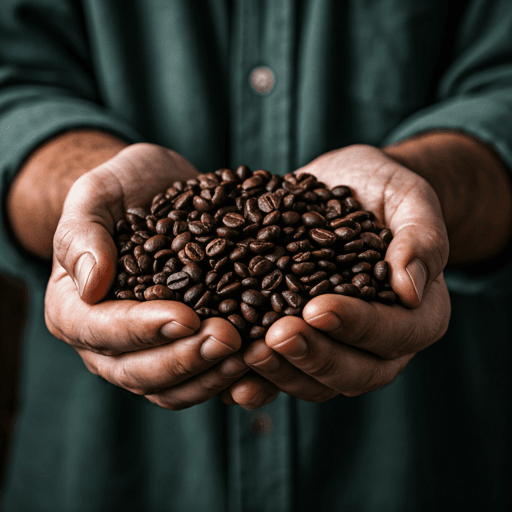
Coffee cupping is the standardized way professionals taste and score coffee. Coarsely ground samples are steeped in hot water in a row of identical cups, then smelled and slurped from a spoon so a taster can judge aroma, flavor, acidity, body, sweetness and any defects. Everything is held constant on purpose, so it is the coffee itself, not somebody's brewing skill, that gets measured. It is the shared tasting language of the trade, used from the farm to the roastery to world competitions.
What coffee cupping is, and why it exists
At its core, cupping coffee is a method for removing variables. If two people brew the same coffee with different grinders, water and techniques, they will pull two different cups out of it and argue about which one the coffee "really" tastes like. Cupping settles that argument by fixing the method: the same dose, the same grind size, the same water and temperature, the same ratio and the same vessel for every sample on the table. Whatever differences remain in the cup must come from the coffee.
That level playing field is why the ritual looks so uniform wherever you find it. A green-coffee buyer uses it to evaluate lots before committing to a purchase. A roaster uses it to check whether a batch hit its target and to compare roast profiles side by side. Quality graders use it to assign a score to a coffee, and competitions such as the Cup of Excellence rank entries with the very same discipline. Cafes lean on it when choosing which coffees to put on the menu. The scores that come out of cupping feed directly into how a coffee is described and graded as specialty coffee, and they shape decisions long before the beans reach a customer.
Cupping sits alongside, but does not replace, the other links in the chain. It does not tell you how the green seed grew or what variety it is, which begins with the beans themselves, and it is not the same as the craft of turning green coffee brown, which is how coffee is roasted. Cupping is the tasting instrument that ties all of it together.
How to cup coffee, step by step
Once you know the sequence, learning how to cup coffee is mostly about repetition and paying attention. A cupping is deliberately slow and quiet, moving through the aroma of the dry grounds, the aroma of the wet crust, and finally the taste of the liquid as it cools.
Setting up the samples
Every cup gets an identical dose of coffee, weighed on a scale, most often somewhere near a 1-to-18 coffee-to-water ratio (a common reference is about 8.25 grams of coffee to 150 milliliters of water). The exact number matters less than the fact that every cup is the same. Grind coarse, roughly the texture of coarse sea salt, and do it just before pouring so the aroma is fresh. The water should be clean and just off the boil, about 93 degrees Celsius or 200 degrees Fahrenheit.
Working through the cups
- Smell the dry grounds. Before any water goes in, lean over each cup and inhale the fragrance of the dry, freshly ground coffee. First impressions of sweetness, spice or fruit often show up here.
- Pour and let the crust form. Saturate all the grounds with your hot water, filling each cup to the same level. A crust of grounds and foam rises to the surface. Smell that wet aroma without disturbing it.
- Break the crust. At around four minutes, put your nose close to the cup and gently stir through the crust a few times with a spoon, breathing in the aroma that releases. This is usually the most intense, expressive moment of the whole session.
- Skim the surface. Using two spoons, clear away the floating foam and grounds so the liquid underneath is clean.
- Slurp. Once the coffee has cooled to a drinkable temperature, load a spoonful and slurp it sharply. The aggressive slurp aerates the coffee and sprays it across your entire palate at once, so you catch flavor, acidity and texture together. When you are working through many cups, you spit rather than swallow.
- Score as it cools. Keep tasting the same cups as they drop in temperature. Different qualities reveal themselves at different heat levels, so a coffee that seemed flat while hot may turn sweet and juicy as it cools.
| Cupping step | What you assess |
|---|---|
| Dry grounds (before water) | Fragrance: the aroma of the dry, freshly ground coffee |
| Wet crust (just after pouring) | Aroma: how the soaked grounds smell before you disturb them |
| Breaking the crust (about 4 minutes) | The fullest burst of aroma, and a first read on freshness and intensity |
| First slurps (hot to warm) | Flavor, acidity and body as the coffee opens up |
| As it cools | Sweetness, aftertaste, balance, and any faults that surface late |
What gets scored on a cupping form
Formal coffee tasting uses a scoresheet so that separate attributes get their own attention rather than blurring into a single "I liked it." The widely used Specialty Coffee Association (SCA) protocol asks tasters to rate a set of qualities and add them up on a 100-point scale. The attributes usually include:
- Fragrance and aroma — the smell of the dry grounds and the wet crust.
- Flavor — the overall character in the mouth, the main event of the cup.
- Aftertaste — how long and how pleasantly the flavor lingers.
- Acidity — brightness and liveliness, ideally sweet rather than sharp.
- Body — the weight and texture, from tea-like and delicate to syrupy.
- Balance — how well the parts work together.
- Sweetness, uniformity and clean cup — consistency and the absence of off-notes across the individual cups of the same sample.
- Overall — the taster's holistic judgment.
Defects, taints and faults are noted and subtracted, because one sour or fermented cup drags down the whole lot. By convention, a coffee that scores 80 points or above is considered specialty grade, and higher scores signal a more distinctive, more valuable coffee. Those numbers are a useful shorthand, but they mean the most when the same trained panel is tasting under the same conditions.
The language of coffee tasting
Scores need words to go with them, which is where tasting notes and the flavor wheel come in. The SCA and World Coffee Research Coffee Taster's Flavor Wheel arranges descriptors from broad categories at the center (fruity, nutty and cocoa, floral, spice, roasted) out to increasingly specific terms at the rim (blackberry, almond, jasmine, clove). A taster works from the general to the particular: is it fruity, and if so, is it more like stone fruit or citrus, and if citrus, more like orange or lemon?
This shared vocabulary is what lets a buyer on one continent and a roaster on another describe the same coffee and actually mean the same thing. It is also why cupping notes read the way they do on a bag of beans, and why the people who buy green coffee and the people who run coffee roasteries spend so much time training their palates against the same reference words.
How to try cupping at home
You do not need a lab to try a simple cupping, and it is one of the fastest ways to sharpen your own palate. Line up two or more coffees you want to compare, ideally different origins or roasts. Use identical cups or glasses, a kitchen scale, a kettle and a couple of spoons.
Weigh the same dose into each cup, grind coarse just before pouring, and add the same amount of hot water to every cup. Then follow the sequence: smell the dry grounds, smell the crust, break it at about four minutes, skim the foam, and slurp once the liquid has cooled a little. Taste them back to back and jot down what you notice, one cup against another. Skip the scoring at first. The point of cupping coffee at home is not to produce an official number but to train yourself to notice difference, and to build the habit of tasting attentively.
The takeaway
Coffee cupping turns tasting from a matter of opinion into something closer to measurement. By holding the brewing constant and moving through a fixed ritual of smelling, breaking and slurping, tasters can compare coffees fairly, describe them in a shared language, and decide which ones are worth buying, roasting and pouring. Whether it happens on a scoring table at origin or on your own kitchen counter with two mugs, the goal is the same: to let the coffee speak for itself.