
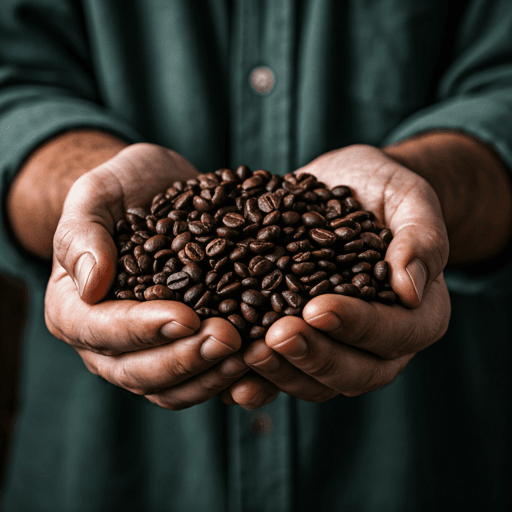
Specialty coffee is high-quality coffee that has been formally graded 80 points or higher on a 100-point scale by trained cup graders, traceable back to the farm or lot that grew it, and handled with care at every step from seed to cup. In short, it is the top tier of the coffee world. The phrase describes both a measurable quality standard and a whole way of thinking about coffee as a craft product rather than a commodity.
If you have ever picked up a bag that names a single farm, a harvest date and tasting notes like "jasmine, peach, brown sugar," you have met specialty coffee. This guide explains the formal definition, what actually earns coffee that label, how it connects to the third wave coffee movement, and how to taste and buy it well.
What is specialty coffee, exactly?
The most widely cited definition comes from the Specialty Coffee Association (SCA). Under SCA standards, green (unroasted) coffee is inspected for defects and then roasted, brewed and tasted in a structured process called cupping. A trained taster scores it on a 100-point scale across attributes like fragrance and aroma, flavor, aftertaste, acidity, body, balance, sweetness and overall impression. Coffee that scores 80 or above, with no primary defects, is classified as specialty grade.
That 80-point threshold matters. Within it, the trade often uses sub-bands: 80 to 84.99 is "very good," 85 to 89.99 is "excellent," and 90 to 100 is "outstanding." Beans that clear the bar represent a small slice of global production, which is part of why specialty coffee commands attention and a higher price than commodity coffee.
The people doing the scoring are not casual reviewers. Many are certified Q graders, trained and examined through the Coffee Quality Institute in an intensive program of sensory tests designed to calibrate their palates against a common standard. The goal is consistency: a coffee scored an 86 by one calibrated grader should taste like an 86 to another.
A note on spelling
You will see "speciality coffee" with an extra "i" — that is simply the British spelling of the same term. American English uses "specialty coffee." Both mean the same thing, so do not let the spelling confuse you when you are reading roasters from different parts of the world.
What makes a coffee "specialty"?
A high cupping score is the headline, but the score is the result of a long chain of careful decisions. Specialty people describe this chain as "seed to cup," and quality can be lost at any link. Here is where it comes from.
- Cultivar and species. Almost all specialty coffee is Coffea arabica, prized for its sweetness, acidity and aromatic complexity. Heirloom and select varieties (Geisha, Bourbon, SL28 and others) bring distinctive character. For the deeper contrast, see our guide to arabica vs robusta coffee beans.
- Terroir. Like wine grapes, coffee tastes of its place. Altitude, soil, shade and climate shape the cup, which is why a washed Ethiopian and a natural Brazilian taste worlds apart.
- Careful picking. Specialty cherries are usually hand-picked at peak ripeness, often in several passes, so only ripe fruit goes forward. Stripping a branch of green and ripe cherries together kills quality.
- Processing. How the fruit is removed from the seed — washed, natural, honey — dramatically changes flavor. Clean, controlled processing is a hallmark of specialty lots.
- Skilled roasting. A good roaster develops each lot to highlight its character rather than burning it into generic "coffee" flavor. Learn more in our coffee roasters guide.
- Thoughtful brewing. The final cup depends on grind, water, ratio and technique. Even an 88-point coffee can taste flat if it is brewed carelessly.
If you want the foundation, our explainer on what coffee beans are and the deep dive on arabica coffee beans cover the raw material that all of this builds on.
Specialty coffee and the third wave
You cannot talk about specialty coffee without the "third wave." The phrase describes the era in which coffee began to be treated like wine or craft beer — something with origin, vintage and a maker worth naming — rather than a cheap, uniform commodity.
Coffee historians often sketch three waves. The first wave made coffee a mass-market household staple (think canned, pre-ground grocery coffee). The second wave, led by large cafe chains from the late 20th century, made espresso drinks and "the coffee shop" part of everyday life. The third wave coffee movement, taking shape from the late 1990s and 2000s through roasters such as Intelligentsia, Counter Culture and Stumptown, pushed quality, transparency and lighter roasting that lets a bean's natural flavors show through.
It helps to keep the terms straight: specialty coffee is the grade (a measured 80+ score), while third wave coffee is the culture and approach built around chasing and celebrating that quality. One is a number; the other is a mindset.
Single origin vs blends
In the specialty world you will constantly see "single origin." That means the coffee comes from one defined source — a country, a region, a cooperative, a single farm, or even one specific lot. Single origins are how roasters show off the distinctive character of a place and a harvest.
Blends combine beans from different origins. In specialty coffee a blend is not a compromise; it is a deliberate recipe, often built for espresso, balancing sweetness, body and acidity in a way no single coffee delivers alone. Good blends are crafted, not just leftovers swept together.
| Aspect | Single origin | Blend |
|---|---|---|
| Source | One country, region, farm or lot | Beans combined from multiple origins |
| Flavor goal | Show off a place's distinct character | Balance and consistency by design |
| Best for | Filter, pour-over, exploring origins | Espresso, milk drinks, everyday cup |
| Traceability | Often very high, down to the lot | Varies, but quality blends still disclose origins |
Traceability, direct trade and fairness
A defining feature of specialty coffee is transparency. Roasters increasingly tell you the producer, the region, the variety, the processing method and the harvest. This traceability is not just marketing — it is the proof that the seed-to-cup chain was managed with care.
Two phrases recur on bags. Fair trade is a certification system that guarantees producers a minimum price and supports community premiums. Direct trade is a less formal but powerful idea: roasters buy straight from farms or cooperatives, often paying quality bonuses well above commodity rates and building long-term relationships with feedback flowing both ways. Both aim to push more value back to the people who grow the coffee, which is what makes consistently high quality sustainable.
How to taste and buy specialty coffee
You do not need a Q grader's palate to enjoy specialty coffee. A few habits go a long way.
- Check the roast date. Specialty bags print one. Aim to buy coffee roasted within the last few weeks and use it within a month or so of that date for best flavor.
- Look for origin detail. A named country is good; a named region, farm or cooperative is better. Transparency signals a roaster who cares.
- Read the tasting notes. Notes like "blueberry," "cocoa" or "floral" describe flavors the roaster found — a map, not a promise. Use them to find styles you like.
- Buy whole bean and grind fresh. Freshly ground coffee tastes noticeably better. See how to grind coffee beans for the basics.
- Taste deliberately. Slurp, notice the acidity, sweetness and body, and pay attention to the aftertaste. The more you taste with intention, the more you will discover.
When you are ready to go beyond the supermarket shelf, the best source is usually a dedicated roaster. Our finder for specialty coffee roasters near you walks through how to spot a serious one wherever you happen to be in the world.
The bigger picture
Specialty coffee is less a luxury and more a philosophy: that coffee, treated with the same respect as fine wine or craft chocolate, can be extraordinary — and that the farmers who grow it deserve to share in that value. Once you start reading roast dates and origins, ordinary coffee rarely tastes the same again. If you want to keep exploring, dig into what coffee roasting is next, or wander over to the coffee hub for more on beans, brewing and the people behind the cup.