
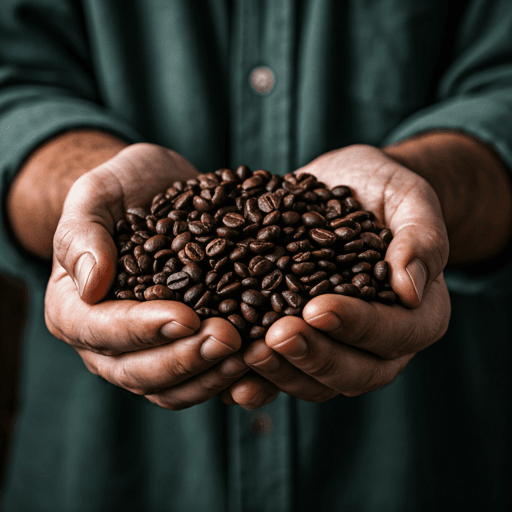
To find specialty coffee roasters near you, start with a map search for "coffee roasters near me," then judge each result on real quality signals rather than star ratings alone: roast dates printed on the bags, single-origin and traceable coffees on the menu, and staff who can talk about where the beans come from. This guide gives you a repeatable method that works in any city on earth, so you can walk into a roastery you have never visited and quickly tell whether it is the real thing.
Specialty coffee is not just marketing language. In the trade it describes beans that score 80 or more on a 100-point scale, judged by trained tasters against criteria such as aroma, flavour, acidity, body and balance. A genuine specialty roaster sources high-quality green coffee, often direct from farms or cooperatives, and roasts it carefully to highlight the character of each origin. Your job is to find those roasters near you and learn to recognise them on sight.
Start your search: "coffee roasters near me" and the terms that work
A map app is the fastest first step. Open Google Maps or Apple Maps and search coffee roasters near me. You will get a list of nearby places with locations, opening hours, ratings and photos. Try several phrasings, because businesses tag themselves differently and you do not want to miss a great one hiding under a different label:
- "coffee roasters near me" surfaces actual roasteries, the places that roast their own beans on site.
- "specialty coffee near me" (and the British spelling, "speciality coffee near me") catches cafes that take quality seriously even if they do not roast in-house.
- "coffee store near me" and "coffee bean shop near me" pull in retailers and bean shops that stock multiple local roasters under one roof.
- "coffee stand near me" finds smaller kiosks and counters; some of the best baristas work tiny spaces and pour through bags from a serious local roaster.
You can also anchor a search to a landmark. Searching "specialty coffee near" a park, station or neighbourhood is handy when you are travelling and want something near where you will actually be. Zoom and pan the map to explore a district, then tap individual pins to open each listing.
Look beyond the map: how roasters get found
Maps are only one channel. Specialty roasters are a tight-knit world, so a few extra moves widen your net:
- Dedicated coffee apps and directories. Several apps and websites curate specialty roasters and cafes city by city. They tend to filter out the generic chains and surface the places enthusiasts rate.
- Social media and hashtags. Search your city's name plus "coffee" or "roastery" on photo-led platforms. The accounts that post roast batches, latte art and origin trips are usually the real deal.
- Ask a good barista. The fastest shortcut anywhere in the world: order coffee at a place you already like and ask who roasts their beans, or which roaster they rate nearby. People in this trade love talking shop.
- Follow the bag. If a cafe serves coffee you love, note the roaster printed on the bag and look them up. Cafes are a low-risk doorway to discovering the roaster behind the cup.
Read ratings and reviews critically
A high star average is a starting point, not a verdict. Reviews skew toward Wi-Fi, seating and service speed, which tells you little about the coffee. Read the words, not just the number:
- Sort by most recent. A roaster can change hands or slip. Recent reviews tell you what the place is like now, not three years ago.
- Search the text for the right keywords. Use the review search box to look for "pour over," "single origin," "filter," "beans," "roast" or "espresso." Mentions of these suggest a crowd that cares about coffee, not just a place to sit.
- Discount the extremes. One furious one-star about a parking spot and one glowing five-star from an opening-week friend are both noise. The thoughtful three- and four-star reviews are often the most honest.
- Look at the photos. Customer photos reveal a lot: bags with origin details, a clean espresso setup, hand-poured filter coffee, a visible roasting machine in the back.
The quality signals that mark a real specialty roaster
Once you are standing inside, or browsing a roaster's website, a handful of concrete signals separate a serious specialty operation from a cafe that merely calls itself one. None requires you to be an expert.
| Signal | What a great roaster does | Why it matters |
|---|---|---|
| Roast date on the bag | Prints the actual roast date, not just a far-off "best before" | Coffee is freshest in the weeks after roasting; a roast date shows they care about freshness and turnover |
| Origin transparency | Lists country, region, often farm or cooperative, and processing method (washed, natural, honey) | Traceability is the backbone of specialty coffee; vagueness usually means commodity beans |
| Single-origin options | Offers single origins alongside blends, often rotating with the harvest | Shows they source distinctive lots and roast to highlight each one |
| On-site or partner roasting | Roasts in-house or names the roaster they pour | Closer to the source means fresher coffee and real accountability for quality |
| Skilled, talkative staff | Can describe a coffee's flavour, origin and brew method without sounding scripted | Knowledge and enthusiasm are reliable proxies for care across the whole operation |
| A busy local trade | Regulars, a steady queue, fresh stock moving | High turnover keeps beans fresh and signals the locals have already vetted the place |
What good staff sound like
Pay attention to how questions are answered. Ask "what would you recommend today?" or "what's tasting good right now?" A great roaster will mention specific origins, flavour notes and brew methods, and will happily guide you. Vague, dismissive or pushy, overly salesy answers are a quiet warning. The people who care want to help you find a coffee you will love, not just clear stock.
What to order to test a roaster
The cup is the real test. A few orders will tell you almost everything about a place's skill and intent.
- A pour-over or filter of a single origin. This is the clearest window into bean quality and roasting. A skilled filter coffee should taste clean, sweet and distinctive, not flat or burnt. If they offer a few origins, ask which is brightest or fruitiest.
- A straight espresso (or a cortado or flat white). Espresso exposes both the beans and the barista. It should be balanced and sweet with a lingering finish, not harshly bitter or sour. A small milk drink shows how well they steam and pour.
- A bag of beans with a recent roast date. If you loved the cup, buy a bag and check the roast date. Brewing it at home over the next couple of weeks is the final confirmation that it was the coffee, not just the cafe atmosphere.
If you are still learning to brew at home, our guides to pour-over with a V60 and the French press method will help you get the most out of beans from a great roaster. A consistent burr grinder makes a bigger difference to the cup than almost anything else.
Questions worth asking at the counter
A few questions quickly reveal how serious a roaster is, and they make you a more confident buyer anywhere in the world:
- "When was this roasted?" A precise date is a great sign.
- "Where is this coffee from, and how was it processed?" Listen for specifics, not just "South America."
- "Which coffee is brightest, and which is the most chocolatey or nutty?" This helps you pick to your taste and tests their palate.
- "How would you brew this at home?" Good roasters give grind and ratio guidance freely.
- "Do you roast here, or who roasts for you?" Either answer is fine; you just want them to know.
A note on price and value
Specialty coffee usually costs more than supermarket tins, and for good reason: traceable, high-scoring beans bought fairly from farmers and roasted in small batches cost more to produce. Think in tiers rather than absolutes, since prices vary widely by country and retailer. Entry-level specialty bags are an easy, affordable upgrade on commodity coffee; premium-tier single origins and rare micro-lots sit higher. The real value is freshness and flavour per cup, not the lowest sticker. A fresh, well-roasted bag brewed properly at home often beats a takeaway cup on both cost and quality.
Keep exploring
Finding specialty coffee roasters near you is a skill you carry to every new city: search smartly, read reviews for substance, trust the quality signals, and let the cup decide. Once you have found a roaster you love, branch out. Learn what separates the beans themselves in our guide to Arabica versus Robusta, or wander into the wider world of coffee and discover the brews, origins and rituals worth a detour. The best roaster near you is often closer than you think.