
In coffee tasting, coffee body is how the coffee feels in your mouth — its weight and texture — rather than how it tastes. It is the mouthfeel that makes one cup feel light and watery on the tongue and another feel rich, round and almost creamy. Body runs on a spectrum from thin and tea-like to thick and syrupy, and it is one of the easiest tasting qualities to notice once you know what you are feeling for.
Think of it as the physical presence of the liquid rather than its flavor. A cup can be delicately floral yet feel weightless, or taste simple yet feel dense and coating. Learning to separate that feeling from flavor is a big step toward tasting coffee more deliberately.
What coffee body and mouthfeel actually mean
"Body" is a sensory term for the tactile experience of coffee — the sense of heaviness, thickness and texture you register when you swirl the liquid across your palate. Tasters often use "body" and "coffee mouthfeel" almost interchangeably, though mouthfeel is the slightly broader idea: it covers weight plus every other physical sensation, from silkiness to a faint gritty or drying edge.
The key thing to hold onto is that body is separate from flavor and aroma. Flavor is what your taste buds and nose decode — chocolate, citrus, nuts. Body is what your tongue, cheeks and the roof of your mouth feel — light or heavy, thin or thick, watery or velvety. That is why the answer to "what is body in coffee" is a texture question, not a taste question. A coffee can taste bright and fruity while feeling either light or surprisingly full; the two travel independently.
The body spectrum: from watery to syrupy
Most tasters map coffee texture along a simple range, and the vocabulary is refreshingly plain-language:
- Light body — thin, delicate, clean, sometimes described as tea-like or even watery. The liquid feels crisp and passes quickly, leaving little behind.
- Medium body — balanced and rounded, with a moderate weight that many everyday coffees land in. Words like smooth and juicy show up here.
- Full body — heavy, rich and coating, described as creamy, buttery, velvety or syrupy. It lingers and leaves a sense of thickness on the tongue.
So the full-bodied coffee meaning people reach for is simply this: a cup that feels weighty and textured, one that seems to fill the mouth and stick around after you swallow. None of these positions is "better." A light, clean body flatters a delicate single origin, while a full, syrupy body suits a rich espresso or a spoon-coating French press. It is a matter of style, not quality.
What drives coffee body: oils and fine particles
Almost everything about body comes down to two things that either reach your cup or get left behind: the coffee's natural oils and the fine particles (the microscopic "fines" produced when beans are ground). Oils add a rounded, slick richness; fines thicken the liquid and give it a little more heft and, sometimes, a trace of texture. The more of both that survive the brew, the fuller the cup tends to feel.
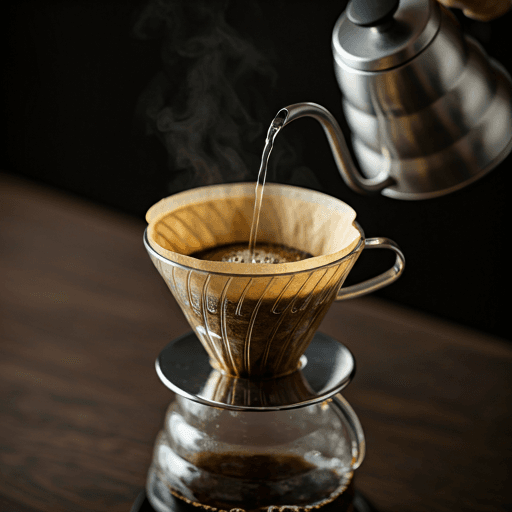
Because of that, the single biggest lever on body is usually your brew method — specifically the filter. A metal mesh or a filterless method lets oils and fines flow straight into the cup, so it feels heavier and fuller. A paper filter traps most of the oils and catches the fines, so the same beans can taste cleaner, brighter and noticeably lighter. This is why a French press and a paper pour-over made from identical coffee can feel like two different drinks in the mouth.
Typical body by brew method
| Brew method | Filter | Typical body |
|---|---|---|
| Espresso | Fine metal + pressure | Full, thick, sometimes syrupy (crema adds texture) |
| French press | Metal mesh | Full, heavy, with oils and light sediment |
| Moka pot | Metal | Medium to full, rich and concentrated |
| AeroPress (metal filter) | Metal | Medium to full, rounded |
| AeroPress (paper filter) | Paper | Medium, smoother and cleaner |
| Pour-over (V60, Chemex) | Paper | Light to medium, clean and delicate |
| Drip machine | Paper | Light to medium, consistent and clean |
| Cold brew | Paper or cloth | Medium to full, smooth and mellow |
Treat these as general tendencies rather than fixed rules — grind, ratio and your specific gear all shift things a notch either way.
How roast and bean affect body
Beyond the brew, the coffee itself sets a baseline. Darker roasts often feel fuller and rounder, partly because roasting draws more oils to the surface of the bean and softens perceived brightness, which lets weight come forward. Lighter roasts frequently feel more delicate and lively. This is a tendency, not a guarantee — origin and processing matter too, and plenty of light roasts carry real weight.
Bean species plays a role as well. Robusta beans tend to brew a heavier, more intense body than arabica, which is one reason a shot of espresso built on a robusta-containing blend can feel especially thick and produce a dense crema. As always, hedge your expectations: the same bean can feel light or full depending entirely on how you brew it.
Grind size and brew ratio
Two more dials shape how much body ends up in the cup. A finer grind creates more fines and exposes more surface area, which generally pushes body up — though grind too fine for your method and you risk bitterness and over-extraction instead. A stronger brew ratio (more coffee relative to water) concentrates the liquid, and a more concentrated brew usually feels fuller and more substantial than a weak, diluted one.
So if two cups from the same beans feel different, the usual suspects are, in rough order: the filter, the ratio and the grind. Change one at a time and you will start to feel the difference clearly.
How to taste coffee body
Body is genuinely fun to practice because you can feel it deliberately. Try this:
- Take a decent sip and, if you are comfortable, slurp it so the coffee sprays across your whole mouth — this spreads the liquid over more of your palate.
- Move it around and pay attention to weight and texture, not flavor. Does it feel like skim milk, whole milk or cream? Thin, rounded or thick?
- Notice the finish — does the sensation vanish instantly or linger and coat the tongue? Lingering, coating cups are fuller-bodied.
- Compare side by side. The clearest lesson of all: brew the same coffee as a French press and as a paper pour-over and taste them back to back. The French press will feel heavier and rounder; the pour-over cleaner and lighter. Once you have felt that contrast, you will recognize body everywhere.
This kind of side-by-side is exactly the muscle that formal tasting builds. If you want the structured version, see how professionals evaluate cups in our explainer on what coffee cupping is.
Body vs flavor vs acidity
It helps to keep three separate ideas straight, because tasters constantly blend them by accident:
- Body is how the coffee feels — its weight and texture.
- Flavor is what it tastes and smells like — the chocolate, berry, floral or nutty notes. That whole map of descriptors lives in our guide to the coffee flavor wheel.
- Acidity is the bright, tangy, sparkling quality — a taste sensation, not a texture. It is a common source of confusion because a light-bodied coffee often reads as "bright." We cover it fully in our piece on coffee acidity.
Aroma sits alongside these too — the fragrance that shapes so much of what you perceive as flavor, explored in our guide to coffee and aroma. A well-rounded cup usually balances all of them, but body is the one you feel with your mouth rather than decode with your palate or nose.
How to adjust body in your own cup
Once you can feel body, dialing it is straightforward. To make a cup feel fuller, brew with a metal filter (French press, metal-filter AeroPress, or espresso), grind a touch finer, and use a slightly stronger ratio. To make a cup feel cleaner and lighter, switch to a paper filter (pour-over or drip), ease off the grind, and dilute a little.
None of this changes whether your coffee is "good" — it changes its character to suit your mood and the beans in front of you. A delicate, floral light roast may shine cleaner through paper; a chocolatey dark roast may feel best as a heavy, oily French press. Body is one of the most satisfying variables to play with precisely because you can taste — and feel — the result immediately. Brew two cups side by side this week, and you will never un-notice it.