
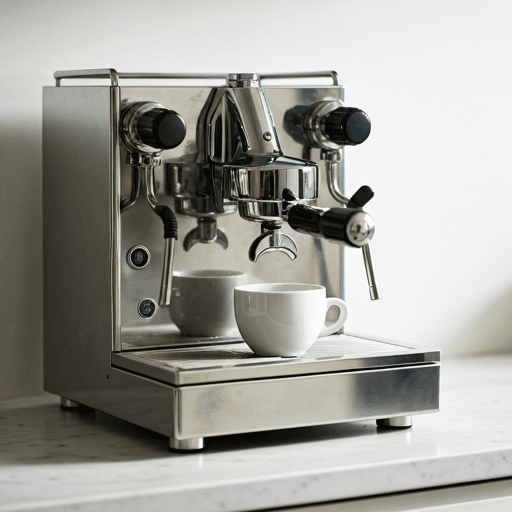
The Breville Barista Express is not one machine but a small family of all-in-one espresso makers, and choosing between them is mostly a question of how much you want the machine to do for you. This guide compares the four "Barista" models you will see — the original Barista Express, the Express Impress, the Barista Pro, and the Barista Touch — so you can pick the right one. First, the thing that confuses almost everyone: if you live in the UK or much of Europe these machines are branded Sage, not Breville. They are the same hardware.
Breville and Sage are the same machines
Breville is an Australian brand, and in the US, Canada and Australia its espresso machines carry the Breville name. In the UK and parts of Europe the identical machines are sold under the brand Sage. So the "Sage Barista Express" and the "Breville Barista Express" are the same product with a different badge, a region-appropriate plug, and a model code that changes by market. The original Barista Express carries the model code BES870XL under Breville in North America and shows up as the BES875/SES875 under Sage in the UK. The differences are voltage, name and box contents — the machine that pulls your shot is the same.
If you want a single-model deep dive on that machine specifically — how the grinder, dose control and steam wand work day to day — see our Barista Express (BES870) espresso machine guide and the hands-on Barista Express review. This page is the family-level decision: which "Barista" to buy.
What the whole Breville Barista Express family has in common
Before the differences, it helps to know what all four share, because it is what makes this family popular with people moving up from pods or instant coffee. Each one is a "bean to espresso" all-in-one: an integrated conical burr grinder, a 15-bar pump, a 54mm portafilter, and a manual steam wand for milk. You put in whole beans, grind straight into the basket, prepare the puck, and pull a shot — no separate grinder needed.
- Integrated conical burr grinder. Every model grinds fresh on demand, which is the single biggest upgrade for cup quality.
- 54mm portafilter. All four use Breville's 54mm basket (not the cafe-standard 58mm), so accessories are interchangeable across the family.
- 15-bar pump and milk steam wand. Real pressurised extraction and proper steamed-milk texturing for flat whites, lattes and cappuccinos.
- Dose control and temperature control. All let you tune grind, dose and shot, so you can dial in your beans.
If terms like microfoam or pulling a shot are new, our espresso explainer and cappuccino guide are a good warm-up.
The four "Barista Express" models compared
Here is the family at a glance. The two questions that separate them are: does it tamp for you? and how fast does it heat and how is it controlled?
| Model | Tamping | Heating | Controls | Milk | Best for |
|---|---|---|---|---|---|
| Barista Express (BES870 / Sage) | Manual (you tamp by hand) | ThermoCoil — needs a short warm-up | Dials and buttons | Manual steam wand | The classic hands-on entry point; learning the craft |
| Barista Express Impress (BES876) | Assisted / automatic — applies set pressure plus a finishing twist | ThermoCoil — short warm-up | Dials and buttons, with intelligent dosing | Manual steam wand | Consistency without learning to tamp; multi-user homes |
| Barista Pro | Manual | ThermoJet — ready in about 3 seconds | LCD screen with grind/shot info | Manual steam wand (faster transition to steam) | Speed and a clearer interface, still hands-on |
| Barista Touch | Manual | ThermoJet — near-instant | Full colour touchscreen with drink presets | Automatic milk texturing (set temperature and foam) | Most convenience; one-touch cafe-style drinks |
Barista Express — the original, fully manual
This is the model most people mean by "the Barista Express". You grind, then tamp the grounds yourself with the included tamper, then pull the shot. It uses Breville's ThermoCoil heating, so it wants a short warm-up rather than being instant. The trade-off is deliberate: it teaches you the craft, because you control the tamp, and it is the most affordable way into the family. If you enjoy the ritual and want to learn to dial in espresso, this is the one.
Barista Express Impress — the same machine that tamps for you
The Express Impress is the Barista Express with one big change: an assisted tamping system. Instead of pressing by hand, you pull a lever and the machine applies a consistent ~22 lb of pressure and finishes with a small barista-style twist to polish the puck. It also adds intelligent dosing that learns from your last grind and tamp. Heating is still ThermoCoil, like the original. The Impress is the pick if you want repeatable shots without learning the feel of tamping — especially in a household where several people make coffee and consistency matters more than ritual.
Barista Pro — faster, with a screen
The Barista Pro keeps manual tamping but swaps in Breville's ThermoJet heating, which reaches brew temperature in around three seconds, so there is effectively no warm-up wait. It also transitions to steam much faster than the ThermoCoil models, and it adds an LCD display that shows grind size, dose and shot timing. Choose the Pro if you still want the hands-on tamp of the original Express but value speed and a clearer interface, particularly for back-to-back drinks in the morning.
Barista Touch — the most automated
The Barista Touch is the convenience flagship. It has ThermoJet heating, a full colour touchscreen with stored drink presets, and — the key upgrade — automatic milk texturing: you set the milk temperature and foam level and the machine steams it for you. You can save personalised drinks and pour a cafe-style flat white with far less technique. It is the pick for people who want espresso quality with the least manual work, or for a household that wants one-touch repeatability.
How to pick your Barista Express model
Match the model to how you actually want to make coffee, not to the spec sheet:
- You want to learn the craft and spend the least: the original Barista Express. Manual tamp, hands-on, the classic.
- You want consistent shots without learning to tamp: the Express Impress. Same machine, the tamping is done for you.
- You want speed and a screen, still hands-on: the Barista Pro. Near-instant heat-up, LCD, manual tamp.
- You want the least effort per cup: the Barista Touch. Touchscreen presets and automatic milk.
On cost: within the family, the Barista Express sits at the entry of the all-in-one tier and the Barista Touch at the top, with the Impress and Pro in between. Exact prices vary widely by country and retailer, so judge by tier rather than a fixed figure. If you are not sure an all-in-one is even the right shape, our broader coffee maker buying guide compares espresso machines against drip, pods and more.
Where the Barista family sits in the wider Breville/Sage range
The four "Barista" models are the all-in-one middle of Breville/Sage's espresso lineup. Below them is the compact Bambino (espresso machine, no built-in grinder). Above them sit the prosumer Dual Boiler and the Oracle range, which automate more and use a 58mm portafilter. The brand also makes non-espresso machines — drip brewers and Nespresso-compatible pod units. For the full espresso range mapped by budget and skill, see our Breville espresso machines guide, and for the whole catalogue including drip and pod models, the Breville and Sage coffee machines overview.
The bottom line
All four "Barista" machines pull genuinely good espresso from fresh-ground beans; the right one is simply the level of automation you want. Buy the Express to learn, the Impress for hands-off consistency, the Pro for speed, or the Touch for the easiest cafe-style drinks. Whichever badge it wears in your country — Breville or Sage — it is the same machine underneath. Next, read the BES870 deep dive for the model-by-model detail, then brush up on the drinks themselves with our types of coffee drinks guide.