
Choosing a coffee maker comes down to three honest questions: how the coffee should taste, how much effort you want to put in, and how many cups you brew at once. Once you know those, the right machine is easy to spot. This complete guide walks through every major brewer type, then shows you how to match one to your habits, your budget and your kitchen.
There is no single best coffee maker for everyone. A drive-thru-fast pod machine and a slow, hands-on pour-over both make excellent coffee for the right person. The trick to learning how to choose a coffee maker is to ignore the marketing and start with how you actually drink coffee on a normal morning.
What a coffee maker actually does
Every coffee maker does the same basic job: it brings water and ground coffee together at the right temperature, for the right amount of time, then separates the liquid from the grounds. The differences between machines are all about how they do that, and how much of the work they do for you.
The Specialty Coffee Association points to a few things that make a good brew: water in the roughly 90 to 96 degrees Celsius range (about 195 to 205 Fahrenheit), even contact between water and grounds, and a sensible brew time. Good machines hit those targets automatically. Manual methods leave them in your hands, which is either freedom or fuss depending on your temperament.
The main coffee maker types compared
Here is the whole field at a glance. Use it to shortlist one or two types, then read their sections below.
| Type | Flavour style | Effort | Speed | Best for |
|---|---|---|---|---|
| Automatic drip | Clean, balanced, familiar | Low | Medium | Households, daily multi-cup brewing |
| Pod / capsule | Consistent, convenient | Very low | Fast | One or two cups, zero fuss |
| Espresso machine | Intense, concentrated, crema | High | Fast per shot | Espresso and milk drinks at home |
| French press | Full-bodied, heavy, rich | Medium | Medium | Bold flavour without electricity |
| Pour-over | Bright, clean, nuanced | Medium-high | Slow | Tasting single-origin coffee |
| Percolator | Strong, old-school, robust | Medium | Medium | Camping, large batches, nostalgia |
| Cold brew maker | Smooth, low-acid, sweet | Low (but slow) | Very slow | Iced coffee and summer drinking |
If you want a deeper head-to-head on the machine types alone, see our types of coffee makers compared decision grid. The sections below give you the working detail on each.
Automatic drip coffee makers
The drip machine is the default coffee maker in most kitchens, and for good reason. It heats water and showers it over a basket of medium-ground coffee, letting gravity pull the brew through a paper or mesh filter into a carafe below. You add water and grounds, press a button, and walk away.
Drip excels at volume and consistency. Many models brew up to ten or twelve cups at once, which suits a busy household far better than a single-serve machine. A good drip brewer hits the right temperature, saturates the grounds evenly, and finishes in a sensible four-to-eight-minute window. A cheap one runs cool and channels water through the bed unevenly, which gives you weak, flat coffee. Because the gap between great and mediocre is so wide here, drip gets its own deep dive: see what makes a great drip coffee maker, and our guide to the carafe or pot itself for keeping coffee hot without scorching it.
Pod and capsule machines
Pod machines trade flexibility for sheer convenience. You drop in a sealed capsule, press a button, and a cup appears in under a minute with nothing to grind, measure or clean. They are the easiest coffee makers to live with, and the most consistent cup to cup.
It helps to know the two families work very differently. Espresso-style pod systems such as Nespresso force hot water through the capsule at high pressure (Nespresso's Original line uses a pump rated around 19 bars), which produces a small, intense shot with crema. Drip-style pod systems such as Keurig run water through the pod at much lower pressure, well under one bar, closer to ordinary drip coffee in a single cup. The catch with both is cost and waste: pods cost noticeably more per cup than ground coffee, and the spent capsules pile up. Compare systems in our Nespresso guide and our Dolce Gusto pod machine guide.
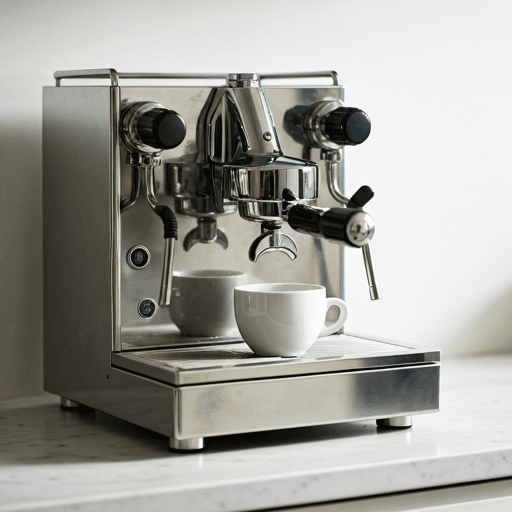
Espresso machines
An espresso machine is a different animal. It forces hot water through finely ground, tightly packed coffee at high pressure, a minimum of nine bars by the classic Italian standard, in well under thirty seconds. The result is a concentrated shot topped with crema, and the base for lattes, cappuccinos and flat whites.
Espresso rewards skill and punishes shortcuts. Grind size, dose, tamp and timing all matter, and most machines need a quality grinder alongside them. That makes espresso the highest-effort, highest-ceiling option on this list. If you love milk drinks and enjoy the craft, nothing else compares. If you just want a mug of black coffee, it is overkill. To understand the drinks an espresso machine unlocks, read espresso explained and our walkthrough of how to make espresso at home.
French press
The French press, or cafetiere, is beautifully simple: coarse grounds steep in hot water for about four minutes, then a mesh plunger pushes them to the bottom. No paper filter, no electricity, no settings. Because the mesh lets oils and fine particles through, French press coffee is full-bodied, heavy and rich, with more texture than drip.
It is forgiving and cheap to buy, but it does not hold coffee hot and the grounds keep extracting if you leave the brew sitting on them. Pour it all out when the timer ends. Our French press coffee guide covers the method step by step.
Pour-over
Pour-over is the connoisseur's manual method. You pour hot water in slow, deliberate circles over coffee in a cone-shaped filter, controlling the flow yourself. The paper filter produces an exceptionally clean cup that shows off the bright, delicate notes of good single-origin beans. It is the method most third-wave cafes use to brew filter coffee to order.
The trade-off is attention. Pour-over takes a few minutes of hands-on work and benefits from a kettle with a gooseneck spout and a scale. It makes one or two cups at a time, not a pot for the family. For brewing quality, grind matters enormously here, so see how to grind coffee beans at home.
Percolator
The percolator is the old-timer. It cycles boiling water up a tube and back down through the grounds, again and again, until the coffee is strong. That repeated circulation makes a robust, punchy brew, but it also risks over-extracting and boiling the coffee bitter if you let it run too long.
Percolators have faded at home, yet they shine where there is no electricity, on a campfire or stovetop, and where you need a big batch of forceful coffee. Compare it with the South Indian filter style in our filter pot vs percolator guide.
Cold brew makers
Cold brew is less a machine than a method, usually a jug or tower with a filter. You steep coarse grounds in cold water for twelve to twenty-four hours, then filter out the grounds. The slow, cool extraction skips much of the acidity and bitterness, leaving a smooth, naturally sweet concentrate you dilute over ice or with milk.
It is almost no effort, but it demands planning, since the brew takes most of a day. If iced coffee is your summer staple, a cold brew maker earns its space. Otherwise it is a nice extra rather than your main machine.
How to choose a coffee maker for your needs
With the types clear, the decision is really about matching a machine to your life. Work through these four filters in order.
Start with taste
Decide what is in your cup most mornings. Black filter coffee by the mug points to drip, pour-over or French press. Lattes and cappuccinos point to an espresso machine or an espresso-style pod system. A clean, bright single-origin tasting experience points to pour-over. A bold, heavy mug points to French press. Iced coffee all summer points to cold brew. Taste first; everything else is secondary.
Be honest about effort
How much do you want to do before your first coffee? Pod machines and automatic drip are press-and-go. French press and percolator ask for a few minutes. Pour-over and espresso ask for genuine technique and, ideally, a grinder. There is no shame in choosing convenience, the best coffee maker is the one you will actually use every day.
Match capacity to your household
A single person who drinks one cup is poorly served by a twelve-cup drip machine, and a family of four is poorly served by a one-cup pod brewer. Drip and percolator scale up; pod, espresso and pour-over are built around one or two servings at a time. Buy for how many cups you brew in a typical sitting, not the maximum you could imagine.
Account for budget and running cost
Look past the sticker price to cost per cup. Manual methods like French press and pour-over cost very little to buy and run, since you only pay for coffee and the occasional filter. Drip machines span budget to premium tiers, with certification and a thermal carafe pushing the price up. Espresso machines are the biggest upfront investment and usually need a grinder too. Pod machines are cheaper to buy but the pods cost the most per cup over time. Prices vary widely by country and retailer, so weigh the lifetime cost, not just the box price.
Features worth caring about
Once you have settled on a type, a handful of features separate a good coffee maker from a frustrating one.
- Brew temperature: The single biggest factor in flavour. Machines that brew in the roughly 90 to 96 degrees Celsius band extract well; cooler ones leave coffee weak and sour. Look for a stated brew temperature or home-brewer certification on drip machines.
- Carafe type: A glass carafe sits on a hot plate that slowly stews the coffee; an insulated thermal carafe keeps it hot for hours with no heat source, protecting flavour. More on this in our drip coffee pot guide.
- Programmability: A timer that wakes the machine before you do is genuinely useful for daily drip drinkers. Pre-infusion (a brief pause to let grounds bloom) improves extraction on better machines.
- Even saturation: A showerhead that wets the whole coffee bed beats a single central drip. Uneven water means uneven, muddy flavour.
- Cleaning and upkeep: Removable parts, dishwasher-safe carafes and descaling reminders save you grief. Pod machines are easiest; espresso machines need the most maintenance.
Do not forget the coffee and the grind
The best machine in the world cannot rescue stale, poorly ground coffee. Each method wants a specific grind: coarse for French press and cold brew, medium for drip, medium-fine for pour-over, fine for espresso. Buying whole beans and grinding fresh makes a bigger difference than upgrading your brewer. See our guide to choosing coffee for drip and French press and the broader coffee bean varieties explained to round out your setup. A dedicated coffee grinder buying guide helps if you are starting from beans.
The bottom line
There is no universal best coffee maker, only the right one for how you drink. Start from taste, weigh effort and capacity, then let your budget settle the rest. A press-and-go drip machine, a one-touch pod brewer and a hands-on pour-over are all excellent choices in the right hands and the wrong choices in the wrong ones. If you are still torn between machine types, our side-by-side comparison of coffee maker types will help you decide, and the wider coffee hub is a good place to keep exploring.