
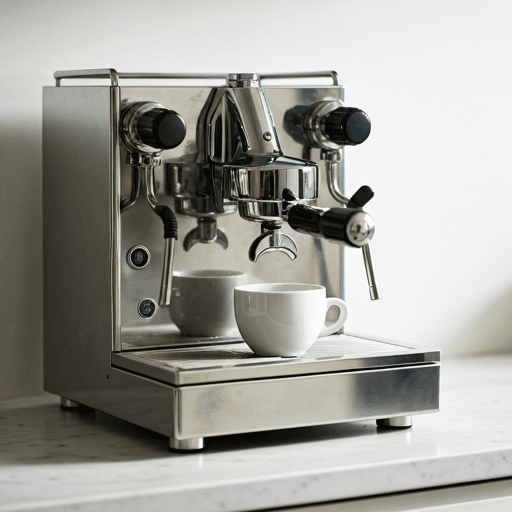
A great drip coffee brewer is the quiet workhorse of the coffee world: load grounds, add water, press a button, and a few minutes later a full carafe is ready. But not all automatic machines brew the same cup. The difference between a flat, bitter pot and a clean, sweet one usually comes down to a handful of measurable things — how hot the water gets, how evenly it spreads over the grounds, and how long the brew takes.
This guide stays squarely on automatic drip. If you are still deciding which kind of machine to buy at all, start with our complete guide to choosing a coffee maker or the head-to-head comparison of coffee maker types. Here, we go deep on what makes a good drip coffee maker and how to get the most out of one.
What a drip coffee brewer actually does
An automatic drip coffee maker heats water, then drips or showers it over a bed of ground coffee held in a paper or metal filter. Gravity pulls the brewed liquid through the grounds and into a carafe below. The category is sometimes called filter coffee, batch brew, or simply "the coffee machine" — it is the most common home brewer in the world.
The process sounds simple, and the cheap machines treat it that way. They dribble lukewarm water through the center of the grounds and call it done. The good ones treat brewing as a series of controlled steps, each of which you can feel in the cup.
The brew cycle, step by step
- Heating: water is brought up to brewing temperature before it touches the coffee.
- Bloom (pre-infusion): a small splash wets the grounds and pauses, letting trapped carbon dioxide escape so it does not sour the brew. Fresh coffee benefits from roughly 30 to 40 seconds of bloom.
- Saturation: the full pour begins, ideally spread evenly across the whole bed.
- Drawdown: brewed coffee filters through and collects in the carafe.
- Hold: the finished coffee is kept warm, either on a hot plate or in an insulated carafe.
What separates a great drip coffee maker
When people search for the best drip coffee maker, they often look at price and capacity first. Those matter, but they are not what makes the coffee taste good. These specs are.
| Spec | What good looks like | Why it matters |
|---|---|---|
| Brew temperature | About 92-96 C (roughly 198-205 F) at the grounds | Too cool under-extracts (sour, weak); too hot scorches (harsh, bitter). |
| Water distribution | A wide shower head, not a single center drip | Even saturation extracts the whole bed instead of channeling through the middle. |
| Brew time | Around 4-6 minutes for a full batch | Too fast leaves coffee weak; too slow turns it bitter. |
| Bloom / pre-infusion | A built-in pause that wets grounds first | Releases gas from fresh coffee for a cleaner, sweeter cup. |
| Certification | SCA Certified Home Brewer badge | Independent proof the machine hits temperature and timing targets. |
Brew temperature is the headline number
The Specialty Coffee Association (SCA) recommends brewing in the range of about 92-96 C. Many budget machines never reach it; they peak well below 90 C, which is why drugstore drip coffee so often tastes thin and sour. A capable heater that holds the right temperature through the whole cycle is the single biggest predictor of a good cup.
Even saturation beats a clever menu
The classic engineering flaw in cheap drip machines is a single hole that dribbles water onto one spot. Water then finds the path of least resistance — a phenomenon called channeling — and pours straight through, leaving much of the bed barely touched. A proper shower head (some brands market it as a "rain" head) sprays water across the whole filter so every gram of coffee contributes. If you only upgrade one thing, upgrade this.
The SCA Certified Home Brewer badge
Rather than test every spec yourself, look for the SCA Certified Home Brewer seal. The SCA runs each candidate machine through a standardized protocol covering brew temperature, contact time, and extraction quality, and only certifies the ones that pass. It is not the only way to get a good machine, but it is the easiest shortcut to a reliably good one. Several brands — Bonavita, OXO, and others — keep models on the certified list.
Glass carafe or thermal carafe
How a machine keeps coffee hot after brewing matters as much as how it brews. There are two main approaches, and they suit different people.
| Glass carafe + hot plate | Thermal (insulated) carafe | |
|---|---|---|
| How it stays hot | Sits on an electric warming plate | Double-walled stainless steel, no external heat |
| Flavour over time | Hot plate keeps cooking the coffee — it scorches and goes bitter within an hour | Holds heat without re-cooking; flavour stays truer for hours |
| Best for | Drinking the pot soon after brewing | Sipping a batch slowly through the morning |
| Trade-offs | Usually cheaper; you can see the level | Costs a bit more; you cannot see inside; pre-warming helps |
If you drink a cup or two right away, a glass carafe is fine. If your pot sits around, a thermal carafe is the clear winner — it keeps coffee hot without the scorched, stewed taste a hot plate produces. We go deeper into pots, sizes, and care in the companion guide to drip coffee pots and carafes.
Capacity, features, and upkeep
Capacity
Drip machines are rated in "cups," but a brewer's cup is small — typically around 5 ounces (about 150 ml), not a full mug. A "12-cup" machine makes roughly 60 ounces. Match the size to your real household: a solo drinker is happier with a 4-5 cup brewer that fills the basket properly, while a family or office benefits from a 10-12 cup model. Brewing far below a machine's capacity often hurts flavour, because the small bed of grounds cools and drains too fast.
Features worth having (and skipping)
- Worth it: a programmable timer so coffee is ready when you wake; a brew-strength or bloom setting; an auto-off for the hot plate; a removable, easy-to-clean shower head and basket.
- Nice but not essential: a small-batch mode for under-filling; a built-in grinder (convenient, but a separate grinder usually grinds better and is easier to clean).
- Often gimmicks: dozens of preset "flavour" buttons, app connectivity, and aggressive marketing claims. The fundamentals above matter far more than the menu.
Upkeep
Even the best automatic drip coffee maker fades if you neglect it. Two habits keep it brewing well: rinse the basket and carafe after each use so old oils do not turn rancid, and descale every month or two depending on your water hardness, since mineral scale clogs the heater and drops your brew temperature. Hard water is the silent killer of drip machines.
How to dial in a good drip cup
A good machine gives you the potential; technique cashes it in. A few adjustments separate a decent pot from a genuinely good one.
- Use fresh, properly ground coffee. Drip wants a medium grind, roughly the texture of table salt or coarse sand — too fine clogs and over-extracts, too coarse runs through weak. Grinding just before brewing makes the biggest single difference. See how to grind coffee beans at home.
- Mind your ratio. The SCA "golden" ratio is about 55 grams of coffee per litre of water; drip often tastes best a touch stronger, around 1:15 to 1:17. A simple kitchen scale beats guessing with scoops.
- Pick the right beans and roast. Medium roasts shine in drip. Our guide to the best coffee for drip and French press covers roast level, grind, and freshness.
- Filter water if yours tastes off. Coffee is mostly water, so its taste and mineral content end up in the cup — and clean water also slows scale.
- Drink it sooner, or use a thermal carafe. Coffee starts to fade within 30 minutes on a hot plate.
Drip versus the alternatives
Automatic drip is not the only way to make a clean filter-style cup, and it is worth knowing where it sits.
| Method | Effort | Best for |
|---|---|---|
| Automatic drip | Low — set and walk away | Hands-off batches for a household |
| Pour-over by hand | Higher — you control every pour | Single cups and total control over the brew |
| French press | Medium | A fuller, heavier body; no paper filter |
A good drip machine is essentially an automated pour-over: it does what a careful hand does, on a timer, every morning. If you enjoy a more involved, hands-on brew, the French press guide is a natural next read.
Putting it together
When you assess any drip coffee maker, look past the cup count and the button panel. Ask whether it brews hot enough (about 92-96 C), spreads water evenly across the bed, finishes in roughly four to six minutes, and keeps the finished pot tasting good — ideally in a thermal carafe. An SCA certification badge is the fastest way to confirm most of that at a glance. Get those fundamentals right and even an unfussy machine will reward you every morning. To zoom back out and compare drip against pods, espresso, and the rest, head to the full how to choose a coffee maker hub, or keep exploring more brewing guides on our coffee hub.