
If you are weighing up coffee makers and want a straight comparison rather than a sales list, here it is: drip machines win on hands-off convenience for a houseful, pods win on speed and zero mess, espresso machines win on intensity and milk drinks, and manual brewers like French press and pour-over win on flavour control for one or two cups. There is no single best machine, only the one that matches your taste, your patience and your budget. This guide puts the main types of coffee makers side by side on the things that actually decide your daily cup.
We keep this page deliberately comparative. If you want the full walkthrough of how to choose, read our companion complete guide to choosing a coffee maker. If you have already settled on automatic drip and want to go deep, see what makes a great drip coffee maker. Here, the job is simpler: compare the kinds of coffee makers head to head so you can pick a lane.
The main types of coffee makers at a glance
Before the detail, here is the decision grid. Treat cost-per-cup as relative, not absolute, because prices vary by country, brand and retailer. The pattern, though, holds everywhere: pods cost the most per cup, ground coffee and whole beans cost the least.
| Coffee maker | Flavour style | Effort | Speed per cup | Relative cost per cup | Best for |
|---|---|---|---|---|---|
| Automatic drip | Clean, mild, consistent | Low | Slow (brews a batch) | Low | Households brewing several cups daily |
| Pod / capsule | Consistent, brand-controlled | Lowest | Fast (single cup) | Highest | Convenience, low volume, no mess |
| Espresso machine | Intense, concentrated, crema | High | Fast shot, slow to learn | Medium | Espresso and milk drinks at home |
| French press | Full-bodied, heavy, some sediment | Medium | Medium (4 min steep) | Low | Bold, rich coffee with little gear |
| Pour-over | Bright, clean, delicate | Medium-high (hands-on) | Medium (manual) | Low | Tasting single-origin coffee, one cup |
| Percolator | Strong, robust, traditional | Medium | Slow | Low | Big, hot batches, camping, nostalgia |
| Cold brew maker | Smooth, low-acid, sweet | Low effort, long wait | Very slow (12-24 hrs) | Low | Iced coffee and sensitive stomachs |
The rest of this guide explains why each type lands where it does, so you can match a brewer to how you actually drink coffee.
Automatic drip: the everyday default
An automatic drip machine heats water, then trickles it over ground coffee held in a brew basket. Gravity pulls the brewed coffee through a paper or mesh filter into a carafe below. It is the workhorse of home brewing for a reason: you load it, press one button, and walk away while it makes anything from a couple of cups to a full pot.
The flavour is clean and mild, leaning toward classic filter coffee rather than anything intense. Drip suits a household where two or more people want hot coffee every morning without fuss. The trade-offs are modest control over extraction and a cup that some find less characterful than a manual brew. A good machine narrows that gap by brewing hotter and saturating the grounds evenly. We cover exactly what separates a great drip brewer in our dedicated guide to drip coffee makers, and the carafe itself, glass versus thermal, in our drip coffee pot guide.
Who automatic drip suits
- Families or shared kitchens that drink more than two cups a day.
- People who want hands-off, set-and-forget brewing.
- Anyone who likes a clean, easy-drinking filter cup over an intense one.
Pod and capsule machines: speed and zero mess
Pod machines, such as those built around Nespresso or Dolce Gusto capsules, brew a single cup from a sealed pod at the press of a button. You drop in the capsule, the machine pierces it and forces hot water through, and you get a remarkably consistent cup with no grinding, no measuring and almost no cleanup. For sheer convenience and reliability, nothing else comes close.
The catch is cost and choice. Pods are the most expensive way to make coffee per cup, because you are paying for the packaging, the portioning and the brand, and you are locked into whatever that system sells. Flavour is consistent but capped; a fast, sealed extraction simply cannot pull as much nuance as fresh grinding. Capsules also generate more waste, though many systems now offer recycling. If pods appeal, compare the ecosystems in our Nespresso brand guide and our Dolce Gusto pod machine guide.
Who pod machines suit
- Low-volume drinkers who want one good cup, fast.
- Anyone who values zero mess and total consistency over cost.
- Offices and guest kitchens where simplicity beats craft.
Espresso machines: intensity and milk drinks
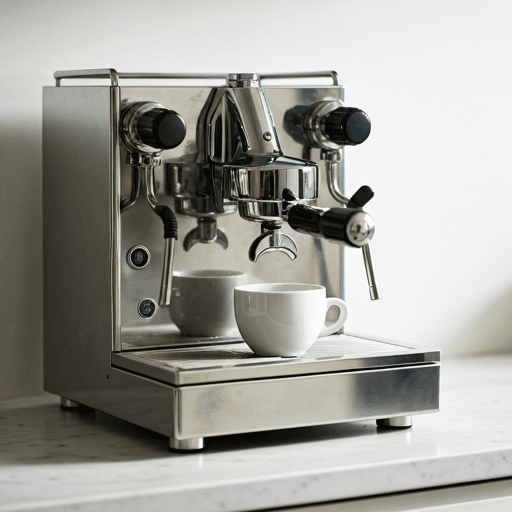
An espresso machine forces hot water at high pressure, around nine bar at the puck, through finely ground coffee to produce a small, concentrated shot topped with crema. It is the only home brewer that makes true espresso, and therefore the only one that can build cappuccinos, lattes and flat whites with steamed milk. If your dream cup is a milk-based cafe drink, this is the category you need.
Espresso rewards effort. Semi-automatic machines give you full control but ask for a good grinder, a consistent dose, a level tamp and a week or two of practice. Bean-to-cup automatics do all of that at the touch of a button, trading some ceiling quality for convenience. Either way, the grinder matters as much as the machine. For the fundamentals, read espresso explained and our walkthrough on how to make espresso at home.
Who espresso machines suit
- People who want espresso, cappuccino, latte or flat white at home.
- Hobbyists who enjoy the barista ritual of dialling in a shot.
- Anyone happy to maintain a machine and pair it with a burr grinder.
French press: full body with the least gear
A French press is an immersion brewer. You steep coarse grounds directly in hot water for about four minutes, then push a metal mesh plunger down to separate the grounds from the liquid. Because the mesh lets coffee oils and fine particles through, the result is the heaviest, richest body of any common method, with a robust, full mouthfeel that flatters dark roasts.
It is also one of the cheapest and most durable ways to brew. There is no electricity, no paper filter and no learning curve beyond timing the steep. The downsides are a little sediment at the bottom of the cup and the need to drink it reasonably soon, since coffee left sitting on the grounds keeps extracting and turns bitter. For the method itself, see our French press coffee guide.
Who French press suits
- Drinkers who want bold, full-bodied coffee without machinery.
- Dark-roast lovers and anyone on a tight budget.
- Travellers and renters who want one rugged, simple brewer.
Pour-over: clarity and control
Pour-over is the manual cousin of drip. You pour hot water over grounds held in a cone-shaped dripper lined with a paper filter, and gravity pulls it through into a cup or carafe. The paper traps oils and fine particles, so the cup is the cleanest and brightest of all the methods, showing off the delicate fruit and floral notes of light and medium roasts.
What you gain in clarity, you pay for in attention. Pour-over is hands-on: you control the water temperature, the pour rate and the bloom, which is exactly the appeal for enthusiasts and the chore for everyone in a hurry. It is built for one or two cups at a time, not a crowd. If drip is pour-over made automatic, then pour-over is drip you steer yourself. To get the grind right for it, see how to grind coffee beans at home.
Who pour-over suits
- People who enjoy the brewing ritual and want to taste single-origin coffee.
- Light and medium roast drinkers chasing brightness and clarity.
- Solo drinkers happy to make coffee a few minutes at a time.
Percolator: the strong, traditional batch brewer
Percolators were once the most common coffee maker in the home. They work by repeatedly cycling boiling water up through a tube and over the grounds until the brew reaches the strength you want. The result is strong and robust, and the stovetop versions are a campsite favourite because they need only a flame.
The same mechanism is the weakness: cycling near-boiling water over coffee again and again risks over-extraction and a bitter, harsh edge if you let it run too long. Modern brewing has largely moved past it for flavour, but a percolator still earns its place for big, piping-hot batches and for the nostalgia and ruggedness it brings outdoors.
Who percolators suit
- Anyone who wants strong coffee in large, hot batches.
- Campers and off-grid brewing where there is no power.
- People who like the old-fashioned ritual and bold taste.
Cold brew makers: smooth and low-acid
A cold brew maker steeps coarse grounds in cold or room-temperature water for 12 to 24 hours, then filters out the grounds to leave a concentrate you dilute over ice or with milk. The long, cool extraction produces a remarkably smooth, naturally sweet, low-acid coffee that is gentle on sensitive stomachs and made for iced drinks.
It asks almost nothing of you except patience. There is no heat, no skill and no fuss, but you do have to plan ahead because the brew takes the better part of a day. Most cold brew makers are just a vessel with a filter, so the kit is cheap. It is the natural pick if your summer drink is iced coffee rather than a hot mug.
Who cold brew makers suit
- Iced-coffee drinkers and warm-climate households.
- People sensitive to acidity who want a smoother cup.
- Anyone happy to brew overnight and pour cold the next day.
How to choose between the best coffee makers for you
When people search for the best coffee makers, they usually mean "best for me," and that comes down to four honest questions. Answer these and the field narrows fast.
- How many cups, and for how many people? One or two cups for yourself points to pour-over, French press or a pod machine. A houseful every morning points to automatic drip or a percolator batch.
- Espresso and milk drinks, or filter coffee? If you want cappuccinos and lattes, only an espresso machine will do. If you want a mug of black or white filter coffee, almost anything else fits.
- How much effort do you enjoy? Pods and drip are set-and-forget. French press and cold brew are simple but a little manual. Pour-over and espresso reward hands-on attention.
- What about running cost? Pods are the priciest per cup; ground coffee and whole beans brewed in drip, press, pour-over or percolator are the most economical over time.
One rule cuts across every type: fresh, well-ground coffee matters more than the machine. The wrong grind size ruins a great brewer, while a fresh grind lifts a modest one. Match the grind to the method, and you are most of the way to a good cup. For the bigger picture on machine features, capacity and upkeep, our complete coffee maker guide ties it all together, and the coffee hub collects the rest of our brewing guides.
The short version
There is no universal best coffee maker, only the right tool for your taste and your morning. Pick drip for easy daily volume, pods for speed and zero mess, an espresso machine for milk drinks, French press for body, pour-over for clarity, a percolator for strong batches, and cold brew for smooth iced coffee. Once you know which lane you are in, dig into the dedicated guide for that brewer and dial in your grind. That is where good coffee really begins.