
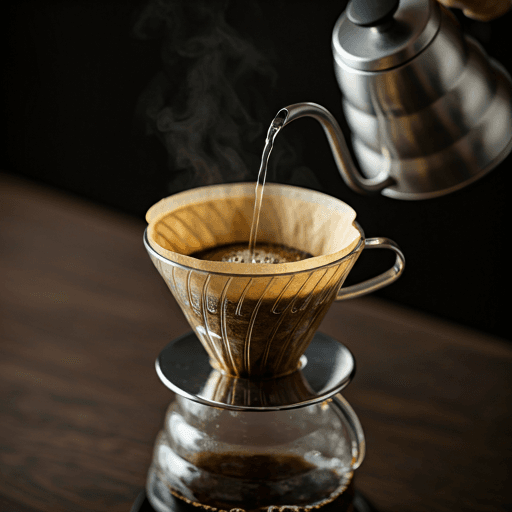
If you want authentic South Indian kaapi, a filter coffee pot almost always brews better than a percolator. The classic stainless-steel filter coffee pot uses slow gravity drip to pull a thick, sweet decoction from coffee and chicory, while a percolator recirculates boiling water that tends to over-extract and turn bitter. Choose the percolator only when speed matters more than that signature smooth, rounded kaapi flavour.
This guide breaks down how each device actually works, how they compare on taste, time and cost in Indian rupees, and which one suits your kitchen, office or cafe. The honest answer here is mostly about brewing physics, not brand loyalty.
What is a filter coffee pot?
A filter coffee pot, also called a South Indian coffee filter or Madras filter, is a two-chamber stainless-steel (or brass) device. The upper chamber has a perforated base and a pressing disc; you spoon in ground coffee, tamp lightly, and pour hot water on top. Over 10 to 25 minutes, gravity pulls a thick, concentrated decoction into the lower chamber. You then mix a small amount of that decoction with hot, frothy milk and sugar to make the cup of kaapi most Indians grew up on.
This is what people mean by a filtered coffee pot: there is no pressure, no boiling of the grounds, just slow percolation through a fine bed of coffee. The slowness is the point. It extracts the sweet, syrupy compounds while leaving most of the harsh, over-roasted bitterness behind. If you want the full ritual, our companion guide on South Indian filter coffee (kaapi) walks through the decoction-to-cup ratio in detail.
The classic coffee pot with filter, part by part
- Top chamber (with perforated base): holds the coffee grounds, acts as the filter.
- Pressing disc: sits on the grounds to keep the bed even so water drips uniformly.
- Bottom chamber: collects the decoction.
- Lid: keeps heat in and dust out while it drips.
A good coffee pot with filter in India costs roughly Rs 250 to Rs 800 for stainless steel, and Rs 1,200 upward for brass. There is nothing to plug in and nothing to break, which is a big part of its enduring popularity in Tamil Nadu, Karnataka, Kerala and Andhra households.
What is a percolator, and how is it different?
A percolator brews by cycling boiling water repeatedly through the coffee grounds. In a stovetop or electric percolator, water in the base heats up, rises through a central tube, showers over the grounds in a basket, drips back down, and the cycle repeats until you stop it. The Italian moka pot works on a related but distinct principle: steam pressure forces water up through the grounds once, which is why many Indians casually call the moka pot a "filter coffee percolator" even though it is technically a pressure brewer.
Percolators are far more common in the West than in India. A stovetop moka pot here runs about Rs 1,500 to Rs 3,500; a true electric percolator is rarer and often Rs 5,000 to Rs 15,000. For the moka route specifically, our Italian moka pot guide covers grind, heat and timing.
Why percolators can taste harsh
The core problem is heat and recirculation. A percolator keeps pushing boiling water through grounds that are already extracted. That repeated contact pulls out the bitter, astringent compounds you actually want to leave behind. Brew too long and you get an over-steeped, scorched decoction. A filter coffee pot avoids this entirely because the water passes through the bed once, at a falling temperature, and is never boiled with the grounds.
Filter coffee pot vs percolator: side-by-side
Here is the honest comparison for an Indian kitchen, using the standard arabica-plus-chicory blend most kaapi drinkers prefer.
| Factor | Filter coffee pot (South Indian filter) | Percolator / moka pot |
|---|---|---|
| Brew method | Slow gravity drip, water passes once | Recirculating boil (percolator) or steam pressure (moka) |
| Taste | Smooth, sweet, rounded, true kaapi | Stronger, sharper, can turn bitter |
| Brew time | 10 to 25 minutes (hands-off) | 3 to 5 minutes (needs watching) |
| Decoction strength | Thick, concentrated, ideal with milk | Concentrated but easy to over-extract |
| Typical India price | Rs 250 to Rs 800 (steel) | Rs 1,500 to Rs 3,500 (moka) |
| Power needed | None | Stovetop or electric |
| Best for | Authentic kaapi, daily home use | Speed, espresso-style strong shots |
Which one brews better kaapi?
For genuine South Indian filter coffee, the filter coffee pot wins on flavour. The slow drip is what gives kaapi its characteristic body and natural sweetness, especially once you cut it with boiled milk and aerate it back and forth between davara and tumbler. A percolator or moka pot can absolutely produce a strong decoction, and on a rushed morning that may be exactly what you need, but the cup leans closer to bitter espresso than to mellow kaapi.
If kaapi is the goal, buy the filter coffee pot. If speed and intensity matter more, a moka pot is the smarter compromise. Most serious filter-coffee homes in India keep the steel filter and never look back.
One practical tip: whichever device you use, the grind and the blend matter as much as the hardware. Kaapi needs a fine grind and a coffee-chicory mix; a true espresso machine needs a different grind again. If you are weighing instant convenience too, our best filter coffee maker buying guide compares pots, drip makers and electric options head to head.
When a percolator (or moka pot) makes sense
- You want a quick, strong shot in under five minutes.
- You prefer a bolder, more espresso-like cup over mellow kaapi.
- You already drink black coffee and add little or no milk.
- You are travelling and want one compact stovetop brewer.
When a filter coffee pot is the clear choice
- You grew up on kaapi and want that exact taste.
- You drink your coffee with boiled milk and sugar.
- You like a hands-off brew you can start and walk away from.
- You want the cheapest, most durable, no-electricity option.
Tips to get the best decoction from a filtered coffee pot
- Use a fine grind. Kaapi-grade coffee is finer than drip but not powder. Too coarse and the decoction is weak; too fine and it clogs.
- Pick the right blend. An 80:20 or 70:30 coffee-to-chicory mix gives the classic body and slow drip. Pure coffee drips faster but tastes thinner.
- Tamp gently. Press the disc down evenly so water spreads across the whole bed.
- Use hot, not boiling, water. Just off the boil is ideal. Boiling water scorches the grounds.
- Be patient. Let it drip fully before you assume it is done. A good decoction is dark and viscous.
- Mix fresh. Combine decoction with hot milk and sugar just before drinking, then froth it between two vessels.
Common mistakes that ruin a filter coffee pot brew
Even with the right hardware, a few habits quietly wreck the decoction. The most common is using too coarse a grind, which lets water rush through and leaves you with a weak, watery cup. The opposite mistake is packing the grounds too tight or grinding too fine, which stalls the drip for an hour and over-extracts the bed. Pouring fully boiling water straight from a roaring kettle scorches the top layer and adds a burnt edge that no amount of milk and sugar can hide. And reusing old, oily grounds, or letting the decoction sit for hours before mixing, both flatten that fresh, sweet character. Get the grind, the water temperature and the timing right and an ordinary steel pot will out-brew an expensive machine for kaapi.
Care, cleaning and how long a filter pot lasts
Part of why a steel filter coffee pot is so loved in Indian homes is that it lasts decades with almost no maintenance. Rinse both chambers and the perforated disc with hot water after every brew, and avoid harsh scouring that can clog the tiny holes. A periodic soak in warm water with a little dish soap clears the coffee oils that otherwise turn rancid and dull the flavour. Brass filters need occasional polishing but reward you with better heat retention. With this minimal care, a single pot can serve a family for ten or twenty years, which makes its low upfront cost look even better next to an electric brewer that may eventually need servicing or spare parts.
Scaling up: offices, cafes and institutions
A steel filter coffee pot is perfect for one household, but it does not scale. If you need to serve dozens or hundreds of cups a day in an office, cafe or canteen, hand-dripping individual pots becomes impractical. That is where bulk Madras-style filter units (3 to 5 litre with a faucet) or a proper coffee machine earns its keep. For high-volume settings, a vending or bean-to-cup machine gives consistent output without a person babysitting each brew. Our guide to the best tea and coffee vending machine for offices covers what to look for.
The bottom line
For real kaapi, the filter coffee pot brews better, smoother and sweeter than a percolator, at a fraction of the cost. Keep a percolator or moka pot around if you want a fast, strong, espresso-style cup, but for the taste most Indians actually mean when they say filter coffee, the humble two-chamber steel filter is unbeaten.