
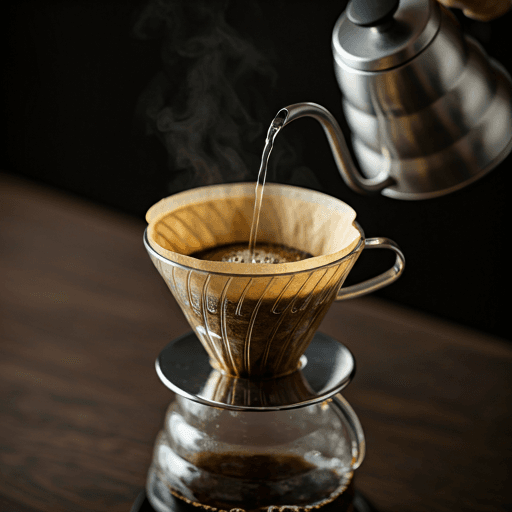
The typica coffee variety is the original cultivated form of Arabica — the ancestral variety from which a huge share of the world's coffee descends. Prized for a clean, sweet, and refined cup yet notoriously low-yielding and vulnerable to disease, Typica traveled out of Ethiopia and Yemen to a single greenhouse tree in Amsterdam, then on to the Caribbean and across Latin America to become the genetic backbone of specialty coffee.
What is the typica coffee variety?
Typica (from the Latin for "typical," and known regionally as Criollo, Indio, or Arábigo) is a variety of Coffea arabica — the species behind nearly all fine coffee. Alongside its sibling Bourbon, it forms one of the two foundational branches of cultivated Arabica. For roughly two centuries it was the coffee: until the mid-twentieth century, the majority of plantations across Central and South America were planted with Typica or its close mutations.
What makes Typica a "cultivar" rather than a wild plant is human selection. Growers propagated it generation after generation for the qualities they valued — a sweet, complex cup and adaptability to new terrain — even as they tolerated its stubbornly low productivity. That trade-off, exceptional quality against fragile agronomics, defines Typica to this day and explains why it eventually ceded ground to hardier hybrids. If you want the wider context of how Arabica differs from the other commercial coffee species, our guide to Arabica vs Robusta sets the stage.
From a single noble tree: the Typica migration story
Arabica coffee originated in the forests of southwestern Ethiopia and was carried across the Red Sea to Yemen, where it entered organized cultivation centuries ago. From the Yemeni port of Mocha, Dutch traders obtained live plants and established coffee on the island of Java, in what is now Indonesia, in the late 1600s. Java's plantations thrived, and it was from there that the variety's most famous journey began.
In the early 1700s, the Dutch shipped a single Java-grown coffee plant back to the botanical garden in Amsterdam. Nurtured under glass, that specimen became legendary — the so-called "noble tree" (de koffieboom), a mother plant whose seeds and cuttings would be distributed across Europe's colonial holdings. In 1714 a descendant was presented to the French court and planted in the royal garden in Paris, quietly seeding the next leg of the story.
Around 1723, a French naval officer named Gabriel de Clieu carried a seedling from Paris across the Atlantic to the Caribbean island of Martinique. The oft-repeated legend has him sharing his own water ration with the plant during a becalmed, storm-tossed crossing. Whatever the embellishments, the seedling survived — and from that founder stock Typica radiated outward to Saint-Domingue (Haiti), Cuba, Puerto Rico, and then across the mainland of Central and South America. An astonishing share of the New World's coffee traces back through this narrow genetic bottleneck to that one Amsterdam tree.
How to recognize a Typica plant
Typica is unmistakable in the field. It grows tall and conical, with a single dominant vertical trunk and lateral branches that angle downward, forming an angle of roughly 50 to 70 degrees with the stem. Left unpruned it can reach around four to five meters (13 to 16 feet), with a thin trunk and branches spaced comparatively far apart. The tell-tale field marker is the color of the new growth: young leaf tips emerge a coppery bronze rather than the green of Bourbon-type plants. Its beans tend to be large and elongated relative to other Arabicas.
That elegant, open architecture comes at a cost. The plant's low branch density means fewer nodes bearing cherry, and Typica is slow to come into production, typically giving its first real crop only around the fourth year — later and lighter than more compact modern varieties. The extreme mutation known as Maragogipe (the "elephant bean"), first found in Brazil, pushes the large-seed tendency to its limit, producing enormous beans on an even larger, sparser plant.
Typica vs Bourbon at a glance
The clearest way to understand Typica is to set it beside its sibling. Both descend from the same early cultivated Arabica, but centuries of separate selection gave them distinct habits and yields.
| Trait | Typica | Bourbon |
|---|---|---|
| Plant shape | Tall, conical, sparse branching | Slightly more compact, denser branching |
| New leaf tips | Bronze | Green |
| Yield | Very low (~20–30% less cherry than Bourbon) | Higher than Typica |
| Bean size | Large, elongated | Smaller, rounder |
| Leaf rust | Very high susceptibility | Susceptible, slightly less so |
| Cup character | Clean, sweet, refined, elegant | Sweet, rounded, more overtly fruity |
The Typica cup: clean, sweet, and elegant
Ask a roaster why growers keep planting a coffee this difficult and the answer is always the flavor. At its best, Typica delivers a strikingly clean, transparent cup with restrained, refined acidity and gentle sweetness. Common tasting notes include mild chocolate and nuts, soft stone fruit such as black cherry and plum, and, at high elevation, a delicate floral lift. It is rarely loud or aggressively fruity; the appeal is elegance, balance, and clarity rather than intensity.
Terroir shapes those notes considerably. Typica adapts well to cool, high-grown conditions, and World Coffee Research rates its quality potential as very good at altitude — generally above roughly 1,600 meters within a few degrees of the equator, easing to lower elevations at higher latitudes. The higher and cooler the site, the slower the cherries mature, concentrating sugars and sharpening that signature refinement.
Why Typica was widely replaced
For all its virtues, Typica is a grower's headache. It carries a very high susceptibility to coffee leaf rust (Hemileia vastatrix), the fungal disease that has repeatedly devastated Arabica across the tropics, and it is also vulnerable to nematodes and coffee berry disease. Combine that fragility with a naturally meager harvest, and the economics become punishing on a commercial scale.
Through the twentieth century, as rust pressure mounted and productivity became paramount, farmers shifted toward Bourbon-descended and hybrid selections — Caturra, Catuai, and rust-resistant Catimor and Sarchimor lines among them — that yield more cherry on shorter, easier-to-harvest plants. Typica retreated to niches where its cup quality justified the risk and low return, which is why encountering a genuinely pure Typica lot today often signals a producer prioritizing flavor over volume.
Famous Typica-derived varieties
Even where the name "Typica" has faded from labels, its genetics persist under regional identities. Many of the world's most celebrated coffees are, at heart, Typica selections adapted to local ground:
- Jamaica Blue Mountain — the mellow, exceptionally balanced coffee grown in Jamaica's misty highlands is a Typica selection prized for its softness and clarity. See our full Blue Mountain coffee guide.
- Kona — Hawaii's flagship coffee grew from Typica planted on the volcanic slopes of the Big Island, yielding a buttery, gently sweet cup. Explore it in our Kona coffee guide.
- Sumatra Typicas — the classic Indonesian selections Bergendal and Sidikalang are Typica lines that, paired with the region's wet-hulled processing, give the earthy, full-bodied character of Sumatran coffee.
- Pluma Hidalgo, Criollo, San Ramón and Pache — an array of Latin American regional strains grown for generations, all sitting within the broader Typica family as local mutations or selections.
Buying and brewing Typica: what to look for
Because "Typica" often hides behind a place name, the surest route to the experience is single-origin coffee that names the variety on the bag — a pure Typica lot, or one of its regional heirlooms like Blue Mountain or Kona. Look for high-grown, carefully processed lots; washed Typica tends to showcase the variety's clean, articulate side, while natural processing pushes the stone-fruit sweetness forward.
In the cup, Typica rewards a lighter-to-medium roast that preserves its delicacy rather than burying it under roast character. Pour-over and other filter methods flatter its transparency and refined acidity, letting the black cherry, plum, and soft chocolate notes read clearly. It is a coffee to sip attentively rather than to power through — subtlety, not punch, is the whole point.
The editorial takeaway
Typica is less a single coffee than a lineage — the quiet ancestor standing behind Kona, Blue Mountain, countless Latin American heirlooms, and, by extension, much of what we drink today. Its story is a study in trade-offs: a variety generous with flavor but miserly with yield and defenseless against rust, kept alive by growers who decided some cups are worth the trouble. To seek out a true Typica now is to taste coffee close to its cultivated roots, and to appreciate why this fragile, elegant plant earned its place at the very start of Arabica's family tree.