
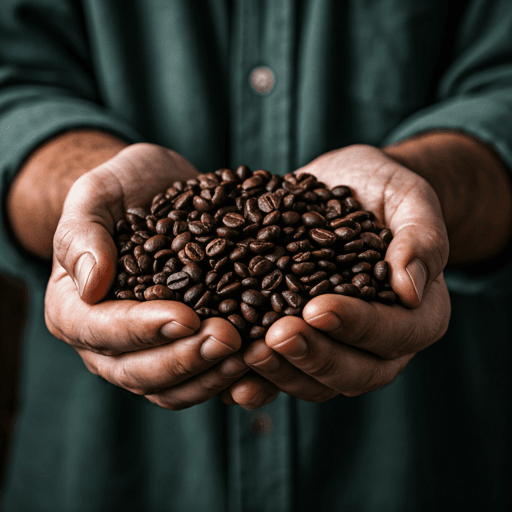
Blue Mountain coffee is a high-grown arabica from the Blue Mountains of eastern Jamaica, and it is one of the most famous and most expensive coffees in the world. Grown slowly in cool, misty, high-altitude conditions, it is prized for a notably smooth, clean, well-balanced cup with bright-but-gentle acidity, mild sweetness, and almost no bitterness. The name is also legally protected: only certified coffee from the defined region may be sold as Jamaica Blue Mountain coffee.
This guide explains where it comes from, what makes the cup so distinctive, why it commands such a premium, and the buyer-beware traps to watch for so you can tell a genuine bag from a marketing label.
What is Blue Mountain coffee?
Blue Mountain coffee is arabica of the Typica variety, grown in a tightly defined mountain region in the east of Jamaica, between the capital Kingston to the south and Port Antonio to the north. To qualify, the coffee must come from the recognized parishes (St. Andrew, St. Thomas, Portland, and St. Mary) and grow within a specific altitude band, roughly 900 to 1,700 meters above sea level. Coffee from lower elevations on the same island is sold under different names such as Jamaica High Mountain or Jamaica Supreme, and cannot legally use the Blue Mountain designation.
The phrase "coffee blue mountain" gets searched a lot, but the official, protected term is Jamaica Blue Mountain coffee. It refers to an origin and a certification, not a brand of roaster. That distinction matters when you shop, because plenty of products borrow the words without the certification behind them.
Where the name comes from
The Blue Mountains are Jamaica's highest range, rising past 2,200 meters. Their slopes are frequently wrapped in cool mist and cloud, and the soil is rich volcanic loam. That combination of altitude, climate, and ground is exactly what gives the coffee its character, which is why the name is tied so strictly to geography.
What makes Jamaican Blue Mountain coffee so special
The short answer is altitude and weather. High up, temperatures are cooler and the cherries ripen slowly. Slow ripening lets sugars and flavor compounds develop more fully while keeping harsh, bitter notes in check. The frequent cloud cover acts like natural shade, slowing things down further.
The result is a cup that tasters describe as exceptionally smooth and clean. Expect a soft, creamy body, a gentle and pleasant acidity rather than a sharp tang, mild natural sweetness, and a long, mellow finish. The best lots are famous specifically for their lack of bitterness, with subtle chocolate, nutty, herbal, and floral hints rather than the bold, jammy fruit you might find in some African coffees. It is balance, not drama, that people pay for. If you enjoy a refined, easy-drinking cup, this is the appeal; if you chase intense flavor fireworks, you may find it understated.
Blue Mountain is not about being the loudest coffee in the room. It is about being one of the smoothest, cleanest, and most forgiving cups you can brew.
The certification: what "Jamaica Blue Mountain" legally means
Jamaica Blue Mountain is a protected certification mark, similar in spirit to Champagne or Parmigiano-Reggiano. The Jamaican authorities, historically the Coffee Industry Board and now the Jamaica Agricultural Commodities Regulatory Authority, inspect and certify the coffee. Only beans grown in the defined region, processed to set quality standards, and approved by the authority may legally carry the name. The mark is registered in major markets including the United States, the United Kingdom, and the European Union.
Certified beans are graded by size and defects, with Number 1 the largest and cleanest, followed by Number 2 and Number 3, plus a small rounded peaberry grade. Authentic export lots are traditionally shipped in distinctive handcrafted wooden barrels rather than ordinary sacks, a packaging tradition almost unique to this origin and used partly to protect the beans from outside odors. If you ever see a roaster show those barrels, it is a real signature of the trade.
Why Blue Mountain coffee is so expensive
Jamaica Blue Mountain coffee is consistently one of the priciest specialty coffees you can buy. Several factors stack up, and none of them are about a single roaster setting a high number.
- Tiny growing area. The certified zone is small, so the total amount of genuine Blue Mountain coffee in the world each year is limited no matter how much demand there is.
- Low yields and hard terrain. The steep mountain slopes cannot be farmed by machine. Cherries are hand-picked, often selectively, which is slow and labor-intensive.
- Higher production costs. Labor and living costs in Jamaica are higher than in many large coffee-producing nations, so the same quality costs more to grow and process.
- Certification overhead. Inspection, grading, and quality control add cost at every step, which is the price of protecting the name.
- Heavy concentrated demand. Japan has long been devoted to this coffee and buys the large majority of the crop, historically around 80 percent. That leaves only a small share for the rest of the world and keeps prices high.
Put simply, you have a small supply, expensive to produce, mostly spoken for before it leaves the island. We will keep cost qualitative here: it sits firmly in the premium-to-luxury tier of specialty coffee. For more on where it ranks among the world's rarest beans, see our look at the most expensive coffee in the world.
Blue Mountain coffee at a glance
| Attribute | Blue Mountain coffee |
|---|---|
| Species and variety | Arabica, traditionally Typica |
| Origin | Blue Mountains, eastern Jamaica |
| Altitude | Roughly 900 to 1,700 meters |
| Cup character | Smooth, clean, balanced, gentle acidity, mild sweetness, very low bitterness |
| Top grade | Number 1 (largest, fewest defects) |
| Certification | Protected mark, certified by the Jamaican coffee authority |
| Traditional packaging | Handcrafted wooden barrels |
| Main export market | Japan (the large majority of the crop) |
| Price tier | Premium to luxury specialty coffee |
Buyer beware: "Blue Mountain blend" versus the real thing
This is the most important practical point. Many supermarket products labeled "Blue Mountain blend" or "Blue Mountain style" contain only a small percentage of genuine Jamaica Blue Mountain coffee, sometimes a token amount, with the rest made up of cheaper beans from elsewhere. A blend can be perfectly enjoyable, but it is not the same thing, and it should not cost the same.
How to make sure you are getting genuine Blue Mountain coffee
- Look for "100% Jamaica Blue Mountain." The wording matters. "100%" and "Jamaica Blue Mountain" together is your strongest signal.
- Check for certification. Reputable sellers reference certification by the Jamaican coffee authority and can point to it.
- Be suspicious of "blend" and "style." These words usually mean a minority of real Blue Mountain, or none at all.
- Mind the price. If a bag is priced like ordinary supermarket coffee, it is almost certainly not pure Blue Mountain. Genuine lots are expensive for the reasons above.
- Buy from a roaster who names the origin clearly. Transparency about grade and estate is a good sign.
How to brew and enjoy it
Because Blue Mountain is delicate and balanced, the goal is to stay out of its way. A clean, gentle brew method such as pour-over or a drip machine tends to show off its smoothness best, while a French press gives a fuller body. Use freshly ground beans, water just off the boil, and a standard ratio of around one part coffee to sixteen or seventeen parts water. A medium roast usually preserves the origin character; very dark roasting can flatten the subtlety you paid for. Brewed black, it is mild and forgiving, which is part of its charm.
It is, in the end, arabica done at the high, careful end of the spectrum. If you want to understand why that matters, our explainer on arabica versus robusta coffee beans covers how species and altitude shape the cup, and what coffee beans actually are is a good grounding in the basics.
Is Blue Mountain coffee worth it?
That depends on what you value. If you love a clean, smooth, low-bitterness cup and enjoy the story behind a rare, certified origin, it is a genuine treat and one of the world's benchmark coffees. If you prefer big, bold, fruit-forward flavor, you may find it too gentle for the price. Either way, it is a landmark example of how geography and altitude define quality, which is the heart of what specialty coffee is all about. Buy it as an occasional indulgence, insist on the genuine 100% certified article, and brew it simply, and you will taste exactly why Jamaica Blue Mountain coffee has stayed famous for so long.