
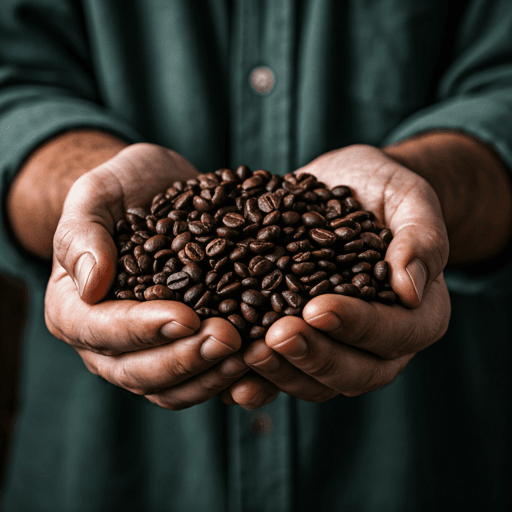
The most expensive coffee in the world is almost always one of two things: kopi luwak (the famous "cat poop coffee" produced from beans eaten and excreted by the Asian palm civet) or ultra-rare auction lots of Panama Geisha. Kopi luwak built the legend, often selling for the equivalent of thousands of rupees per kg, but in recent years competition-grade Geisha has shattered every record. This guide explains what these coffees actually are, why the prices are so wild, whether they are worth it, and what it all means for a home, office or cafe buyer in India.
Spoiler for the busy reader: the price tag is mostly about scarcity, story and novelty, not a flavour that is 20 to 60 times better than a good cup. If your real goal is reliably excellent coffee every morning, the lever that matters is your machine and your beans, not chasing a luxury lot. We will come back to that, but first, the answer you came for.
What is the most expensive coffee in the world?
There is no single official title, because "most expensive" depends on whether you mean the highest retail price you can casually buy, or the highest price ever paid at auction. Two names dominate every list.
Kopi luwak (civet coffee) - the original "cat poop coffee"
Kopi luwak is an Indonesian coffee made from beans that have passed through the digestive tract of the Asian palm civet (Paradoxurus hermaphroditus), a small cat-like mammal. The civet eats ripe coffee cherries, the fruit is digested, and the seed - the coffee bean - is collected from the droppings, washed thoroughly, sun-dried and roasted. Fermentation in the animal's gut is said to break down some proteins and soften the bitterness, which is the entire selling point. Because it is genuinely odd and genuinely scarce, it became famous as the costliest coffee in the world and earned the blunt nickname "cat poop coffee".
Black Ivory - the elephant version
Black Ivory Coffee from Thailand uses the same idea but with elephants instead of civets. Production is tiny - only a couple of hundred kg a year - so a single cup at a luxury hotel can cost the equivalent of several thousand rupees. It rarely reaches Indian shelves and is more a curiosity than a practical buy.
Panama Geisha - the auction record-breaker
The truly eye-watering numbers come from competition coffee, not animal-processed coffee. Geisha (or Gesha) grown at estates like Hacienda La Esmeralda in Panama has sold at auction for tens of thousands of US dollars per kg for the very top micro-lots. This is not poop coffee at all - it is an exceptional, delicately floral arabica grown at altitude, in tiny quantities, judged and bid on by the world's roasters. When a headline says a coffee sold for a record price, it is almost always a lot like this.
Other rare lots worth knowing
- Saint Helena coffee - grown on the remote Atlantic island where Napoleon was exiled; rarity and shipping push the price up.
- Jamaican Blue Mountain - a long-established premium name, tightly certified and export-limited.
- Hawaiian Kona - small US-grown volumes that command a steady premium.
- Indian civet coffee from Coorg - a domestic, India-grown answer to kopi luwak, more on this below.
Why is the most expensive coffee in the world so expensive?
It helps to separate two very different reasons a coffee can be costly: genuine quality and scarcity versus novelty and story.
- Tiny supply. Whether it is civet droppings collected by hand or a half-tonne of prize-winning Geisha, you cannot simply make more. Low volume plus high demand equals high price - the same logic that drives any luxury good.
- Labour-intensive harvest. Authentic wild kopi luwak means people walking forest floors to find and clean droppings. That is slow, manual work.
- The story sells. A lot of the kopi luwak price is paying for the anecdote - the "I drank cat poop coffee" dinner-party line. Multiple reviewers and food scientists have noted the taste is pleasant but not dramatically better than other fine coffees; the legend does the heavy lifting.
- Auction dynamics. For Geisha, roasters bid competitively for bragging rights and a halo product, which pushes the per-kg figure far beyond what the coffee "costs" to grow.
In short, you are usually paying for rarity and narrative. A blind taste test rarely justifies paying 20 to 60 times the price of an excellent everyday cup.
How much does it cost in India? (INR framing)
Prices change constantly and vary by brand, pack size and whether the coffee is imported or India-grown, so treat the figures below as durable bands rather than today's exact rate. Always check current listings before you buy.
| Coffee | Typical India price band | What you are really paying for |
|---|---|---|
| Indian civet coffee (Coorg, Karnataka) | ~Rs 9,000-12,000 per kg | Domestic kopi luwak-style novelty, no import cost |
| Imported Indonesian kopi luwak | Often higher than domestic, plus import markup | The original "cat poop coffee" name and story |
| Black Ivory (elephant) - cafe/hotel cup | Several thousand rupees per cup, where available | Extreme scarcity and spectacle |
| Record-lot Panama Geisha | Auction-only; effectively unattainable retail | World-class flavour and bragging rights |
| Excellent Indian specialty arabica | ~Rs 600-1,500 per kg | Genuinely great daily coffee - the smart buy |
On a per-cup basis, India-grown civet coffee brewed at home often works out to roughly Rs 90-150 per cup of beans - before any cafe markup. That sounds dramatic until you notice that the same money buys you outstanding single-origin Indian coffee with none of the ethical baggage.
The ethical problem behind cat poop coffee
This is the part most luxury listicles skip, and it matters. The romantic image of kopi luwak is a wild civet roaming free and choosing the ripest cherries. The reality of much of the modern industry is very different. Investigations by animal-welfare groups have documented civets kept in small, filthy battery cages, force-fed coffee cherries far beyond their natural diet, showing signs of stress, injury and a shortened lifespan.
Caged kopi luwak is both an ethics problem and a quality problem: stressed, force-fed animals do not produce the carefully "selected" beans the marketing promises, and producers have admitted that genuinely wild-sourced coffee is hard to guarantee.
There is also widespread mislabelling - "wild" or "100% wild" claims that are difficult to verify. If you do choose to try civet coffee, look hard for credible, traceable wild-sourcing, and treat unusually cheap "kopi luwak" with suspicion. For many buyers, once they know how it is produced, the novelty wears off fast.
What does it actually taste like - and is it worth it?
Honest answer: pleasant, smooth, lower in bitterness - but not magic. Tasters often describe kopi luwak as a clean, mild cup rather than a revelation, and several have openly questioned whether it is worth many times the price of a good ordinary coffee. Record-lot Geisha is a different story - it can be genuinely extraordinary, with jasmine and stone-fruit notes - but you will essentially never see it at retail, and at competition prices it is a collector's item, not a daily drink.
So if your aim is to impress someone once or tick a bucket-list box, a small, ethically sourced sample can be a fun experience. If your aim is great coffee every single day, the most expensive coffee in the world is one of the worst-value choices you can make. To understand why, it helps to know what really drives coffee prices and quality.
What actually drives coffee prices (the part that affects your daily cup)
Behind the luxury headlines sits the real coffee market - and that is what shapes what you pay for everyday beans. A few durable forces:
- Arabica vs robusta. Arabica is smoother and pricier; robusta is stronger, more bitter and cheaper, and India is a major robusta grower. The blend in your pack moves the price. See our arabica vs robusta price guide for the full picture.
- Global futures markets. Bulk coffee is priced off the ICE arabica market (New York) and the ICE robusta market (London). These set the baseline that flows down to Indian roasters and brands.
- USD-INR. Coffee is traded in dollars, so a weaker rupee makes imported beans and machines costlier even if the global price is flat.
- Weather and harvest. Frost or drought in Brazil, supply from Vietnam, and the monsoon-fed crop in Karnataka, Kerala and Tamil Nadu all swing availability and price.
- The bean-to-cup chain. Picking, processing, roasting, packaging, transport and retail margin each add cost between the farm and your cup.
If you want to follow the market yourself, you can track live arabica and robusta prices on commodity exchanges and broker or charting platforms, and Indian financial sites and MCX-style data feeds. We walk through this in our coffee prices in India explainer and how to read coffee price charts guide.
The smarter buy for homes, offices and cafes in India
Here is the practical takeaway. The thing that determines whether your coffee is consistently good is rarely the exotic bean - it is whether you can brew the same quality cup every time. Great espresso is repeatable. A reliable machine plus fresh, well-grown Indian beans will beat a one-off luxury bag almost every day of the year, at a fraction of the cost.
- For homes: a good espresso machine or filter setup, paired with fresh local beans, gives you cafe-grade coffee for a small fraction of any luxury-lot price.
- For offices: a tea and coffee vending machine delivers a consistent cup for every employee through the day, with predictable per-cup economics - far more useful than a novelty bag in the pantry.
- For cafes: consistency and throughput win repeat customers. The right commercial machine and a solid house blend matter more than a headline-grabbing rare lot.
Spend the "luxury coffee" budget on a machine that pays you back in great cups for years, and on genuinely excellent Indian beans, and you will out-drink kopi luwak every morning without the ethical worry.
The bottom line
The most expensive coffee in the world - whether it is kopi luwak cat poop coffee or a record Panama Geisha lot - is a fascinating story and, occasionally, a fun one-time experience. As a daily drink it is poor value, and the civet-coffee trade carries real animal-welfare concerns you should not ignore. For an Indian buyer, the reliable path to brilliant coffee is a good machine and fresh local beans, not a luxury price tag.