
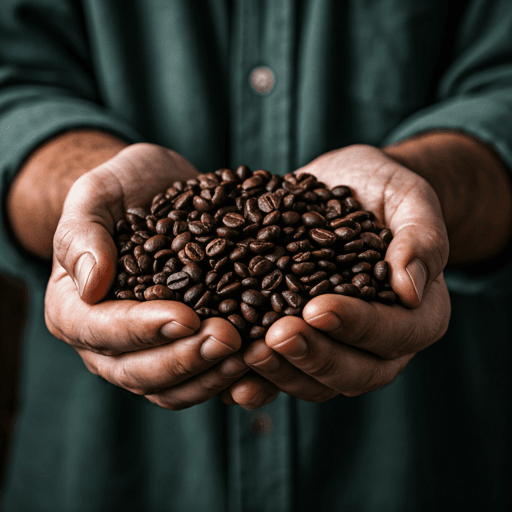
Indonesian Sumatra coffee is a heavy, earthy, low-acid arabica grown on the island of Sumatra, and it tastes unlike almost any other origin in the world. The trademark notes are dark chocolate, cedar, herbs, tobacco and a savory, almost forest-floor depth, with a thick, syrupy body and very little of the bright fruit acidity you find in African or Central American coffees. Most of that character comes from one unusual step: a local processing method called wet-hulling. This guide explains what makes Sumatra coffee so distinctive, walks through its main growing regions, and shows you how to brew it at home.
What is Indonesian Sumatra coffee?
Sumatra is one of the larger islands of Indonesia, and it sits among the world's most important coffee-producing countries. The coffee we are talking about here is arabica grown in the cool highlands that run down the island's spine along the Bukit Barisan mountain range, much of it near the great volcanic crater lake, Lake Toba. When people say "Sumatran coffee" or "Indonesia Sumatra coffee," they usually mean these full-bodied highland arabicas rather than the robusta that also grows on the island.
If you have only ever had bright, citrusy "third wave" coffees, Sumatra can be a surprise. It is the classic example of an earthy, low-acid, full-bodied cup. Where many origins are prized for sparkle and clarity, Sumatra is prized for weight, mellow richness and a deep, rounded flavor that holds up beautifully to milk and to darker roasting. To understand why, you have to look at how the beans are processed after picking. If you are new to the raw material itself, our explainer on what coffee beans are and the deeper dive into arabica coffee beans are useful companions to this page.
Wet-hulling (Giling Basah): the secret behind the flavor
The single biggest reason Sumatra tastes the way it does is a processing method called wet-hulling, known locally as Giling Basah. It is rare elsewhere in the coffee world and is one of the defining traditions of Indonesian coffee.
To see why it matters, it helps to know what normally happens. In most origins, the parchment layer (the papery husk around the green bean) stays on until the bean is fully dried to roughly 10 to 12 percent moisture. Only then is it hulled off. This protects the bean during drying and tends to produce a cleaner, brighter, more acidic cup.
Wet-hulling breaks that rule. Farmers and collectors remove the parchment much earlier, while the bean is still soft and damp at a high moisture content, commonly cited in the rough range of 25 to 50 percent. The naked green bean then finishes drying exposed directly to the warm, humid air, often taking on a distinctive bluish-green color. That early exposure, plus the physical stress on a soft bean, drives the chemical changes that create Sumatra's signature taste: muted acidity, a big heavy body, and those earthy, herbal, cedar, mushroom and savory notes. Wet-hulling is also a practical answer to a wet, humid climate where waiting for a full slow dry is difficult. The result is a processing style that gives Sumatra a flavor fingerprint you can pick out blind.
How Sumatra tastes, in plain terms
Across regions, most Sumatra coffee shares a recognizable profile:
- Body: full, thick, sometimes almost syrupy.
- Acidity: low and soft, never sharp or citrusy.
- Flavor notes: dark chocolate, cedar and wood, earth, dried herbs, tobacco, baking spice, and sometimes a savory or mushroom-like edge.
- Finish: long, mellow and rounded rather than crisp.
This is a love-it-or-leave-it style. Fans find it warming, grounding and deeply satisfying; people who chase fruity brightness sometimes find it heavy. Both reactions are normal, because Sumatra is genuinely doing its own thing.
The key Sumatra coffee regions
"Sumatra coffee" is really a family of regional styles. Three names dominate, and learning them is the fastest way to read a bag of Indonesian Sumatra coffee.
Mandheling (Mandailing)
Mandheling coffee is the most famous Sumatran name worldwide. It is a trade name rather than a single town, derived from the Mandailing people of the Tapanuli region of North Sumatra, who have long farmed and processed coffee there. "Mandheling coffee" today broadly means wet-hulled arabica from the northern Sumatran highlands. It is the textbook Sumatra cup: full body, low acidity, and earthy notes of dark chocolate, nuts and spice, often with woody, herbal or lightly smoky undertones. Because that character survives heavy roasting so well, Mandheling is a staple of dark roasts and blends.
Gayo (Aceh)
Gayo coffee comes from the highlands around the town of Takengon and Lake Laut Tawar, at the northern tip of Sumatra in the Aceh region, with farms commonly sitting between roughly 1,100 and 1,600 meters. Much of it is grown by smallholder cooperatives, often under shade trees and certified organic. Sitting a little higher than some other Sumatran origins, Gayo tends to be the more nuanced and slightly lighter-bodied expression: still earthy and chocolatey, but cleaner and more layered, sometimes with a gentle brightness and a creamy texture.
Lintong
Lintong coffee is grown in the Lintong Nihuta district to the southwest of Lake Toba. It is often described as the cleaner, brighter and more structured of the major Sumatran origins, with a touch more perceived acidity and less of the rough earthiness that defines classic Mandheling. Expect light sweetness, low acidity and that characteristic earthy, cedar aroma.
| Region | Where | Style in the cup |
|---|---|---|
| Mandheling | Tapanuli, North Sumatra | Heaviest, earthiest, classic dark chocolate and spice |
| Gayo | Aceh (Takengon, Lake Laut Tawar) | Slightly lighter, cleaner, more layered and complex |
| Lintong | Near Lake Toba | Cleaner and brighter, more structure, gentle sweetness |
Why Sumatra is prized in dark roasts and blends
There is a reason so many house blends and "dark roast" bags lean on Indonesian Sumatra coffee. Its bold, earthy, spicy character holds up under medium-dark and dark roasting better than most beans, where lighter, more delicate coffees would lose their personality. The low acidity and big body also make Sumatra a natural anchor in a blend: it adds weight, depth and a smooth backbone that balances brighter, livelier components.
That same heaviness is why Sumatra shines in milk drinks and works well in espresso blends, where its body cuts cleanly through steamed milk. Roasters love it for exactly these reasons, and if you want to understand what happens between the green bean and your bag, our coffee roasters guide explains what happens at the roastery and how a roaster shapes a bean like this one.
How to brew Sumatra coffee at home
Sumatra's body and low acidity make it forgiving and rewarding, especially with immersion and full-bodied methods. A few pointers:
- Pick your roast. Medium to medium-dark is the sweet spot for showcasing the earthy, chocolatey character. Many people enjoy it darker still; the spicy, savory notes survive deep roasting unusually well.
- Try a French press. The full-immersion brew amplifies Sumatra's thick body and rich flavors, and the metal filter lets its oils through. This is many people's favorite way to drink it.
- Or reach for a pour-over dripper. A method like the V60 gives a cleaner cup that highlights the cocoa and cedar notes while taming some of the heaviness.
- Mind the ratio. Around 1 part coffee to 15 to 17 parts water is a good starting point; lean toward the stronger end to enjoy the body.
- Grind fresh and match the method. Coarser for French press, medium for pour over. Freshly ground beans make a far bigger difference here than any single gadget.
Because Sumatra is naturally low in acidity, it is a friendly choice for anyone who finds brighter coffees a little sharp, and it takes milk gracefully without turning thin or sour.
A quick word on the name "Mandheling"
You will often see Sumatran coffee sold as "Mandheling," and there is a well-known story behind the spelling. The name comes from the Mandailing people of North Sumatra. As coffee lore tells it, a visitor once asked a local what the excellent coffee was called, and the answer named the ethnic group rather than a place; the name stuck as a trade label. Whatever the exact history, "Mandheling coffee" today is shorthand for classic wet-hulled Sumatran arabica, and it remains one of the most recognized origin names in the world.
The bottom line
Sumatra coffee earns its reputation honestly. The wet-hulled Giling Basah tradition gives it an earthy, full-bodied, low-acid cup that no other origin quite matches, and its regional styles, from the heavy classic Mandheling to the cleaner Gayo and Lintong, give you plenty to explore. If you have only ever had bright, fruit-forward coffees, a good Sumatra is a genuinely different experience worth seeking out. To keep going, browse the rest of our coffee guides to find your next favorite origin.