
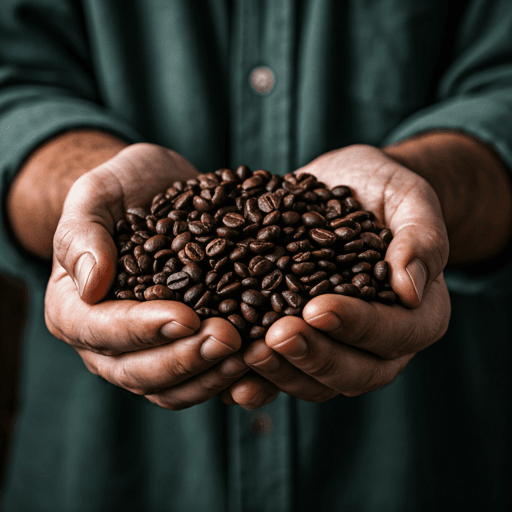
The bourbon coffee variety is one of the two foundational cultivars of Coffea arabica — the other being Typica — and it is prized for a cup that is sweet, syrupy, and beautifully balanced. To clear up the obvious confusion first: this is a coffee plant, not the American whiskey. The name comes from Île Bourbon, a French island east of Madagascar now called Réunion, where Typica-type seedstock from Yemen diverged over generations into something distinct and delicious.
What is the bourbon coffee variety?
The bourbon coffee variety is a distinct arabica cultivar — widely understood to have emerged from the same Yemeni seedstock as Typica — and it became a parent to a huge share of the world's specialty arabica. Genetically it belongs to the same narrow family as almost every classic Latin American and East African coffee, and its DNA runs through cultivars grown from Brazil to Rwanda. Where Typica gives a clean, elegant, sometimes lighter cup, Bourbon tends toward more sweetness, more body, and a rounder complexity — the traits that made it the reference point for "great coffee" long before modern breeding programs existed.
Because the word doubles as a spirit, it helps to say it plainly one more time: there is no bourbon whiskey, no barrel aging, and no alcohol involved. The link is purely historical — both the coffee and, indirectly, the drink trace their names back to the French House of Bourbon. In coffee, "Bourbon" simply names a specific arabica variety with a specific pedigree.
Origin: from Yemen to Réunion island
Arabica coffee reached the wider world through Yemen, and it was Yemeni Typica-type plants that the French carried east. Records suggest French traders attempted to establish coffee on Île Bourbon more than once in the early 1700s — with accounts often citing shipments around 1715 and 1718, of which only a handful of trees survived. On the island's fertile volcanic soil and in its tropical climate, those plants slowly diverged from their Typica ancestors across generations of natural selection.
The result was a genetically distinct cultivar that took the island's name: Bourbon. For well over a century it stayed put, a regional curiosity grown mainly on Réunion itself. Its global career only began in the mid-1800s, when it finally left the island and started its remarkable spread across two continents. If you want the fuller botanical context, our primer on arabica vs robusta coffee beans explains where arabica sits in the coffee family before Bourbon and Typica split off.
How Bourbon spread across the world
Bourbon travelled along two main routes, and both matter for the coffees you drink today.
The first went to the Americas. Bourbon was introduced to Brazil around 1860 near Campinas in the south, then pushed north into Central America. It became a backbone variety in El Salvador, Guatemala, Honduras, Colombia, and beyond — often the plant that defined a country's "classic" flavour profile before higher-yielding hybrids arrived.
The second route ran to East Africa. French Spiritan missionaries carried Bourbon from Réunion to Zanzibar and the East African coast in the late 1860s, and from there it seeded the highland coffees of the Great Lakes region. This is why Bourbon is so central to the reputations of Rwandan coffee and neighbouring Burundi, where Red Bourbon remains a signature. Its descendants also underpin the famous auction lots of Kenyan coffee, whose renowned SL28 and SL34 selections draw partly on Bourbon-related lineage.
Why growers love it — and why it is hard to grow
Bourbon's fame rests on cup quality. At its best it delivers pronounced sweetness, a syrupy or rounded body, gentle but lively acidity, and a layered complexity that rewards careful roasting and brewing. It performs best at altitude — roughly 1,100 to 2,000 metres — where slow cherry maturation concentrates sugars.
That quality comes at a cost. Bourbon yields more than Typica (often cited at 20–30% more), but far less than modern dwarf hybrids, and its open, tall growth habit makes harvesting less efficient. It is also susceptible to the major coffee diseases, especially leaf rust and coffee berry disease. On commercial farms chasing volume, those weaknesses pushed Bourbon aside; in specialty programs chasing flavour, they are a trade-off worth making.
Bourbon vs Typica at a glance
| Trait | Bourbon | Typica |
|---|---|---|
| Origin | Île Bourbon / Réunion | Yemen, spread via Indonesia and the Caribbean |
| Cherry colour | Red (also yellow, orange, pink) | Typically red |
| Yield | Moderate; higher than Typica | Low |
| Cup character | Sweet, syrupy body, balanced acidity, complex | Clean, elegant, sweet, sometimes lighter body |
| Bean shape | Rounder, slightly smaller | More elongated |
| Disease resistance | Low (susceptible to leaf rust) | Low |
If you want to go deeper on the sibling side of this family tree, see our dedicated guide to the Typica coffee variety.
The colour sub-types: Red, Yellow, Orange and Pink Bourbon
One reason Bourbon fascinates coffee people is that it appears in several cherry colours, each with a slightly different reputation.
- Red Bourbon — the original and most widespread form, ripening to a deep red cherry. It is the benchmark, especially strong in Rwanda, Burundi, and Central America.
- Yellow Bourbon — a form associated with Brazil, where it is thought to have arisen from a cross involving Red Bourbon and a yellow-fruited variety. Cherries ripen golden-yellow and the cup is often described as soft, sweet, and heavy-bodied.
- Orange Bourbon — rarer still, generally regarded as a cross between the red and yellow forms, producing an orange cherry and a delicate, honeyed profile.
- Pink Bourbon — celebrated in Colombia's Huila region for floral, tea-like, complex cups. It is usually described as an intermediate between red and yellow, though some genetic testing suggests certain "Pink Bourbon" lots may not be pure Bourbon at all — a reminder that names in the field can outrun the genetics.
The Bourbon family tree: cultivars it spawned
Perhaps Bourbon's greatest legacy is not what it brews but what it produced. A striking number of important cultivars are direct mutations or descendants of Bourbon:
- Caturra — a single-gene dwarf mutation of Bourbon discovered in Brazil between 1915 and 1918, with formal selection beginning at Brazil's IAC institute in the 1930s. Its compact size made high-density planting possible and reshaped Latin American farming. See our full guide to the Caturra coffee variety.
- Pacas — a natural dwarf mutation of Bourbon first described in El Salvador in 1949, now a mainstay of Salvadoran farms.
- Villa Sarchi — another compact Bourbon mutation, this one from Costa Rica, valued for quality at altitude.
- SL28 and SL34 — Kenyan selections from the Scott Laboratories work of the 1930s, whose complex lineage includes Bourbon-related "French Mission" material; SL28 in particular is legendary for its blackcurrant-like acidity.
- Pacamara and Mundo Novo — later crosses that carry Bourbon genetics forward, blending its cup quality with other traits.
In other words, when you drink a great washed Central American or a bright Kenyan, you are very often tasting Bourbon's fingerprints even when the label says something else.
Buying and brewing: what to look for
Because "Bourbon" signals variety rather than region, it shows up on bags from many countries. When you spot it, a few things help you get the best from it. Look for high-grown, well-processed lots — Bourbon's sweetness and body shine when the cherries were fully ripe and carefully handled. Both washed and natural processing suit it: washed Bourbon leans clean, sweet, and balanced, while natural Bourbon amplifies fruit and syrupy weight.
For brewing, Bourbon's rounded body and moderate acidity make it forgiving and versatile. It sings as a filter coffee at a medium roast, where its caramel-and-red-fruit sweetness stays legible, and it also makes a comforting, syrupy espresso. Yellow and Pink Bourbon lots reward a gentler roast that protects their floral and honeyed top notes. Since Bourbon is a single variety often sold as a distinct micro-lot, it also rewards choosing coffee by farm and cultivar rather than by anonymous blend.
The editorial takeaway
Bourbon endures not because it is easy — it is finicky, disease-prone, and out-yielded by almost every modern hybrid — but because it set the standard for what sweet, complex, balanced arabica can taste like. It is a living link from a small volcanic island east of Madagascar to the specialty coffees pouring in cafés today, and it is the genetic grandparent of a whole generation of cultivars. Understanding the bourbon coffee variety is really understanding the shape of modern coffee flavour itself: when a cup tastes effortlessly sweet and round, there is a good chance Bourbon, somewhere in the lineage, is the reason why.