
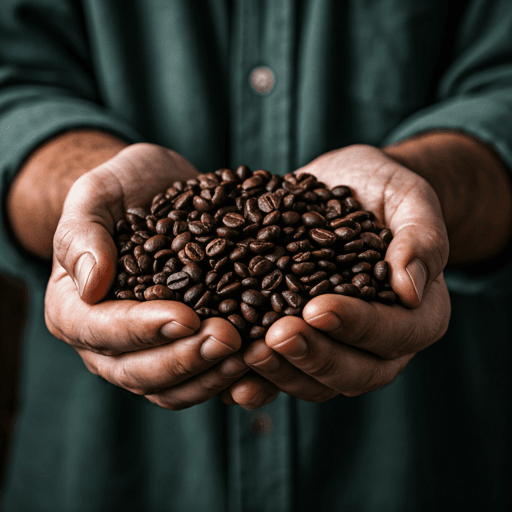
Kona coffee is arabica grown in the Kona districts on the western slopes of the Big Island of Hawaii, prized for a smooth, mild, low-acid cup with sweet, nutty and gently fruity notes. It comes from a narrow belt of small farms sitting on rich volcanic soil, where warm mornings and cloudy afternoons create an almost tailor-made climate for slow-ripening coffee cherries. Genuine Kona is one of the world's more famous single origins, and also one of the scarcer and pricier ones.
This guide explains where Kona coffee grows and why the land matters, how it tastes, how it is graded, and how to tell true 100% Kona from a mostly-filler "Kona blend." For the broader picture of coffee across the islands, see our Hawaiian coffee guide.
What is Kona coffee?
Kona coffee is not a bean variety or a roast style. It is a place. The name refers to arabica coffee grown in the North and South Kona districts on the leeward (western) side of Hawaii Island, often called the Big Island. Only coffee actually grown in that region can honestly be called Kona, and the State of Hawaii backs this up with an official origin-certification system.
The plants themselves are arabica, historically the old Typica lineage brought to the islands in the 1800s, with newer varieties now grown too. What sets the coffee apart is the combination of that arabica genetics, the volcanic ground, the microclimate and a great deal of hand labor.
Where Kona coffee grows and why the land matters
The growing area is often called the Kona coffee belt: a thin strip only a couple of miles wide and roughly thirty miles long, running down the slopes of the Hualalai and Mauna Loa volcanoes. Most farms sit between about 500 and 3,000 feet of elevation. The belt is small, and much of it is planted on steep ground that has to be worked by hand.
A few natural factors line up here in a way that is genuinely hard to reproduce:
- Volcanic soil. The young, mineral-rich volcanic ground drains well while holding onto nutrients, which suits coffee roots.
- Sunny mornings, cloudy afternoons. Clear mornings give the trees light, then afternoon cloud cover rolls in like a natural shade. The clouds slow the day's heat and let the cherries ripen gradually.
- Gentle afternoon and evening rain. Regular moisture without the extremes of a monsoon keeps the trees watered through the growing season.
- Elevation and mild temperatures. The moderate altitude and steady tropical warmth mean the cherries develop slowly and evenly.
Slow ripening is the key phrase. When cherries take their time, the beans inside have longer to build sugars and develop flavor, which is a big part of why the cup tastes the way it does. All of this is simply a fact about the region, not a claim that any one farm's marketing gets right.
What Kona coffee tastes like
The classic Kona profile is smooth, clean and easy-drinking. It tends to be mild and well balanced rather than loud, with low acidity, a medium body and a smooth finish that does not turn bitter. People often describe:
- A sweetness that reads as brown sugar, honey or caramel;
- Nutty and buttery notes, sometimes with a hint of milk chocolate;
- A gentle fruitiness, and in some lots a soft floral or spiced edge.
Because it is naturally low in acid and not especially bright, Kona is a coffee many people find approachable black. It is usually shown off at a light-to-medium roast, where those sweet and nutty notes stay front and center; roasting it very dark tends to bury the delicacy that makes it special in the first place. As with any coffee, exact flavor varies by farm, harvest, processing and how you brew it.
How Kona coffee is graded
All coffee leaving Hawaii is inspected and certified by the State of Hawaii, and Kona is sorted into official grades based on bean size (measured on screens), the number of defects, and moisture and cup quality. Larger, more uniform, cleaner beans earn the higher grades. Grade is about consistency and appearance more than a guarantee of your personal favorite taste, but it is a useful shorthand.
| Grade | Bean type | What it means |
|---|---|---|
| Extra Fancy | Flat bean | The top grade: largest, most uniform beans, very few defects. |
| Fancy | Flat bean | Slightly smaller than Extra Fancy, still large and clean. |
| Number 1 | Flat bean | Good, medium-sized beans with a few more allowable defects. |
| Select / Prime | Flat bean | Lower tiers judged more by cup quality, with more permitted defects. |
| Peaberry | Round bean | Cherries with a single round bean instead of two; sorted separately and often prized. |
A quick word on peaberry: normally a coffee cherry holds two flat-sided beans, but in a small share of the crop only one small, round bean forms. These are picked out and sold on their own. Many roasters and drinkers feel peaberries roast a touch more evenly and taste a little more concentrated, though whether that is worth seeking out comes down to taste.
Why real 100% Kona is scarce and pricey
Kona is among the more expensive origins in the world, and the reasons are practical rather than hype. The growing belt is tiny, the farms are mostly small, the steep terrain is worked largely by hand, and picking happens over multiple passes as cherries ripen. Little land, high labor and strong demand add up to a premium price.
That premium is exactly why label-reading matters. In many markets you will see bags marked "10% Kona blend". Under the labeling rules those only need to contain ten percent actual Kona coffee; the other ninety percent is other, cheaper coffee from anywhere. Those rules are also tightening over time, so the exact minimum can change, but the principle holds: a blend like that can taste perfectly fine, yet it is mostly not Kona and will not deliver the pure Kona character.
If you want the real thing, look for the words "100% Kona" on the label, ideally with the certification and the farm or region named. If a bag is priced like an everyday supermarket coffee and does not say 100% Kona, assume it is a blend. Being a smart label-reader here is the whole game, and it is one small habit that also serves you well across the wider world of specialty coffee.
How Kona compares to other prized origins
Kona sits in a small club of famous, sought-after single origins, and it is worth knowing where it fits. Jamaica's Blue Mountain coffee is its closest cousin in reputation and price: another island coffee celebrated for a mild, smooth, low-acid cup and equally famous for blends that carry only a small percentage of the real bean. If Kona leans sweet and nutty, a classic Colombian coffee is usually more widely available and a little brighter and juicier, which makes it a useful everyday point of comparison.
| Origin | Typical character | Availability |
|---|---|---|
| Kona (Hawaii) | Smooth, low-acid, sweet, nutty | Scarce, premium priced |
| Blue Mountain (Jamaica) | Mild, smooth, balanced, low bitterness | Scarce, premium priced |
| Colombian | Balanced, brighter, often fruity or caramel | Widely available |
None of these is simply "better." They are different expressions of arabica shaped by their land and climate, and part of the fun is tasting them side by side.
The bottom line on Kona coffee
Kona earns its reputation honestly: a real place, a rare microclimate, careful hand-picking and an official grading system all feed into that famously smooth, sweet, low-acid cup. The main thing to remember as a drinker is to look past the pretty packaging and check the label for "100% Kona" so you are actually getting what makes this bean special. From there, brew it gently, keep the roast on the lighter side, and let the sweetness speak.