
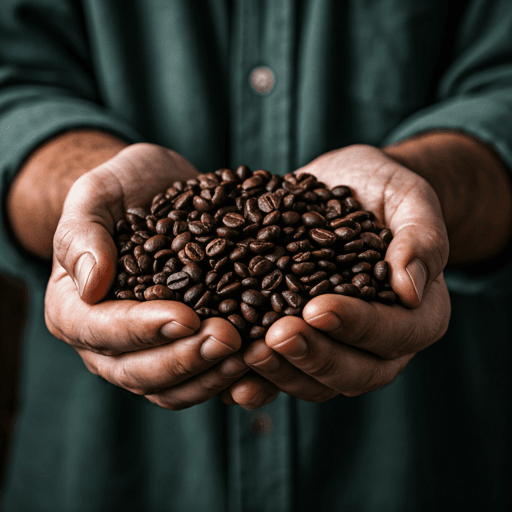
Hawaiian coffee is coffee grown in the U.S. state of Hawaii, most famously the Kona coffee that comes from the volcanic slopes of the Big Island's Kona district. It is one of the world's premium origins: rich volcanic soil, high elevation, tropical sun and reliable afternoon cloud cover combine to produce a smooth, mild, clean cup with low acidity and sweet, nutty, sometimes chocolatey or floral notes. It is also, in practical terms, the only coffee grown commercially within the United States, which keeps supply small and its reputation premium.
What is Hawaiian coffee?
Hawaiian coffee is Arabica coffee cultivated across a handful of the Hawaiian islands. The name covers far more than Kona alone: it includes beans from Ka'u, Puna and Hamakua on the Big Island, plus Maui, Oahu, Kauai and Molokai. Kona is the icon that made the origin famous, but "Hawaiian coffee" is really a family of related regional coffees, each shaped by its own elevation, rainfall and volcanic ground.
Because Hawaii is the only U.S. state with the tropical climate and volcanic terrain that Arabica loves, it occupies an unusual position: a specialty origin sitting inside a country that is otherwise the world's largest coffee consumer rather than grower. Farms tend to be small, labor is expensive, and much of the crop is still hand-picked, all of which feeds into the premium reputation. If you want to understand what "premium origin" means in the wider coffee world, our guide to what specialty coffee is is a useful companion.
Where Hawaiian coffee grows: Kona and beyond
Most people meet Hawaiian coffee through Kona, and for good reason. The Kona Coffee Belt on the western slopes of the Big Island's Mauna Loa and Hualalai volcanoes is home to hundreds of small farms, and the district's morning sun, misty afternoons and free-draining volcanic soil are close to ideal for Arabica. But several other regions produce excellent coffee, and knowing them helps you read a label with confidence.
- Kona (Big Island): the flagship region; smooth, mild, sweet and low in acidity.
- Ka'u (Big Island): a fast-rising region on the volcano's southern flank, known for deeper, fruit-forward cups.
- Puna and Hamakua (Big Island): smaller, newer or boutique areas with cooler, wetter microclimates.
- Maui: a mix of one large estate and smaller "upcountry" farms on the slopes of Haleakala; look also for "Maui Mokka," a small-bean variety.
- Oahu, Kauai and Molokai: larger plantation-style farms; Kauai hosts some of the state's biggest acreage, while Molokai is known for red Catuai Arabica.
The table further down translates the most common region names and label terms so you know exactly what you are buying.
Why Hawaiian coffee tastes the way it does
The signature Hawaiian profile - clean, smooth, gently sweet and low in acidity - comes from a stack of natural advantages. Volcanic soil is porous and mineral-rich, giving young coffee trees a fertile, well-drained root zone. Elevation on the volcanic slopes slows cherry ripening, which concentrates sugars and builds sweetness. The climate pattern matters just as much: sunny mornings drive photosynthesis while afternoon clouds and light rain act as natural shade, protecting the cherries from harsh heat.
Human care finishes the job. Because the terrain is steep and the farms are small, cherries are often hand-picked at peak ripeness rather than stripped all at once, and many producers wet-process (wash) the coffee to keep the cup clean and bright. The result is a coffee that tends to taste balanced and approachable rather than intense or funky, one reason it appeals to drinkers who find some origins too sharp or too heavy.
100% Kona coffee vs a Kona blend: the label caveat
This is the single most useful thing to learn before buying, so read it carefully. On shelves you will see two very different products that sound almost the same: 100% Kona coffee and a "Kona blend." They are not close to equivalent.
Under long-standing Hawaii labeling rules, a bag labeled "Kona blend" has only ever been required to contain a minimum of about 10% real Kona coffee by weight. The other roughly 90% can be cheaper coffee from anywhere in the world. So a "Kona blend" on a supermarket shelf may be mostly non-Hawaiian beans with a small amount of Kona for the name. If you want the genuine article, look for the words "100% Kona" (or "100% Ka'u," "100% Hawaiian," and so on). Certified 100% Kona is the real, single-origin experience; a blend is a value product that borrows the reputation.
It is worth knowing the rules are tightening. Hawaii passed a law (Act 198, signed in 2024) raising the minimum origin content in these named blends from 10% to at least 51%, taking effect from July 2027, and requiring clearer percentage labeling. That should make "blend" mean more than it used to, but the core buyer's rule stays the same: if you want authentic Hawaiian coffee beans, read the front of the bag and favor "100%" language plus a stated origin and, ideally, the farm or region.
Kona coffee vs regular coffee: what you're really paying for
When people compare Kona coffee vs regular coffee, they are usually noticing two things: taste and cost. On taste, genuine Kona is prized for a smooth, low-acid, sweet and mellow character with nutty or milk-chocolate tones, gentler and cleaner than many everyday supermarket blends, which are often robusta-heavy or roasted dark to hide lower-grade beans. On cost, Hawaiian coffee is firmly premium: small farms, high labor costs, hand-picking and limited supply all push it well above commodity coffee. That premium is qualitative rather than a specific figure, and it is why blends exist in the first place - to offer a hint of the flavor at a lower price point.
Grading also plays a role. Kona is sorted into grades such as Extra Fancy, Fancy, Number 1 and Peaberry, based on bean size, shape and defects. Higher grades mean larger, more uniform beans that roast evenly, which is part of why top-grade 100% Kona commands the highest respect.
How to brew Hawaiian coffee beans
Hawaiian coffee's smooth, low-acid profile makes it forgiving and versatile. A few pointers:
- Choose a medium roast. Light-to-medium roasts show off the origin's natural sweetness and nutty notes; very dark roasts can flatten the delicate character you paid for.
- Favor clean brewing methods. Drip, pour-over and French press all suit it well. Pour-over and drip highlight clarity and sweetness; a French press gives a fuller, rounder body.
- Mind the ratio and water. A standard ratio of roughly 1 part coffee to 15-17 parts water, with water just off the boil (around 195-205F / 90-96C), lets the smooth profile shine.
- Grind fresh. Whole beans ground just before brewing preserve the aromatic, sweet notes that make premium Hawaiian coffee worth seeking out.
Because the cup is naturally low in acidity and bitterness, it is a good candidate for drinking black, so you can actually taste what makes the origin special.
How Hawaiian coffee compares to other premium origins
Hawaiian coffee sits comfortably among the world's celebrated origins, and comparing it helps place its flavor. Jamaica's Blue Mountain coffee is the closest cousin: another scarce, premium island coffee prized for smoothness and low acidity, and, like Kona, one that suffers from "blend" labeling loopholes, so the same "buy 100%" advice applies. For a mainland Latin American benchmark, Colombian coffee offers a balanced, approachable cup across a wider range of tiers. And Ethiopian coffee sits at the other end of the flavor spectrum - bright, floral and fruity - which shows just how mellow and rounded the Hawaiian style really is by contrast.
Hawaiian coffee terms at a glance
| Term on the label | What it actually means |
|---|---|
| 100% Kona | Certified single-origin Kona coffee, nothing else added. The genuine article. |
| Kona blend | Historically as little as ~10% real Kona (rising toward 51% under new rules); the rest is other coffee. |
| 100% Hawaiian | All beans grown in Hawaii, though possibly from a mix of islands or regions. |
| Ka'u | Big Island region south of Kona; look for "100% Ka'u" for authenticity. |
| Maui / Maui Mokka | Coffee from Maui; "Mokka" is a small-bean variety grown there. |
| Extra Fancy / Fancy / Peaberry | Kona grades by bean size and defects; higher grades roast more evenly. |
| Kauai / Oahu / Molokai | Larger plantation-grown Hawaiian coffees from those islands. |
The bottom line for buyers
Hawaiian coffee earns its reputation through geography and care: volcanic soil, elevation, gentle climate and small-farm attention give it a smooth, clean, sweet cup that many drinkers love. The catch is the label. If you want the real experience, reach for wording that says "100%" alongside a named origin, whether that is Kona, Ka'u or another Hawaiian region, and treat "blend" as a value product rather than the genuine single origin.
From there, brew it kindly - medium roast, clean method, fresh grind - and enjoy comparing it against the world's other great coffees, from rare island origins like Jamaica's Blue Mountain to the bright, fruity cups of East Africa. Reading a label well is what turns a famous name into a genuinely great cup.