
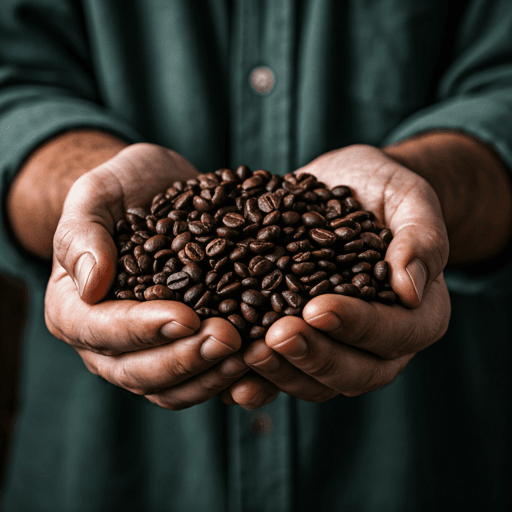
Monsooned Malabar is Indian Arabica that has been deliberately spoiled, in the best sense of the word. Green beans grown in the Karnataka and Kerala hills are spread across warehouse floors on the west coast during the southwest monsoon and left to drink in humid sea air for 12 to 16 weeks, until they swell to roughly twice their size, fade from green to pale gold, and lose almost all their acidity. What comes out is heavy, earthy and frankly musty. Professional cuppers have scored good lots between 85 and 91 points. They have also called bad lots undrinkable.
That gap is the real story of this coffee, and most write-ups skip straight past it to the romantic sailing-ship legend. This guide covers what the GI registration actually protects, what published cupping notes say it tastes like, what four Indian roasters are charging right now, how to brew a bean that gives you no acidity to steer by, and who should not buy it at all.
What the GI tag actually protects
Monsooned Malabar appears on India's Geographical Indications register twice, not once. "Monsooned Malabar Arabica Coffee" and "Monsooned Malabar Robusta Coffee" are separate entries in Class 30, both entered in 2007-08 with the Coffee Board of India as registered proprietor, covering Karnataka and Kerala.
Two things follow from that, and only one of them is the one buyers assume. Yes, the name is legally tied to this coast and this process, and only registered authorised users may sell under it. Aspinwall & Company, the Mangalore exporter that has monsooned coffee for generations, publishes its authorised-user status openly. But the GI covers place and process, not cup quality. A pack that says "Monsoon Malabar" tells you nothing about which grade is inside or how carefully it was monsooned, and as the cupping scores below show, that variance is enormous. The grade code on the bag matters more than the GI does.
If you want a completely different Indian profile for contrast, our guide to single-origin coffee from Koraput sits at the bright, clean end of the Indian range.
How monsooning works: the numbers that matter
Monsooning is a post-harvest treatment applied to green coffee. It is not a plant variety and not a roast level, which is why the same estate can sell both monsooned and unmonsooned lots. Aspinwall, as a GI authorised user, publishes the working method:
- Starting stock. Natural (dry-processed) coffee, not washed. The dry process leaves the bean chemistry the monsoon acts on.
- Window. June to September, during the southwest monsoon coming off the Arabian Sea.
- Spreading. Beans go onto ventilated cement or tile warehouse floors in layers 10 to 15 cm deep.
- Bagging. They are then loaded into gunny bags filled only to half capacity and left unstitched, stacked four bags high, so air keeps moving through them.
- Repetition. Spread, bag, re-spread, repeated until the intended monsoon effect appears, across 12 to 16 weeks in total.
- Moisture. The beans climb to roughly 14 to 15 percent moisture. Ordinary green coffee is dried down to about 10 to 12 percent and kept there, so this is a coffee held deliberately in a range the trade usually treats as a defect risk.
Learn the grades, because they are printed on export documents and often on the retail bag. Arabica is graded AAA, AA, A and Triage; Robusta is graded AA and Triage. AA is what almost every Indian roaster sells to consumers. Monsooned Robusta is a genuine product as well and costs considerably less, in line with the usual gap set out in our Arabica vs Robusta price comparison.
What it tastes like, according to people who cup it for a living
We have not cupped these specific lots, so here is what published assessments say, with scores and dates attached rather than paraphrased into a generic flavour wheel.
| Source and date | Score | Published description |
|---|---|---|
| Coffee Review, Martinez Fine Coffees lot (Dec 2007) | 91 | Highest-scoring monsooned lot in Kenneth Davids' comparative tasting of aged and monsooned coffees |
| Coffee Review, Coffee Bean Direct lot (Dec 2007) | 89 | Spice notes of ginger and cardamom, "sweet clayish earth", syrupy mouthfeel, almost candyish sweetness; marked down for a raw-potato off-note in some cups |
| Coffee Review, California Coffee Roasters (Jul 2004) | 85 | Sweet and pungent aroma, aromatic wood, fermented fruit reading "between chocolate and composted apricot" as it cools |
| Sweet Maria's, green coffee listing (current) | 85 | "Pungent bitter cocoa, unsweetened Baker's chocolate, spice, earthy accent notes and a smokey aroma"; described as all body, very low acidity, much more bitter than sweet |
| Blue Tokai, Hoysala Estate AA (current) | n/a | Cocoa nibs, nutty, raisins; body medium-high, acidity low, bitterness medium-high |
| Devan's, Arabica AA (current) | n/a | "Notes of spice, mustiness, wood, chocolate and nuts" with a sweetish finish and a golden colour in the cup |
Read those together and a pattern appears that marketing copy tends to soften. Every source agrees on very low acidity and heavy body. Where they diverge is on whether the mustiness is a pleasure or a problem. In the same 2007 tasting that produced a 91-point lot, Kenneth Davids reported a monsooned sample that was "virtually undrinkable", and described the failure mode precisely: at its worst the character reads as damp closet rather than spice. Sweet Maria's, selling the green, tells buyers outright to try a small amount first and consider using it in a blend. That is unusually honest sourcing language, and it is the correct expectation to bring to your first bag.
The practical translation: this is not a coffee that is bright, clean or fruity, and it is not trying to be. It is the opposite end of the spectrum from a washed Ethiopian. See our low-acid coffee guide for where it sits in that category.
What it costs in India right now
Prices below were read off each seller's own listing on 13 August 2026. US dollar figures are converted at roughly ₹95.3 to the dollar for comparison only.
| Seller | Product | Pack | Price | Per 100 g |
|---|---|---|---|---|
| Devan's (New Delhi) | Monsooned Malabar Arabica AA, medium roast, 10 grind options incl. South Indian filter | 250 g | ₹550 | ₹220 |
| Ainmane (Coorg) | Monsooned Malabar, light roast | 250 g | ₹590 | ₹236 |
| Roastery Coffee House | Monsoon Malabar, Chikmagalur, filter roast (1 kg listed at ₹2,500) | 250 g | ₹650 | ₹260 |
| Blue Tokai | Monsoon Malabar AA, Hoysala Estate, medium-dark (500 g ₹1,300; 1 kg ₹2,380). Out of stock when checked | 250 g | ₹700 | ₹280 |
| Volcanica (US, roasted) | Indian Monsoon Malabar AA, medium roast | 454 g | $29.99 (about ₹2,860) | about ₹630 |
| Sweet Maria's (US, green) | India Monsoon Malabar, unroasted. Out of stock when checked | 454 g | $8.65 (about ₹825) | about ₹180 green |
One caution on sizes: Devan’s lists a single price against a 250 g / 500 g selector, and Ainmane’s own listing does not state a pack weight (the 250 g figure comes from third-party retail listings) — confirm the size at checkout before comparing per-gram.
Two things worth noticing. Indian roasted Monsooned Malabar lands at ₹220 to ₹280 per 100 g, while the same coffee retails abroad at roughly ₹630 per 100 g equivalent. Buying it in India is not a small saving, it is a different price bracket, and it is the strongest argument for not paying import prices for a coffee that is processed on India's own west coast. Second, the green price of about ₹180 per 100 g against Blue Tokai's ₹280 shows the spread is thinner than people assume once roast loss is accounted for; the premium here is mostly in the processing, not in retail margin. For wider context, see our coffee beans price guide.
Brewing a coffee with no acidity to steer by
Roasters disagree about the right brewer for it, which is itself informative. Blue Tokai recommends espresso, moka pot and French press for its medium-dark lot and asks for a 15-day rest after roasting. Roastery Coffee House sells a lighter filter roast and points at pour-over, Aeropress and French press. Devan's offers a South Indian filter grind among ten options. Sweet Maria's, selling the green, is the bluntest: Full City+ as a minimum, do not light roast it, rest it at least two days, and treat it as a blend component for espresso rather than a solo act.
French press is the one method all of them are comfortable with, so start there.
- Grind coarse, 7 g per 100 ml, so about 30 g in a three-cup press. Our French press grind guide covers the setting.
- Water at 92 to 94 degrees C. Do not use a rolling boil; this bean already leans bitter and heat pushes it further.
- Steep four minutes, break the crust, wait 30 seconds, skim the foam, then press slowly.
- Taste it black before adding milk. Hollow and thin means grind finer or add a gram; ashy and drying means drop the water temperature by two degrees.
One caution specific to this coffee. With normal beans, sourness is your signal that extraction is short. Monsooned Malabar has almost no acidity, so that signal is missing and beginners routinely over-extract it into something ashy without realising why. Judge by body and by how long the bitterness lingers instead. It also carries milk unusually well, which is why it suits moka pot and South Indian filter drinkers who take their coffee with a lot of milk and sugar.
Verdict: buy a bag, do not make it your house coffee
Monsooned Malabar is worth owning, and it is a poor choice as your only coffee. It is one specific effect, executed well by the better producers, and it does not do range. Drinking it every morning for a month is how people discover they were fascinated rather than fond.
You will probably love it if you drink dark, milk-forward coffee; you use a moka pot, an espresso machine or a South Indian filter; you find bright washed African and Central American coffees sour or thin; or you blend for espresso and want body without adding Robusta harshness.
You will probably hate it if you buy coffee for fruit, florals and clarity; you brew pour-over almost exclusively; or the word "musty" reads to you as a fault rather than a style. If that is you, no amount of careful brewing will convert you, and that is a legitimate preference rather than an unrefined palate.
Buy a 250 g bag first, never a kilo. At ₹550 to ₹700 the worst case is one wasted purchase. On current prices Devan's at ₹550 is the cheapest credible entry point with the widest grind choice; if you want estate traceability, Blue Tokai names the estate, village and altitude and charges about ₹150 more per 250 g for it. Whichever you pick, buy from a roaster that prints a roast date, because a stale musty coffee is considerably worse than a stale clean one.