
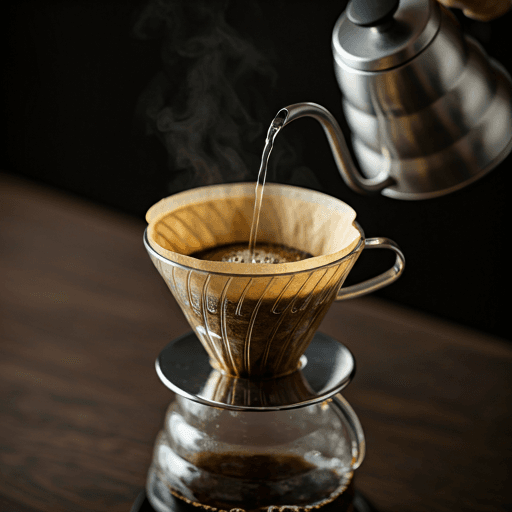
Lilly's Cafe is a lightly distributed Indian coffee label most easily found as a roasted-coffee product on trade and marketplace listings rather than on every supermarket shelf. The clearest verifiable SKU under the name is an AA-grade roasted coffee sold in 1 kg packs through B2B portals at around Rs 550, listed by a trader rather than a famous national roaster. This guide explains what Lilly's Cafe coffee appears to be, how a roasted Indian coffee like this behaves in the cup, honest INR price context, and how to buy it without overpaying or chasing a fake "near me" result. Because public information on the brand is thin, treat the variant and pack details on the actual pack or seller listing as the final word.
What Lilly's Cafe coffee is
On the listings that carry it, Lilly's Cafe shows up as AA-grade roasted coffee, sold by weight (commonly a 1 kg pack) through trade portals such as IndiaMART, at around Rs 550 per kilogram. "AA" is a green-bean size grade, not a flavour promise; it tells you the beans were screened large and uniform, which roasters often prize for an even roast. What the public listing does not confirm is a long retail line of pouches, instant jars, pods, or printed coffee-to-chicory ratios. So unlike a mass-market name such as Bru or Nescafe, you should not assume a fixed, widely stocked product range. Confirm the exact format you are buying.
Where does it sit in the wider market? A roasted Indian coffee sold by grade, by the kilo, on trade portals usually lands in one of two camps: whole or coarsely roasted beans for someone who will grind their own, or a roast-and-ground style aimed at the classic Indian steel filter. If you intend to brew it as South Indian filter coffee, check whether the pack is whole bean or ground, and whether any chicory is blended in, before you buy. Our explainer on what South Indian filter coffee (kaapi) is covers that style in full.
Coffee-to-chicory ratio: what to expect from Indian filter blends
If you do brew Lilly's Cafe as filter coffee, the coffee-to-chicory ratio is the single biggest taste lever — so it is worth understanding the category norms, then checking what your specific pack actually is. Chicory is a roasted root, not a bean; it adds body, a dark colour, a slightly bitter-sweet edge, and it makes the decoction stretch further, which is why budget blends lean on more of it. These are category ranges, not confirmed Lilly's Cafe figures:
| Blend type | Typical coffee:chicory | What it tastes like |
|---|---|---|
| Pure / peaberry | 90:10 or 100:0 | Cleaner, more aromatic, less bitter; costs more |
| Classic filter | 80:20 | The everyday South Indian balance; strong but smooth |
| Strong / dark | 70:30 | Heavier body, darker decoction, more bitter edge; cheapest |
If a pack does not print the ratio, price is a rough clue — higher-coffee blends usually cost more per kilogram. For how the ratio changes the cup, our guide on making filter coffee decoction walks through it.
How Lilly's Cafe coffee tastes and brews
An AA-grade dark-roasted Indian coffee, brewed in the South Indian style, gives a strong, full-bodied, slightly bitter decoction rather than the light, fruity profile of a single-origin pour-over. That is by design. South Indian filter coffee is built to be diluted with hot milk and sugar, so the powder is roasted hard and ground fine so it gives up colour and strength quickly in the steel filter. If your Lilly's Cafe pack is whole bean, you control the grind; if it is pre-ground, it is set for you.
To get a clean cup from a roasted Indian coffee like this:
- Use a fine grind. Filter coffee powder is finer than espresso grind. If you buy beans, grind them fine — see how to grind coffee beans at home.
- Brew hot, not boiling. Water just off the boil, poured over the powder in the top chamber, gives a smoother decoction.
- Let it drip fully. Do not press or rush it. A slow drip extracts more cleanly.
- Cut with hot milk and sugar to taste. Roughly one part strong decoction to three or four parts hot milk is the usual ratio for "degree" coffee.
- Store airtight. Ground coffee loses aroma within weeks, so buy a size you will finish and keep it sealed. The Lilly's Cafe listing notes a six-month shelf life, but fresher is always better.
If you are new to the brewing kit itself, our filter pot versus percolator guide and brass versus steel filter guide explain which hardware suits this style of coffee.
Lilly's Cafe price in India: honest context
The one publicly visible price point for Lilly's Cafe is the AA-grade roasted coffee at around Rs 550 for a 1 kg pack on B2B listings. Everything else depends on format, pack size, and the seller, and prices move with green-coffee rates, so treat any number as an "around" band rather than a live quote. Always check the printed MRP and the per-kilogram maths before you buy. For scale, here is the one confirmed point alongside the broader market band for roasted Indian filter coffee, so you can judge whether a listing is fair:
| What | Pack | Indicative price (INR) |
|---|---|---|
| Lilly's Cafe AA roasted coffee (B2B listing) | 1 kg | around Rs 550 |
| Typical Indian roast-and-ground filter coffee (market) | per 1 kg | around Rs 380 to Rs 1,000+ |
| Typical Indian filter coffee (market) | per 250 g | around Rs 100 to Rs 250 |
Higher-coffee "pure" blends sit at the upper end; chicory-heavy "strong" blends sit at the lower end. For context on what filter powder should cost across the market, see our 1 kg coffee powder cost guide and the broader best filter coffee powder roundup. If a listing is priced far above these bands and calls itself "premium" with no clear higher-coffee ratio or single-origin story to justify it, be sceptical.
Where to buy Lilly's Cafe coffee
Because Lilly's Cafe is a niche, lightly distributed name, availability is uneven and you will not find it everywhere. Here is how to track it down honestly, without trusting any made-up "branch near you" list:
- B2B and trade portals like IndiaMART are where the brand is most visible today — that is where the AA-grade roasted-coffee pack is listed. Useful if you want a wholesale quantity for a shop or office, and you can message the supplier for the data sheet.
- Online marketplaces and grocery apps — search the exact brand name on Amazon, Flipkart, BigBasket, JioMart, or your city's quick-commerce app. Stock for niche brands comes and goes, so check more than one app and read the pack description for grind, roast, and any chicory.
- Local kirana and provision stores can carry small or regional coffee labels that never reach the big apps. Ask the shopkeeper directly and look at the actual pack.
- Regional grocery chains in the South often stock local filter coffee alongside Narasu's and Cothas, which is the easiest way to compare a niche name against the regulars.
For "near me" searches, the honest move is to open the seller's own listing and your map app rather than trust any list a guide invents. If you live in a major metro, the easiest path to fresh South Indian filter coffee is often a local roaster — our coffee roasters near you guide and the city pages for Chennai and Coimbatore point you at the right places. When you want to compare against the wider field of regional names, the South Indian coffee powder brands roundup is the place to start.
Lilly's Cafe versus the bigger filter brands
If you are choosing between a niche name like Lilly's Cafe and the brands you see everywhere, here is the honest trade-off. Note that Lillys Cafe is the same name written without the apostrophe, which is how some listings spell it.
| Brand | Reach | What it is good for |
|---|---|---|
| Lilly's Cafe | Niche, trade-listing led | Bulk AA-grade roasted coffee; confirm format, roast and chicory on the pack |
| Narasu's | Wide in the South | Consistent classic filter blends with clear variants |
| Cothas / Malgudi | Wide | Reliable everyday "degree coffee" powder |
| Bru Green Label | National | Easy availability; standardised filter powder |
A niche name can be good value, especially in bulk, but it trades away the guaranteed availability and printed consistency of national labels. Because the public detail on Lilly's Cafe is limited, the single most useful habit is to read the actual pack — grade, roast, grind, and any chicory percentage — before you commit. For single-brand deep dives on the bigger filter names, see our Narasu's guide and Malgudi guide; for context on instant ranges, the instant coffee buying guide helps you tell formats apart.