
Few coffee origins carry as much history in a single cup as Haiti. Two and a half centuries ago, the mountainous western third of the island of Hispaniola was arguably the most important coffee-growing place on Earth, and the beans it exported helped fuel the café culture of Enlightenment Europe. That golden age collapsed, but the coffee trees never left. Today Haiti remains a compelling single-origin story: an old-growth, mountain-grown Typica that is mild, low in acidity, and deeply chocolatey — and a cooperative-led effort to bring the Caribbean's most historic coffee back to the specialty world.
When Haiti Ruled the Coffee World
Coffee reached the French colony then known as Saint-Domingue in the early eighteenth century, carried through the Caribbean from Martinique after the plant's celebrated journey across the Atlantic. The cool, shaded, well-watered mountainsides proved ideal for Arabica, and production expanded rapidly across the 1700s. By the late 1780s the colony is often credited with supplying roughly half of all the coffee traded in the world — an astonishing share for a territory smaller than many countries that grow coffee today. Saint-Domingue coffee poured into the cafés of Paris and beyond, making it one of the most valuable agricultural exports of its era.
That prosperity was built on brutal enslaved labor, and the contradictions of the plantation system helped ignite the Haitian Revolution in 1791. When Haiti won independence in 1804 as the first free Black republic, most of the old estates had been burned or abandoned. Coffee itself survived, but it passed into the hands of smallholders farming modest mountain plots — the pattern that still defines Haitian coffee today. Few origins can claim to have peaked before the United States was fully settled, only to be quietly farming the same hillsides more than 200 years later.
The Typica Connection
Nearly all of Haiti's coffee is Typica, one of the two foundational branches of cultivated Arabica (the other being Bourbon). This is not a marketing footnote — it is a direct genetic link to the same Typica lineage that spread through the West Indies in the 1700s and became renowned elsewhere in the Caribbean, most famously as Jamaica's celebrated mountain coffee. Haiti's trees descend from that same old Caribbean Typica stock, which is why Haitian coffee is often compared, in both heritage and cup, to its more expensive island neighbor.
Because the industry changed so little through decades of upheaval, many of Haiti's Typica trees are genuinely old — tall, lanky, and lightly pruned, growing under the shade of forest canopy rather than in intensively managed rows. Old Typica tends to yield fewer cherries per tree than modern high-density varieties, which is part of why volumes are small. But low yields on aged trees at altitude also concentrate sweetness and body, giving the beans a classic, gentle profile that many drinkers find nostalgic and easy to love.
What Haitian Coffee Tastes Like
Haitian coffee is a textbook example of the mellow, low-acid Caribbean style. The cup leans toward chocolate and cocoa rather than the bright, fruit-forward acidity of an African or high-grown Central American coffee. Expect a smooth, rounded body — sometimes almost syrupy — with pronounced sweetness and a clean, comfortable finish. Tasting notes commonly reported for well-processed Haitian lots include milk chocolate, roasted nuts, brown sugar, and a soft, mellow spice.
| Attribute | Typical Haitian coffee character |
|---|---|
| Body | Medium to heavy; smooth, occasionally syrupy |
| Acidity | Low to gently soft |
| Sweetness | Pronounced — honey, brown sugar |
| Dominant flavors | Milk chocolate, cocoa, roasted nuts |
| Finish | Clean, mellow, lingering |
| Variety | Predominantly old-growth Typica |
This makes Haitian coffee a friendly, crowd-pleasing origin: comforting rather than challenging, and forgiving across brew methods. It rarely delivers the electric, wine-like acidity that lights up a competition coffee, but that is precisely the point — its charm is roundness, chocolate, and ease.
Mountains, Shade, and Microclimates
Haiti's best coffee grows in the mountains, often at elevations high enough to slow cherry maturation and build sugars. The country's coffee is spread across several ranges, with the southeastern highlands around the town of Thiotte among the most recognized modern producing zones, alongside pockets in the north and the mountainous interior. Much of it is grown under shade in mixed forest gardens, interplanted with fruit trees and other crops — an agroforestry approach that predates the word "sustainable" by centuries.
Most Haitian coffee is still processed the traditional way, though quality-focused cooperatives increasingly favor careful washed processing to produce a cleaner, more consistent cup for export. Where infrastructure is thin, natural or semi-washed methods remain common, which can add fruit and heavier body but also more variability from lot to lot.
Decline, Deforestation, and the Charcoal Trade
Haiti's long fall from coffee dominance is one of the more painful stories in the crop's history. Political instability, trade disruptions, hurricanes, and volatile global prices repeatedly undercut growers. When coffee earnings fell, farmers facing hard choices sometimes cut and burned their own coffee and shade trees to sell as charcoal — a quick source of income in a country where charcoal remains a major household fuel and a significant part of the rural economy.
The result was a slow-motion loss of both coffee and forest. Deforestation stripped hillsides, accelerated soil erosion, and made the land more vulnerable to storms — which in turn damaged the surviving coffee. By the late twentieth century, Haiti had gone from feeding the world's cafés to producing a small fraction of its former volume, much of it consumed domestically or sold informally across the border rather than reaching specialty buyers.
The Cooperative Revival and Haitian Bleu
The modern revival has largely been built cup by cup through cooperatives. In the 1990s, a development-funded effort organized thousands of smallholders into a federation and branded their washed coffee as Haitian Bleu — a name that deliberately echoed Jamaica's Blue Mountain while nodding to Haiti's French heritage. That first push eventually faltered, hit hard by mismanagement and then the devastating 2010 earthquake, but it planted an important idea: that Haiti's old Typica could compete as a premium origin rather than a bulk commodity.
Since then, farmer cooperatives in areas like Thiotte, along with mission-driven roasters and importers, have invested in nurseries, replanting, wet mills, and strain selection to lift quality. The goal is to position Haitian coffee squarely in the specialty coffee conversation — traceable, carefully processed, and rewarded at prices that make farming worthwhile enough that growers keep the trees standing instead of turning them into charcoal. Progress is uneven and fragile, tied to Haiti's broader challenges, but the raw material — heirloom Typica on old mountain farms — is genuinely special.
Brewing and Enjoying Haitian Coffee
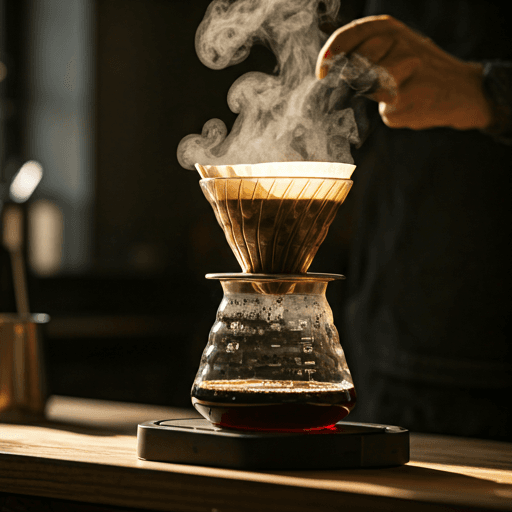
Because Haitian coffee is naturally sweet, low-acid, and chocolate-forward, it shines at medium to medium-dark roast levels that emphasize body and cocoa without scorching its gentle character. It is an excellent everyday drip or French press coffee, and its smooth heft makes it a satisfying base for milk drinks and easygoing espresso.
A few practical tips for getting the most from a bag:
- Lean toward full-immersion or drip. French press and pour-over both flatter its round body and mellow sweetness.
- Don't over-extract. Its low acidity means there's little brightness to balance bitterness, so pull back if the cup turns flat or ashy.
- Serve it as a comfort cup. This is a coffee for relaxed mornings and after-dinner chocolate notes, not for hunting exotic fruit acidity.
- Choose traceable sources. Cooperative and named-lot Haitian coffee tends to be cleaner and more consistent than anonymous bulk.
Drink it with a little context, too. Every cup of Haitian coffee connects you to a country that once defined the global trade, lost almost everything, and is slowly coaxing an heirloom crop back down its mountains.