
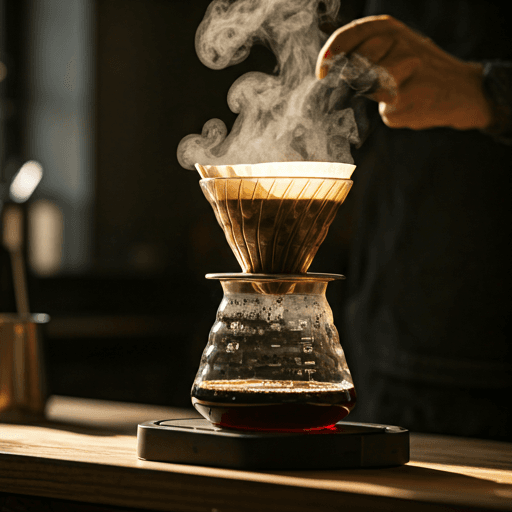
Coffee culture is the set of rituals, settings and meanings a place wraps around its coffee. The drink is nearly universal, but how people make it, where they drink it and what it signals change completely from one country to the next. In Italy it is a quick shot taken standing up; in Ethiopia it can be a ceremony lasting hours. This guide is a world tour of those traditions, with a short, vivid note on each and a link to the deeper dives.
Think of it as a map rather than an encyclopedia. We name the signature drink, the typical setting and the ritual that gives each tradition its character, then point you to the dedicated guide when you want the full story.
What "coffee culture" means
Coffee culture is everything around the cup, not just what is in it. It covers the brewing method, the size and strength of the serve, the time of day it is acceptable, the place it is drunk, and the social meaning attached to the whole act. The same bean can become a 1-ounce espresso bolted at a bar, a sweet glass of iced coffee over condensed milk, or a slow ceremonial pour shared among neighbors.
That is why coffee and culture are so tightly bound. A drink this widespread becomes a carrier for local values: speed and efficiency in one place, hospitality and patience in another, craft and provenance somewhere else. Reading a country's coffee culture is a quick way to read a little of the country itself.
Coffee culture around the world at a glance
Here is the tour in one view. Each row pairs a place with its signature coffee and the ritual that defines it. The sections below add the color.
| Place | Signature coffee | The ritual |
|---|---|---|
| Italy | Espresso, cappuccino | Drunk fast and standing at the bar; cappuccino before noon only |
| Turkey & Greece | Unfiltered coffee from a cezve | Simmered with the grounds; the cup read for fortunes afterward |
| Ethiopia | Freshly roasted, brewed in a jebena | The coffee ceremony: roasting, incense and three rounds |
| Vietnam | Ca phe sua da, egg coffee | Slow drip through a phin filter over condensed milk |
| Scandinavia | Filter coffee | Fika: a shared coffee-and-cake pause, taken daily |
| United States | Drip coffee, specialty espresso | The to-go cup, bottomless diner refills, the third-wave cafe |
| Australia & NZ | The flat white | Strong independent-cafe scene and trained baristas |
| Middle East | Qahwa with cardamom | Poured for guests as a gesture of hospitality |
| Cuba & Latin America | Cafecito, cortadito | Sweet, dark and shared; a social pick-me-up |
A tour of the world's coffee traditions
Italy: the espresso bar and the cappuccino clock
Italy gave the world espresso, and with it a culture of speed and ritual. Coffee is often a quick concentrated shot taken standing at a bar counter, exchanged with the barista in a minute or two rather than nursed at a table. The unwritten rule most visitors learn fast: milky drinks like the cappuccino belong to the morning, while after lunch Italians stick to a plain espresso. It is a small custom, but it tells you how seriously the daily rhythm of coffee is taken.
Turkey and Greece: the cezve and the cup that tells the future
Across Turkey, Greece and the wider eastern Mediterranean, coffee is very finely ground and simmered, grounds and all, in a small long-handled pot called a cezve or ibrik. It is served unfiltered, so the grounds settle at the bottom of the cup. When the cup is empty, it is turned over onto the saucer and the patterns left by the grounds are "read" for fortunes, a playful tradition called tasseography. Turkish coffee culture is recognized by UNESCO as intangible cultural heritage. Read the full story in our guide to what Turkish coffee is.
Ethiopia: the birthplace and the coffee ceremony
Ethiopia is widely regarded as the birthplace of coffee, and it treats the drink accordingly. The traditional coffee ceremony is a slow act of hospitality: green beans are roasted in a pan over heat, ground by hand, and brewed in a clay pot called a jebena, often alongside burning incense. The coffee is served in three successive rounds, known as abol, tona and baraka, each thought to carry a deeper blessing. It can take the better part of an hour, and the point is connection as much as caffeine.
Vietnam: the phin filter, condensed milk and egg coffee
Vietnam built a bold, sweet coffee culture on robusta beans and a clever workaround for fresh milk. The classic is ca phe sua da: strong coffee dripped slowly through a small metal filter called a phin onto a layer of sweetened condensed milk, then poured over ice. Hanoi is also home to egg coffee, ca phe trung, invented in the 1940s when whipped egg yolk and sugar stood in for scarce milk, creating a rich, custard-like cap. Our guide to Vietnamese coffee covers the phin and the recipes in full.
Scandinavia: fika and the world's biggest coffee habit
The Nordic countries are among the heaviest coffee drinkers on earth per person, and they have turned the coffee break into an institution. In Sweden it is called fika: a deliberate pause for coffee and something sweet, almost always shared, valued for the slowing-down as much as the caffeine. It is less a quick refuel than a small social ritual woven into the day. We explain the custom and its cinnamon buns in what fika is.
The United States: the to-go cup and the specialty wave
American coffee culture spans two extremes. On one side is the everyday tradition of large, milder filter coffee: the paper to-go cup carried down the street and the bottomless diner refill. On the other is the modern specialty coffee movement, with carefully sourced beans, lighter roasts and pour-over bars. The big cafe chains that spread espresso drinks worldwide grew up here too, and so did much of the craft-focused reaction against them.
Australia and New Zealand: the flat white and the independent cafe
Australia and New Zealand share one of the world's most respected cafe scenes, built on waves of Italian and Greek immigration and a fierce loyalty to independent shops over chains. Their best-known contribution is the flat white, an espresso drink with steamed milk and a thin layer of microfoam that emerged in the region in the early-to-mid 1980s. Trained baristas and high expectations are the norm, which is one reason global chains have struggled to gain a foothold there.
The Middle East: qahwa, cardamom and hospitality
In the Arabian Peninsula and across much of the Middle East, coffee, or qahwa, is first and foremost a gesture of welcome. It is typically made from lightly roasted beans, spiced with cardamom and sometimes saffron, and served unsweetened in small handleless cups, often poured for guests from a long-spouted pot called a dallah. Offering it is a marker of generosity and respect, and Arabic coffee is recognized by UNESCO as a symbol of hospitality. Dates are the usual accompaniment.
Cuba and Latin America: cafecito and cortadito
Latin America grows much of the world's coffee, and several countries drink it sweet and strong. The Cuban cafecito is a sweetened shot whose signature is espumita, a pale foam made by whipping the first dark drops of coffee with sugar. A cortadito cuts that sweet shot with a little steamed milk. These small, intense cups are made to be shared, passed around an office or a family kitchen as a social pick-me-up rather than a solo fix.
The threads that connect coffee and culture everywhere
For all their differences, these traditions share a few deep patterns. Two are worth naming because they show up almost everywhere.
The three waves of coffee
Coffee history is often told in three "waves." The first wave, through the early and mid twentieth century, made coffee a cheap household staple sold by the can. The second wave, from the 1960s onward, made it an experience, as cafe chains spread espresso drinks like the latte and cappuccino to a mass audience. The third wave, from the late 1990s, treats coffee as a craft, prizing single-origin beans, lighter roasts, traceability and brewing precision. Our guide to third-wave coffee unpacks the shift.
The cafe as a "third place"
Almost everywhere, the place coffee is drunk matters as much as the drink. The sociologist Ray Oldenburg called spaces like these "third places," the informal public ground between home and work where community happens. The Italian bar, the Viennese coffeehouse, the Nordic fika table and the neighborhood specialty bar all do the same social job. Our explainer on what a cafe is looks at how that role has evolved.
The takeaway
There is no single global coffee culture, and that is the pleasure of it. The same plant becomes a standing espresso, a fortune-telling ritual, an hours-long ceremony, a sweet iced glass or a daily shared pause, depending on where you drink it. Treat your own coffee habits as just one tradition among many, then go exploring. Browse the wider coffee hub for more of the world in a cup, or read more about what we cover.