
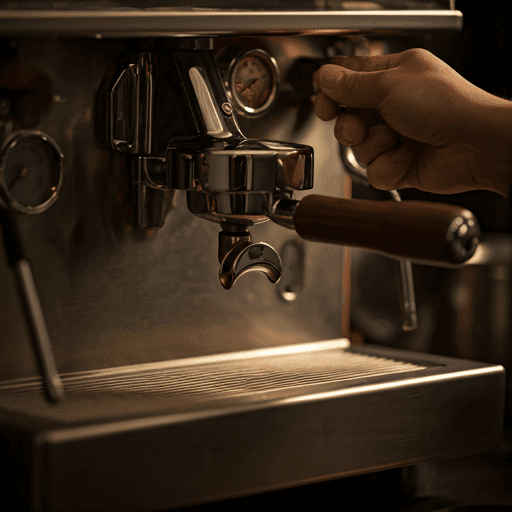
Fika is the Swedish tradition of pausing for coffee (or tea) and something sweet, almost always in the company of others. It is less a quick caffeine stop than a small social ritual: a moment to slow down, sit, and talk. Swedes treat it as a daily habit rather than an occasional treat, and the word covers both the pause itself and the act of taking it.
You can use fika as a noun ("let's have a fika") or a verb ("shall we fika?"). Either way it points to the same idea: stepping away from work or chores, sharing a hot drink and a baked treat, and giving the moment your full attention. That deceptively simple combination is one of the most recognized pieces of Swedish culture in the world.
What fika means
At its heart, fika is a deliberate break built around coffee and conversation. The drink matters, but the point is the pause. Phones go down, chairs are pulled up, and for ten or twenty minutes the goal is simply to be present with whoever is there. It is the opposite of grabbing a paper cup and drinking it at your desk.
The word itself has a charming origin. It is widely understood to be a back-slang reversal of kaffi, an older Swedish word for coffee, with the syllables flipped. Coffee arrived in Sweden in the 18th century, and at first the coffee was the fika. Over time the cake became just as important as the cup, and the social side of the custom grew up alongside it.
How Swedes practice the fika tradition
For many Swedes, the fika tradition happens at least once and often twice a day, both at work and at home. A typical workplace fika is a scheduled pause where colleagues step away from their desks together, sometimes at fixed times in the morning and afternoon. At home, fika might mean inviting a friend over for coffee and a slice of cake, or simply sitting down with family in the afternoon. In many Swedish offices the break is so normal that it is built into the working day rather than squeezed around it.
A few features show up again and again:
- It is shared. Fika is usually social. Even a solo fika is framed as time you give yourself, not a task to rush through.
- It is regular. It is woven into the rhythm of the day rather than saved for special occasions.
- It is unhurried. The value is in slowing down, not in the caffeine hit.
- It has food. A drink alone is rarely "a proper fika." There is almost always something to eat.
What you eat and drink at a fika
Coffee is the classic fika drink, and Sweden is one of the highest per-capita coffee-consuming countries in the world. Tea works just as well, and so does a hot chocolate for anyone skipping caffeine. If you want to understand the bean side of things, our guide to how to make coffee covers the basics, and caffeine explained walks through what is actually in your cup.
The food is where fika really comes alive. The accompanying baked goods have their own collective name: fikabrod, literally "fika bread." The undisputed star is the kanelbulle, the Swedish cinnamon bun, which is spiced with cardamom, often twisted into a knot, and topped with pearl sugar. It is so beloved that Sweden marks an annual Cinnamon Bun Day on October 4.
Classic fikabrod
| Treat | What it is |
|---|---|
| Kanelbulle | Cardamom-spiced cinnamon bun topped with pearl sugar; the icon of fika. |
| Kardemummabulle | The cardamom bun, a fragrant cousin of the cinnamon bun. |
| Kladdkaka | A dense, gooey, almost-flourless chocolate cake. |
| Prinsesstarta | The green marzipan-domed "princess cake" of layered sponge, cream, and jam. |
| Smakakor | Small crisp cookies, often a homemade assortment served on a plate. |
| Semla | A cardamom bun filled with almond paste and whipped cream, eaten around Lent. |
There is even a tradition called sju sorters kakor, or "seven kinds of cookies," the old idea that a good host should be able to offer seven different baked goods to guests. Today most fika is far more relaxed than that, but the phrase still captures the generous spirit of the custom: when you fika with someone, you put a little care into it.
How fika compares to other coffee breaks
Fika overlaps with breaks found everywhere, but it has its own emphasis. A standard coffee break in many workplaces is mainly a chance to refuel, often taken alone or on the move. The British tea break shares fika's social warmth and its pairing of a hot drink with something to eat, but it is built around tea rather than coffee. Fika sits between them: as social as a tea break, as coffee-forward as a coffee break, and more intentionally about slowing down than either.
| Feature | Fika | Coffee break | British tea break |
|---|---|---|---|
| Core drink | Coffee (or tea) | Coffee | Tea |
| Food expected? | Almost always | Optional | Often (biscuits, cake) |
| Social by default? | Yes | Not necessarily | Often |
| Main purpose | Slowing down and connecting | Refueling | A relaxed pause |
The key difference is intent. Fika is not framed as a productivity tool or an efficiency hack. It is simply a valued part of the day, and that is precisely why it feels different from a rushed cup at the keyboard. The drink and the cake are the easy part; the real ingredient is permission to stop.
How to fika anywhere in the world
The good news is that fika travels. You do not need to be in Stockholm, and you do not need a fancy cafe. You only need a drink, something to eat, a little time, and ideally some company. Here is a simple way to start:
- Pick a time and protect it. Mid-morning or mid-afternoon works well. Treat it as a real appointment, not a maybe.
- Brew a proper drink. Coffee is traditional, but tea or hot chocolate is perfectly welcome.
- Add something to eat. A cinnamon bun is ideal, but any baked treat or cookie does the job.
- Invite someone. A colleague, a friend, a neighbor. Sharing is the whole point.
- Put the screens away. Fika is about being present, so let the messages wait.
- Don't rush. Even fifteen unhurried minutes counts. Linger if you can.
You can hold a fika at home, at the office kitchen table, in a park, or in a neighborhood cafe. The setting matters far less than the mindset. What turns an ordinary break into a fika is the attitude: an unhurried, shared, screen-free pause that you actually look forward to. Start small with one fika a few times a week, and it quickly becomes a habit you protect.
Why fika endures
Fika has lasted for centuries because it meets a need that never goes away. People want to slow down and connect, and a warm drink with something sweet is an easy, welcoming way to do it. It asks very little and gives a lot back: a small reset in the middle of a busy day, and a reliable reason to sit down with someone. That is also why the idea has spread far beyond Sweden, popping up in cafes and offices around the world.
If the idea appeals, the easiest next step is to brew a good cup, find a treat you love, and invite someone to join you. From there, keep exploring our coffee and tea guides for more ways to make the pause your own.