
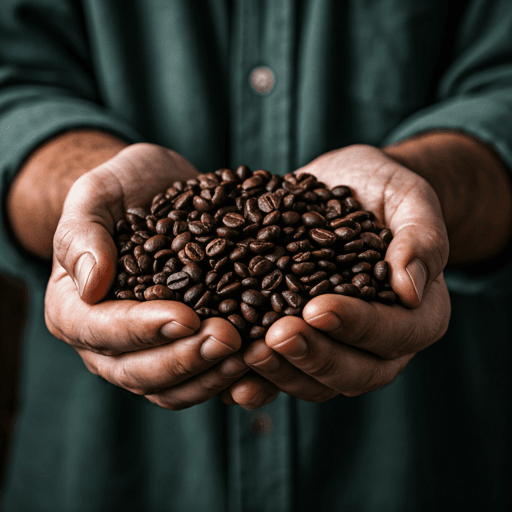
Caffeine is a natural stimulant found in coffee, tea, cocoa and many soft and energy drinks, and it is the most widely used psychoactive substance in the world. It works mainly by blocking adenosine, the brain chemical that builds up through the day and makes you feel sleepy, so you feel more alert and awake. For most healthy adults, up to about 400 mg a day is generally considered a safe upper limit, though the right amount for you depends on your own sensitivity.
This guide explains what caffeine is, how it actually works in the body, how much is in your favourite drinks, how long it lingers, and the sensible limits worth knowing. It is general information, not medical advice. If you are pregnant, take medication or have a heart or anxiety condition, talk to a doctor about what suits you.
What is caffeine?
Caffeine is a naturally occurring compound, a member of a family called methylxanthines. Plants like the coffee shrub, the tea plant (Camellia sinensis), the cacao tree, guarana and the kola nut produce it as a natural pesticide that paralyses or deters insects that try to eat the leaves and seeds. In us, at the much smaller doses we drink, it acts as a mild central nervous system stimulant rather than a poison.
Because it occurs in so many different plants, caffeine reaches us through a long list of everyday products: brewed and instant coffee, all true teas, matcha, cola and other soft drinks, energy drinks, dark chocolate, and some over-the-counter pain and cold remedies, where a little caffeine is added to help the other ingredients work faster. The same molecule is at work in every case; only the dose changes.
How caffeine works in the body
The headline effect, alertness, comes down to one clever trick: caffeine impersonates a molecule your brain already uses, then gets in its way.
Blocking adenosine
As your brain burns energy through the day, it produces a chemical called adenosine. Adenosine binds to receptors on your brain cells and acts like a brake pedal, slowing nerve activity and gradually building up the feeling of sleepiness, sometimes called "sleep pressure." Caffeine has a shape similar enough to adenosine that it can slot into those same receptors, mainly the A1 and A2A receptors. It does not switch them on. It simply occupies the parking spot so adenosine cannot, which is why scientists call caffeine an adenosine receptor antagonist.
With the brakes blocked, the brain stays in a more active state. Naturally stimulating chemicals like dopamine and norepinephrine flow more freely, which is what you feel as sharper focus, faster reaction time and that lift in mood and energy. Caffeine has a few smaller secondary effects too, such as mild phosphodiesterase inhibition, but the adenosine-blocking action is the one that matters most for the everyday buzz.
How fast it kicks in
Caffeine is absorbed quickly through the gut. Roughly 99 percent of a dose is taken up within about 45 minutes, and blood levels typically peak somewhere between 15 and 120 minutes after you drink it, often around the 30 to 60 minute mark. That is why a coffee before a meeting or a workout is usually timed about half an hour ahead. It crosses easily into the brain and other tissues, which is why the effects are felt all over, not just as wakefulness but sometimes as a faster heartbeat or the need for the bathroom.
Caffeine content: how much is in what you drink
One of the most common questions is simply how much caffeine is in a cup. The honest answer is that caffeine levels vary a lot. Bean variety, how finely it is ground, brew time, cup size and the specific product all move the number. Robusta coffee beans, for example, carry roughly twice the caffeine of arabica. The table below shows typical ranges for a standard serving rather than exact figures, because real-world caffeine content is a range, not a fixed value.
| Drink (typical serving) | Approximate caffeine | Notes |
|---|---|---|
| Brewed/filter coffee (cup) | ~80 to 120 mg | Varies with strength and cup size |
| Espresso (single shot) | ~60 to 75 mg | High per ounce, but small volume |
| Instant coffee (cup) | ~30 to 90 mg | Depends on how much you spoon in |
| Decaf coffee (cup) | ~2 to 15 mg | Decaf is low-caffeine, not caffeine-free |
| Black tea (cup) | ~40 to 70 mg | Longer steeping raises it |
| Green tea (cup) | ~20 to 45 mg | Generally gentler than black tea |
| Matcha (serving) | ~60 to 70 mg | You drink the whole leaf, so it adds up |
| Cola / soft drink (can) | ~30 to 45 mg | Some citrus sodas add caffeine too |
| Energy drink (can) | ~80 to 160 mg | Large or "ultra" cans can be much higher |
| Herbal tea (chamomile, peppermint, rooibos) | ~0 mg | Not from the tea plant, so caffeine-free |
A few surprises are worth flagging. Espresso looks intense but a single shot often holds less total caffeine than a mug of filter coffee, because the serving is so small. Cold brew tends to run high because of its long steep and strong concentration. And "decaf" never means zero. It means most, not all, of the caffeine has been removed. If you want to avoid caffeine entirely, a genuinely caffeine-free herbal infusion is the safer route. For more on the difference between true teas and herbal blends, see our guide to the types of tea.
How much caffeine is safe?
For most healthy adults, food-safety bodies and health authorities broadly converge on the same ballpark: up to about 400 mg of caffeine a day is unlikely to cause problems for the general adult population. That is roughly three to four cups of brewed coffee, depending on strength. It is a guideline, not a target to hit, and it is for healthy adults specifically.
Several groups should aim lower:
- During pregnancy, most guidance recommends keeping caffeine to about 200 mg a day or less, because caffeine crosses the placenta and the developing baby clears it slowly. Anyone pregnant or breastfeeding should check with their own doctor or midwife.
- Children and adolescents should have considerably less, scaled to body weight, and energy drinks in particular are not recommended for them.
- People with anxiety, sleep problems, acid reflux, high blood pressure or certain heart rhythm conditions often do better with less, and should follow medical advice.
- Anyone on medication should ask a pharmacist or doctor, because some drugs slow caffeine clearance or interact with it.
It is also easy to under-count. Caffeine in a pre-workout, a square of dark chocolate, an iced tea and a headache tablet all add to your daily total alongside your coffee. When you are working out how much caffeine is right for you, count everything, not just the cups.
Half-life: how long caffeine stays with you
Caffeine does not vanish when the buzz fades. Its half-life, the time your body needs to clear half of a dose, averages around 4 to 5 hours in a healthy adult, but the real range is wide, roughly 2 to 12 hours depending on the person. A practical example: if you drink a coffee with about 100 mg at 4 p.m. and your half-life is five hours, you may still have around 50 mg circulating at 9 p.m. and around 25 mg near midnight. That lingering caffeine is a common, underrated cause of restless sleep.
Why people clear it at such different speeds
The main driver is genetics. A liver enzyme called CYP1A2 does most of the work of breaking caffeine down, and natural variation in the gene that codes for it splits people into roughly "fast" and "slow" metabolizers. Fast metabolizers can have an evening espresso and sleep fine; slow metabolizers may feel a single afternoon cup well into the night. Other factors shift it too: smoking speeds clearance and shortens the half-life, while pregnancy and oral contraceptives can lengthen it considerably. Liver health and some medications matter as well.
The takeaway is simple and freeing: there is no single correct caffeine routine. If coffee after lunch wrecks your sleep, you may just be a slower metabolizer, and an earlier cut-off, or switching to decaf or a low-caffeine tea, will help more than any willpower.
Tolerance, dependence and withdrawal
Drink caffeine regularly and your body adapts. The brain responds to constant adenosine-blocking by growing more adenosine receptors, so over time the same coffee delivers less of a lift. That is tolerance, and it is why the third daily cup feels routine rather than electric.
Stop suddenly after regular use and you can get withdrawal: a dull headache, fatigue, low mood, irritability and trouble concentrating, usually starting within a day or so and easing over several days. This is a genuine, well-documented effect, though it is mild and temporary for most people, not the same as addiction to harder drugs. If you want to cut back, tapering gradually, smaller cups, half-caf blends, or swapping one coffee for tea, is far gentler than quitting cold turkey.
The downsides of too much caffeine
Caffeine has real upsides, and black coffee in particular is associated with several possible benefits, which we cover in our piece on the pros and side effects of black coffee. But more is not better. Push past your personal comfort zone and the same stimulant that sharpens you starts to work against you.
Common effects of overdoing it include jitteriness and restlessness, a racing or pounding heartbeat, anxiety, irritability, an upset stomach or worsened acid reflux, headaches and, very commonly, disrupted sleep. Because caffeine has a diuretic effect and stimulates the gut, it can also send you to the bathroom more often. Sensitivity varies hugely: a slow metabolizer or an anxious person may feel all of this on a dose a friend handles easily. Very large amounts, the kind reached with concentrated supplements or powders rather than ordinary drinks, can be genuinely dangerous, which is why caffeine powders carry strong warnings.
The smart move is to learn your own threshold. Notice when caffeine helps and when it tips into jitters or poor sleep, and let that, not a blanket rule, set your limit.
Getting the most from caffeine
A few habits make caffeine work for you rather than against you. Give it a head start by drinking it 30 to 45 minutes before you need the focus. Set a personal cut-off time in the afternoon and stick to it, especially if your sleep is sensitive. Spread intake across the day instead of front-loading a huge dose, which softens the later crash. And stay hydrated alongside your coffee or tea. If you love the ritual but want less of the stimulant, a good decaf or a gentle green tea lets you keep the cup without the late-night wakefulness.
Caffeine is one of the most studied compounds we consume, and for most people it is a safe, enjoyable part of daily life when treated with a little respect. Know how much is in your cup, know roughly how long it stays with you, and listen to your own body over any one-size-fits-all number. From there, explore the wider world of what is in your mug, whether that is the many types of coffee drinks or the leaf behind every tea in Camellia sinensis.