
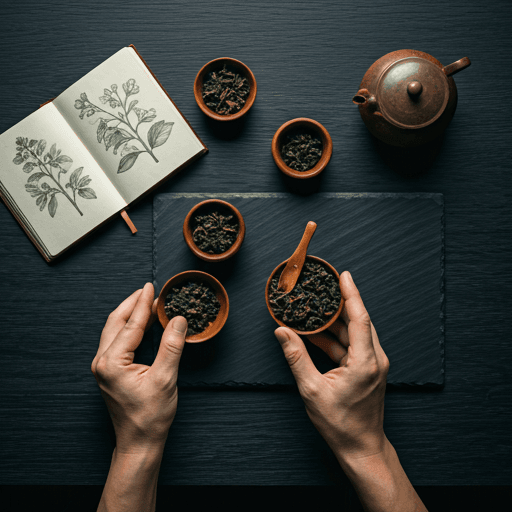
Here is the fact that surprises most tea drinkers: white tea, green tea, oolong, black tea, yellow tea and pu-erh all come from the same plant. That plant is Camellia sinensis, an evergreen shrub in the Theaceae family. The differences between a delicate white tea and a robust English-breakfast black are not different species in the cup. They come from how the leaves of this one tea plant are handled after they are picked.
Understanding the Camellia sinensis plant is the single most useful thing you can learn about tea. Once you know that the type is made by processing rather than by the plant, the entire world of tea snaps into focus. This guide explains what the plant is, its two main varieties, how processing turns the same leaf into six very different teas, and why your chamomile and peppermint "teas" are not technically tea at all.
What is Camellia sinensis?
Camellia sinensis is a species of evergreen shrub or small tree whose leaves, leaf buds and tender stems are used to make tea. Left unpruned it can grow into a tree several meters tall, but on a working tea estate it is kept clipped to waist height — a "plucking table" — so workers can pick the youngest leaves and buds by hand. The plant has glossy, lightly serrated leaves and small white-to-cream flowers with yellow stamens. It is closely related to the ornamental camellias grown in gardens, but it is the only one grown for drinking.
The name itself tells the story. Camellia is the genus; sinensis is Latin for "from China," which is where the plant was first domesticated and where tea drinking began thousands of years ago. From China the plant and the habit spread across the world, and today Camellia sinensis is cultivated commercially across Asia, Africa, South America and beyond, wherever the climate is warm and wet enough.
Crucially, every "true tea" — meaning a tea made from the tea plant rather than a herbal infusion — comes from this one species. There is no "black tea bush" and "green tea bush." There is just Camellia sinensis, and what you do with its leaves.
The two main varieties: sinensis and assamica
Within the species there are two varieties that matter most for tea, and they behave quite differently in the field and in the cup.
| Feature | Camellia sinensis var. sinensis | Camellia sinensis var. assamica |
|---|---|---|
| Origin | China (the original "China bush") | Assam region and Southeast Asia (the "Assam bush") |
| Leaf size | Smaller, around 2-3 inches, more serrated | Larger, around 3-5 inches, less serrated |
| Plant form | Hardy bush, tolerates cooler temperate climates and higher altitude | Larger, can grow tree-like; suited to warm, humid lowland tropics |
| Typical flavor | Sweeter, more delicate and complex | Bolder, stronger, more astringent and full-bodied |
| Often used for | Green, white and many oolong teas | Most black teas and many pu-erh teas |
The small-leaf sinensis variety is more cold-tolerant and thrives at higher elevations, which is why it dominates the cool mountain gardens that produce delicate greens and high-grown black teas. The large-leaf assamica variety is adapted to heat and humidity, grows vigorously, and is naturally rich in the compounds that give a strong, dark, malty cup — the kind of tea that stands up to milk. Plant breeders have also developed countless named cultivars from these two varieties, selected for flavor, hardiness, disease resistance and yield.
One plant, six teas: how processing makes the type
This is the heart of the matter. The six classic types of true tea — white, green, yellow, oolong, black and pu-erh — are not six plants. They are six recipes applied to the leaf of the Camellia sinensis plant. The most important variable is oxidation: how much the picked leaf is allowed to react with oxygen before that reaction is stopped with heat.
The main processing steps a tea master can choose from are:
- Withering — letting fresh leaves wilt to reduce moisture and begin developing flavor.
- Fixing ("kill-green") — applying heat (steaming or pan-firing) to halt oxidation and lock in green character.
- Rolling or shaping — bruising the leaf to release juices, drive aroma and shape the final leaf.
- Oxidation — exposing the bruised leaf to air so its compounds darken and deepen, the way a cut apple browns.
- Drying or firing — finishing the leaf for stability and storage.
Different combinations and timings of those steps produce wildly different teas from identical raw leaf:
| Tea type | Oxidation level | In a nutshell |
|---|---|---|
| White | Minimal | Young buds and leaves simply withered and dried — the least handled tea. |
| Green | Very low | Heated early to stop oxidation, keeping it fresh, grassy and green. |
| Yellow | Low | Like green but with a gentle "smothering" step that mellows it. |
| Oolong | Partial | Partially oxidized, spanning a huge range from light and floral to dark and roasty. |
| Black | Full | Fully oxidized for a dark, brisk, robust cup. |
| Pu-erh | Post-fermented | Aged and microbially fermented over time for an earthy, mellow character. |
So a green tea and a black tea can begin as leaves from the very same bush picked on the very same morning. The green is fired quickly to stay green; the black is rolled, left to oxidize fully, then dried. That single decision is the difference. For a fuller tour of the categories and what to brew, see our guide to the types of tea explained.
Where the tea plant grows: terroir and the cup
Like wine grapes, Camellia sinensis is shaped by where it grows. Altitude, climate, soil, rainfall, shade and even the time of year a leaf is plucked all leave a mark on flavor — what tea people call terroir. High-grown teas tend to be more aromatic and complex; the cooler air slows the plant down and concentrates flavor. Lower, warmer gardens tend to produce stronger, brisker tea with higher yields.
This is why region names carry so much meaning in tea. The high Himalayan slopes of Darjeeling produce a light, muscatel black tea from largely China-type bushes, while the hot, low Assam plains produce a bold, malty black tea from the assamica variety. Same plant, different places, different cups. Shade-growing — covering the bushes before harvest — is its own terroir tool, used to make sweeter, greener teas such as the leaf that becomes powdered matcha.
Camellia sinensis vs herbal "teas"
Here is where a lot of confusion lives. Chamomile, peppermint, rooibos, hibiscus and ginger are commonly sold and brewed as "tea," but botanically they are not tea at all, because they do not come from the tea plant. They are tisanes — infusions of other herbs, flowers, fruits, roots or spices.
The practical difference most people notice is caffeine. Because true teas all come from caffeine-containing Camellia sinensis, they all naturally contain caffeine (the amount varies by leaf and brewing). Most herbal tisanes are naturally caffeine-free, which is why chamomile and peppermint are popular in the evening. There are oddball exceptions — yerba mate, for example, is a caffeinated tisane from a South American holly, not from the tea plant — but as a rule, if it is not Camellia sinensis, it is a tisane.
- True tea (from Camellia sinensis): white, green, yellow, oolong, black, pu-erh — naturally contains caffeine.
- Tisane / herbal infusion (not the tea plant): chamomile, peppermint, rooibos, hibiscus, ginger, lemon — usually caffeine-free.
Neither is "better." But knowing the line helps you shop, brew and manage caffeine on purpose. If you want to explore the caffeine-free side, our herbal tea guide covers the most common botanicals and what they taste like.
Why this matters for the way you drink tea
Once you internalize that Camellia sinensis is the single source of all real tea, a lot of marketing noise falls away. A "green tea bush" and a "black tea plant" do not exist. What exists is one remarkable evergreen shrub, two main varieties, countless cultivars and gardens, and a handful of processing choices that turn the same leaf into a spectrum of flavor. The plant supplies the raw material; the tea maker supplies the artistry.
It also makes you a smarter taster. Next time you compare a delicate white with a brisk black, you are really tasting two decisions made about the same leaf — how much oxidation, how much heat, how much shaping. To keep going, read up on the green tea side of the plant, or dig into the contrast between the two big varieties in our look at Assam and black tea.