
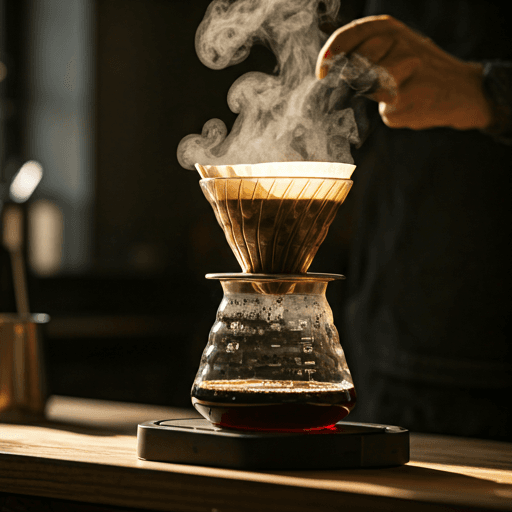
Vietnamese coffee is the coffee tradition of Vietnam: strong, dark-roasted, often robusta-heavy coffee brewed slowly through a small metal filter called a phin, then classically combined with sweetened condensed milk. It is bold and bittersweet, built around big flavor rather than delicacy. Vietnam is the world's second-largest coffee producer and its top grower of robusta, so the country's coffee identity is woven from the bean it grows best.
If you have only ever met coffee as a light, fruity pour-over or a milky espresso drink, Vietnamese coffee is a different experience entirely. It is thick, intense and unapologetically sweet, and it is brewed one cup at a time at a deliberate, almost meditative pace. This guide explains why robusta sits at its heart, how the phin works, and the iconic drinks worth knowing by name.
What is Vietnamese coffee made from?
The defining ingredient of Vietnamese coffee is robusta. Vietnam produces roughly 40 percent of the world's robusta, and the overwhelming majority of its coffee crop is robusta rather than arabica. That choice shapes everything about the cup.
Robusta is the bolder, more bitter sibling of arabica. It carries close to double the caffeine, brews thicker in the cup, and brings a deep, woody, dark-chocolate-and-roasted-nut intensity rather than the bright, fruity acidity arabica is prized for. It is also hardier to grow and historically more affordable, which is part of why it took hold so widely. To dig into the difference between the two species, see our explainer on arabica vs robusta coffee beans.
The beans are usually taken to a dark roast, sometimes with butter or oil in the roasting process for an extra glossy, caramelized edge. A dark roast tames some of robusta's sharpness and pushes the cup toward bittersweet richness. If you want to understand what those roast levels actually do, our guide to coffee roasting walks through the stages from first crack onward.
The Vietnamese coffee phin: how it brews
The phin is the small metal drip filter that gives this coffee its rhythm. It is a simple stack: a perforated cup that holds the grounds, a screw-down or gravity press plate that sits on top of them, and a saucer-like base that perches over your glass. There is no machine, no pressure, no electricity. Just hot water finding its way through coffee, slowly.
Here is the basic method:
- Set the phin chamber on top of your cup or glass.
- Add a couple of spoonfuls of medium-coarse ground coffee and gently level it.
- Place the press disc on top of the grounds.
- Pour a small splash of hot water to let the coffee bloom and swell for about 30 seconds.
- Top up with the rest of the hot water, cover with the lid, and let it drip.
A full phin takes roughly four to six minutes to drip through, producing a small, concentrated, syrupy shot of coffee. The slow drip is part of the appeal: it is unhurried by design. For the broader picture of brewing methods and how the phin fits among them, see our overview of how to make coffee.
Why condensed milk?
Sweetened condensed milk is the other signature of Vietnamese coffee. When coffee culture took root in Vietnam under French colonial influence in the 19th century, fresh dairy was scarce and hard to keep. Shelf-stable condensed milk solved the problem, and the pairing stuck. A spoonful or two waits at the bottom of the glass; the strong, bitter coffee drips down onto it, and you stir the two together into something rich, creamy and dessert-sweet. If you want to compare condensed milk to other dairy and non-dairy options, our coffee creamers guide covers the field.
The iconic Vietnamese coffee drinks
Most Vietnamese coffee drinks start with that same phin-brewed concentrate. The variations come from what you add and whether it is served hot or over ice. The drinks are usually written as ca phe, the Vietnamese word for coffee.
| Drink | What it is |
|---|---|
| Ca phe den (nong / da) | Black coffee, hot or iced, often with a little sugar. No milk. Pure robusta intensity. |
| Ca phe sua nong | Hot coffee stirred with sweetened condensed milk. |
| Ca phe sua da | The famous iced version: phin coffee plus condensed milk, poured over ice. Bold, sweet and refreshing. |
| Ca phe trung (egg coffee) | A Hanoi specialty: whipped egg yolk, sugar and condensed milk beaten into a thick, custardy foam over strong coffee. |
| Coconut coffee | Coffee topped with blended coconut cream or coconut milk, almost like an iced dessert. |
| Salt coffee (ca phe muoi) | A Hue-region drink with a lightly salted cream topping that balances the bitterness. |
Ca phe sua da: the everyday icon
If Vietnamese coffee has a flagship, it is ca phe sua da, iced coffee with condensed milk. It is strong enough to stand up to a generous layer of sweetness and a glass full of ice, which makes it perfect for a hot climate. For a step-by-step recipe and ratios, see our dedicated guide to iced Vietnamese coffee.
Ca phe trung: Hanoi egg coffee
Egg coffee was invented in Hanoi in the 1940s. By the most-told account, a bartender named Nguyen Van Giang, working at what is now the Sofitel Metropole, faced a wartime milk shortage and whipped egg yolks with sugar and condensed milk to mimic a creamy, cappuccino-like topping. The result is astonishingly good: a warm, custardy foam, like liquid tiramisu, floating over a small, fierce cup of coffee. It remains a Hanoi signature today.
Vietnamese cafe culture
Coffee in Vietnam is not a takeaway habit so much as a way to sit and pass time. Cafes line the streets with low plastic stools, people-watching is half the point, and a single drink can anchor a long unhurried stretch of the day. The phin's slow drip suits that pace perfectly. Coffee here is everyday and social, woven into morning routines and afternoon breaks alike, in a way that has more in common with a leisurely coffee break than a rushed commute cup.
That culture has traveled. Vietnamese coffee shops now appear in cities around the world, and a wave of specialty roasters is showcasing high-quality Vietnamese robusta and arabica as serious beans in their own right rather than mere commodity filler.
Is Vietnamese coffee strong?
Yes, in two senses. The brew itself is concentrated and syrupy because the phin yields a small volume of liquid from a generous dose of grounds. And robusta naturally carries more caffeine than arabica, so cup for cup, a black Vietnamese coffee tends to pack a real punch. The condensed milk in the sweet versions softens the bitterness, but the underlying coffee stays bold. To understand caffeine levels across coffee styles, see our guide to caffeine.
How to enjoy it at home
You do not need a special machine, only a phin, some dark-roasted coffee (robusta-forward if you can find it), and sweetened condensed milk if you want the classic profile. Brew a phin onto a spoonful of condensed milk, stir, and either sip it hot or pour it over a tall glass of ice. From there, experiment: try it black to taste the bean, or whisk up an egg-yolk foam for a homemade ca phe trung.
Vietnamese coffee rewards slowing down. It is a tradition built on a humble metal filter, a hardy bean and a tin of condensed milk, and yet it produces some of the most distinctive coffee drinks anywhere. Once you have the phin rhythm in your hands, explore the wider world of beans or keep brewing with the iced Vietnamese coffee recipe.