
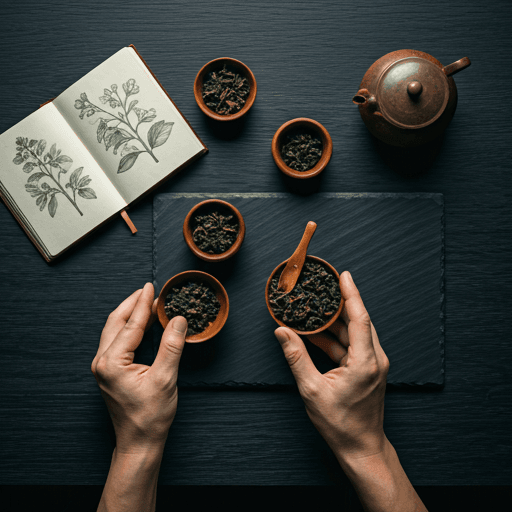
So, what is kukicha? In short, kukicha is a Japanese green tea made mostly from the stems, twigs and stalks of the tea plant rather than from its leaves. Those woody offcuts are gathered when premium leaf teas are sorted, which is why kukicha is widely known as twig tea, and it steeps into a pale, mild, gently sweet and nutty cup that is naturally lower in caffeine than most green teas. It is a quiet, everyday favourite in Japan.
If you have ever loved the fresh, grassy character of Japanese green tea but wanted something softer and easier to drink all day, kukicha tea is worth knowing. Below is what it is, how it tastes, why it is gentle on caffeine, and how to brew it well.
What is kukicha, the Japanese twig tea?
Kukicha (茎茶, literally "stem tea") is a true tea from the Camellia sinensis plant, the same plant behind sencha, gyokuro and matcha. What makes it different is the part of the plant used: instead of the tender young leaves, kukicha is made largely from the stems, twigs and leaf stalks that are separated out during the production of higher-grade leaf teas.
Because it uses these by-products, kukicha was historically an economical, everyday tea — nothing is wasted, and the stems that would otherwise be set aside become a pleasant cup in their own right. Today it is enjoyed on its own terms, valued for exactly the mild, smooth character those stems give. You will see it labelled "twig tea", "stem tea" or "bocha" in some places, and a roasted version shares the kukicha name too (more on that below).
It sits within the wider world of Japanese green tea alongside leaf teas like sencha and bancha and blends like genmaicha; if you want the full map of that family, see our guide to Japanese tea types.
How kukicha tastes
Kukicha is one of the gentlest green teas you can brew. The stems and twigs carry different compounds from the leaves — less of the astringent, bitter elements and, in the finer grades, a good share of the sweet, savoury notes — so the cup tends to be light, softly sweet, nutty and a little creamy, with low bitterness and low astringency.
People often describe green kukicha as fresh and mellow, with a hay-like or lightly grassy edge and a smooth, rounded finish. It is rarely sharp or grippy, which makes it an easy, low-drama cup: pleasant on its own, undemanding with food, and forgiving if you are not fussy about temperature or timing. Flavour naturally varies by grade, harvest and maker, so treat these as general impressions rather than a fixed profile.
Why kukicha is low in caffeine
One of kukicha's best-known traits is that it is naturally lower in caffeine than most green teas. Caffeine in the tea plant is concentrated in the youngest leaves and buds, and far less of it sits in the woody stems and twigs. Since kukicha is built mostly from those stems, a cup generally delivers less caffeine than a comparable cup of leaf sencha — one reason kukicha caffeine levels have such a gentle reputation.
That said, kukicha still contains some caffeine — it is a true tea, not a caffeine-free herbal tisane — and the exact amount depends on the ratio of stems to leaf, the grade, how much you use and how long you steep. Many people reach for it in the afternoon or evening for this reason, but if you are sensitive to caffeine, pregnant, or watching your intake for any health reason, responses vary and it is best to ask your own healthcare provider. This is general information, not medical advice.
Green vs roasted kukicha
Green (unroasted) kukicha is steamed and dried like other Japanese green teas; it keeps that fresh, grassy-mild, faintly sweet character and a pale yellow-green liquor. It is the version most people picture when they think of everyday twig tea.
Roasted kukicha is the same twigs and stems roasted over heat, which turns the cup toasty, warm and even mellower, with nutty, almost caramelised notes and a browner colour. Roasting also tends to soften what little caffeine and astringency remain, so roasted kukicha is often chosen as a cosy, wind-down drink. Roasted twig tea overlaps in spirit with hojicha, the roasted green tea family, though hojicha is more often made from leaf.
What is karigane?
You may also come across karigane, a higher grade of kukicha. Where everyday kukicha uses stems from standard leaf teas, karigane is made from the stems of premium teas — the stalks of gyokuro or high-grade sencha. Because those plants are shaded and richer in sweet, savoury (umami) compounds, karigane tends to be smoother, sweeter and more refined than basic kukicha, while keeping the same gentle, low-caffeine appeal. If you enjoy kukicha and want a step up in delicacy, karigane is the name to look for.
How to brew kukicha
Kukicha is forgiving, which is part of its charm, but a few gentle habits bring out its best. Like other Japanese green teas, it prefers cooler-to-medium water rather than a rolling boil.
- Water temperature: aim for roughly 70-80°C (about 160-175°F). Hotter water can pull out more bitterness; cooler water keeps it sweet and smooth.
- Leaf and stem: use about a tablespoon of kukicha per cup, adjusting to taste — the twigs are bulky, so a good measure can look like a lot.
- Steep time: a short steep of around 30-60 seconds is a good starting point. Because kukicha is mild, it is hard to over-brew, but a very long soak can still flatten it.
- Re-steep: kukicha re-steeps well. Later infusions can be a touch hotter or a little longer, and often reveal fresh, sweet notes.
Roasted kukicha is even more relaxed and takes slightly hotter water comfortably. These are starting points, not rules — taste as you go and adjust temperature, quantity and time to your own liking.
Kukicha vs sencha vs bancha at a glance
Kukicha is easiest to place next to two other everyday Japanese green teas. Sencha is the classic leaf tea; bancha is a coarser, later-harvest leaf tea; kukicha is the stem-and-twig tea. We defer the full deep dives to their own guides — here is how the three compare.
| Attribute | Kukicha | Sencha | Bancha |
|---|---|---|---|
| Part of plant | Stems, twigs and stalks | Tender young leaves | Larger, later-harvest leaves |
| Origin | Japan | Japan | Japan |
| Flavour | Mild, sweet, nutty, creamy | Fresh, grassy, umami, brisk | Mellow, mild, slightly woody |
| Bitterness / astringency | Low | Moderate | Low to moderate |
| Caffeine (rough, varies) | Lower — stems hold less | Moderate | Lower than sencha |
| Suggested water temp | ~70-80°C | ~70-80°C | Hotter is fine (~80-90°C) |
| Good time to drink | Afternoon / evening | Morning / daytime | Anytime, everyday |
Who will enjoy kukicha
Kukicha is a natural fit for anyone who wants a mild, low-caffeine, easy-drinking green tea. If strong sencha or matcha feels too brisk or bitter, the soft, gently sweet, nutty character of twig tea is a friendly alternative. It suits afternoon and evening sipping thanks to its lighter caffeine, works well for newcomers to Japanese green tea, and rewards the curious who like to re-steep a single serving several times. Fans of toasty, comforting flavours will gravitate to the roasted style, while those chasing a more refined, umami-rich cup can seek out karigane.
For a leftover part of the plant, kukicha punches well above its humble origins. It is proof that Japanese tea makers waste nothing — and that some of the easiest, most soothing cups come from the parts of the plant most teas leave behind. Brew it cool, let it steep briefly, and enjoy a quiet, everyday green tea that asks very little and gives back a great deal.