
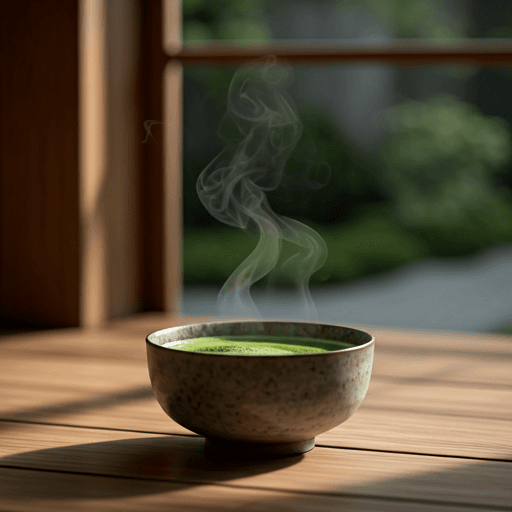
Sencha is Japan's most popular green tea — a steamed (not pan-fired) green tea made from whole leaves grown in full sun. Because the freshly plucked leaves are steamed within hours of harvest, sencha keeps a vivid green colour and a fresh, grassy cup with seaweed-like umami and a clean, bright finish. It is the everyday tea in most Japanese homes and accounts for the large majority of the country's green-tea production.
What is sencha green tea?
Sencha (煎茶) is a whole-leaf Japanese green tea made from the leaves of Camellia sinensis, the tea plant. The defining move is steaming: soon after the leaves are picked they are passed through steam, which deactivates the enzymes that would otherwise oxidise the leaf and turn it dark. That single step is what separates sencha — and Japanese greens in general — from most Chinese green teas, which are instead heated in a hot pan or wok (pan-firing). Steaming locks in the leaf's green pigments and its fresh, vegetal character, so a good sencha smells and tastes almost like just-cut grass or steamed spinach.
After steaming, the leaves are rolled, shaped and dried into the tight, dark-green needles that are the signature look of sencha. Unlike shaded teas, sencha bushes are grown in open, full sunlight right up to harvest, which encourages the catechins that give the tea its brisk, slightly astringent edge. Like other green teas, sencha is a natural source of those catechins, the calming amino acid L-theanine and a moderate amount of caffeine — which is a big part of why people reach for it in the morning and after meals. Any talk of sencha green tea benefits is best kept in that everyday, food-and-drink sense rather than as medical advice.
How sencha is made: steamed, not pan-fired
The classic production chain runs plucking → steaming → rolling → drying, and the length of the steam is the biggest lever a producer has over the final cup. A short steam preserves the individual leaf shape and gives a crisp, transparent liquor; a long steam breaks the leaf down more and produces a rounder, cloudier, mellower drink. Because sencha is grown in full sun (in contrast to the shade-grown teas covered below), it develops more of the brisk, grassy notes that most people picture when they think of Japanese green tea. This grow-in-sun, steam-early recipe is the backbone of the whole sencha family — and of the wider family of Japanese teas.
The main styles: asamushi, fukamushi and shincha
Most sencha you will meet falls into one of a few recognisable styles, sorted by how long the leaf is steamed and when it is picked.
Asamushi (light-steamed)
Asamushi sencha is steamed only briefly — roughly 30–40 seconds. The leaves keep their intact, needle-like shape, and the brewed cup is pale, clear and delicate, with a refined, aromatic character and a lively finish. It is the more traditional profile and rewards careful brewing.
Fukamushi (deep-steamed)
Fukamushi sencha is steamed roughly twice as long — around 60–90 seconds. The extra steam partly breaks down the leaf, so you get smaller, finer particles that brew fast and throw a fuller, slightly cloudy, deep-green cup. The taste is richer, sweeter and rounder, with less sharp astringency, which makes fukamushi very forgiving and a favourite for everyday drinking.
Shincha (the first flush)
Shincha means "new tea": it is simply the very first sencha of the year, picked in spring during the first flush. It is prized for its exceptional freshness, sweetness and bright aroma, and is treated as a seasonal treat when it appears. Shincha is not a different processing method — it is early-season sencha at its most vibrant.
What does sencha taste like?
Sencha tea leans savoury rather than sweet. Expect a stack of green, vegetal notes — fresh grass, steamed greens, a touch of seaweed or ocean brine — wrapped around a distinct umami (brothy, savoury) core, with a mild, refreshing astringency that keeps the finish clean and brisk. Higher grades taste sweeter and more delicate; everyday grades are grassier and grippier. The exact balance shifts with the steaming style (deep-steamed is mellower and rounder) and, crucially, with how you brew it.
How to brew sencha so it is not bitter
The single most common sencha mistake is water that is too hot. Boiling water pulls out harsh catechins and turns a lovely cup sharp and bitter, so the goal is a lower temperature and a short steep. A reliable starting point:
- Water temperature: about 70–80°C (158–176°F). Cool boiled water for a minute or two, or pour it between cups to drop the heat. For deep-steamed fukamushi, aim slightly lower, around 70–75°C; for a premium leaf you can go cooler still to coax out sweetness.
- Leaf: roughly a teaspoon (about 2 grams) of leaf per small cup, adjusted to taste.
- Time: a short steep of about 60 seconds for asamushi, or 30–60 seconds for the faster-brewing fukamushi.
- Re-steep: quality sencha is happy to give two or three infusions. Nudge the water a little hotter and shorten each later steep, and pour every drop out of the pot so the leaves are not left stewing.
Serve it plain — sencha is not a milk-and-sugar tea. Because the leaves unfurl fully, a basket infuser, a small teapot (kyusu) or a gaiwan gives them room to open and taste their best.
Sencha vs gyokuro, bancha and matcha
Sencha is one member of a wider group of Japanese greens, and the easiest way to place it is by two variables: whether the bush was shaded before harvest, and when the leaf was picked. The table below contrasts the four you are most likely to see; for the deep dives, follow the linked owner pages rather than treating any of them as interchangeable with sencha.
| Tea | Shading | Harvest | Flavour | Brew temp |
|---|---|---|---|---|
| Sencha | Full sun | Spring–summer (first/second flush) | Grassy, marine, umami, brisk | ~70–80°C |
| Gyokuro | Shaded ~2–3 weeks before picking | Spring (first flush) | Sweeter, deep umami, low astringency | ~50–60°C |
| Bancha | Full sun | Later harvest (summer/autumn) | Milder, mellow, more woody | ~80–90°C |
| Matcha | Shaded, then stone-ground | Spring | Whole leaf whisked, intense | Whisk ~70–80°C |
Gyokuro is grown under shade for a couple of weeks before harvest, which cuts astringency and pushes sweetness and umami far higher than sencha's — think of it as sencha's luxurious, shaded cousin. Bancha sits at the other end: it is made from the same plant but from later, more mature leaves, so it is milder, mellower and lower in caffeine. Matcha is different again — shade-grown leaf that is dried and stone-ground to a powder you whisk into the water and drink whole, rather than steeping and discarding the leaf. Sencha threads the needle between all three: full-sun grown like bancha, but young-leaf and fresh like the finer spring teas.
Grades and harvest timing
Timing is everything with sencha. The prized first flush (ichibancha), picked in spring, gives the sweetest, most aromatic and highest-graded leaf. The second flush (nibancha) in early summer is brisker and more everyday, and later pickings tend to be sold as coarser, more affordable tea or blended toward bancha. Within any harvest, higher grades come from younger, more tender leaves and buds and are steamed and sorted more carefully; standard grades use more of the leaf and give a grassier, workhorse cup. Origin matters too — regions such as Shizuoka, Kagoshima and Uji are well-known sencha-growing areas, each with its own house style — but you do not need to chase a label to enjoy japanese sencha well. A fresh bag, cool water and a short steep will do more for the cup than almost anything else.
A cup worth slowing down for
Sencha rewards a little attention. Where a teabag forgives rough handling, sencha's whole steamed leaves respond to every degree of temperature and every extra second in the pot — which is exactly what makes it such a satisfying tea to learn. Start with cooler water and a short steep, taste as you go, and let the second and third infusions show you how the leaf changes. Do that and Japan's everyday green tea quietly becomes one of the most quietly rewarding cups in the house.