
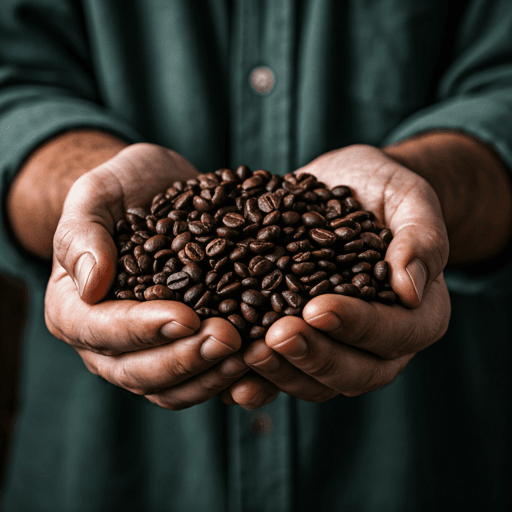
Kopi luwak is coffee made from beans that an animal called the Asian palm civet has eaten, partly digested and passed in its droppings. Collectors gather those beans, clean them thoroughly, then dry, hull, and roast them like ordinary green coffee. Often called "civet coffee," kopi luwak comes from Indonesia and is famous for two reasons: an unusual production story and a reputation as one of the most expensive coffees in the world. It is also one of the most ethically complicated drinks in coffee, so this guide explains the whole picture honestly.
What is kopi luwak?
The name comes straight from Indonesian: kopi means coffee, and luwak is the local word for the Asian palm civet (Paradoxurus hermaphroditus), a small, nocturnal, cat-like mammal native to Southeast Asia. The civet is a natural fruit-eater. Left to roam, it uses a sharp sense of smell to pick out the ripest coffee cherries on the tree, eats the sweet fruit, and digests the pulp. The hard coffee seeds inside pass through its gut largely intact and end up in its droppings.
So kopi luwak is not a coffee variety or a growing region. It is a processing method defined by the animal. The same Arabica or Robusta beans that grow across Indonesia can become kopi luwak if a civet eats and excretes them first. If you are new to how the seed inside a coffee cherry becomes the bean in your cup, our explainer on what coffee beans actually are is a useful companion read.
How kopi luwak coffee is made
The traditional, wild version of the process looks roughly like this:
- The civet eats ripe cherries. Because it self-selects only the ripest fruit, the raw material starts out well-chosen.
- Digestion partly ferments the bean. Stomach acids and enzymes work on the seed's outer layers during the hours it spends in the gut. This is a natural fermentation, not a flavoring added later.
- The beans are collected. In the wild tradition, gatherers find civet droppings on the forest floor or in coffee gardens and pick out the seeds.
- Cleaning and drying. The beans are washed repeatedly, then sun-dried.
- Hulling and roasting. The dried parchment layer is removed and the green beans are roasted like any other coffee. The roast level still shapes much of the final flavor.
Why people say the process "mellows" the beans
The claimed appeal is that digestion changes the chemistry of the bean. Civet enzymes are said to break down some of the storage proteins that contribute to bitterness, which supposedly produces a smoother, less acidic, rounder cup. Tasting notes attached to kopi luwak often describe it as low in bitterness with earthy, chocolatey or syrupy character.
It is important to be measured here. There is no firm consensus that kopi luwak tastes better than a well-grown, carefully roasted specialty coffee. Many in the coffee industry regard it as more novelty than masterpiece, and inconsistent sourcing makes quality wildly variable. The roast matters enormously too; if you want to understand how heat builds flavor, see our guide to what coffee roasting is.
Where kopi luwak comes from
Kopi luwak originated in the Indonesian archipelago, on islands including Sumatra, Java, Bali and Sulawesi. One common origin story traces it to the colonial era, when local plantation workers who were not allowed to take harvested cherries noticed that civets ate the coffee fruit and left the beans behind. They collected, cleaned and brewed those beans, and an unusual coffee tradition was born.
Indonesia remains the most associated origin, though civet coffee is also produced in the Philippines (where it is sometimes called kape alamid) and elsewhere in the region. If Indonesian coffee interests you generally, our guide to Sumatra coffee covers the more conventional, and far more widely available, side of the country's beans.
Why kopi luwak became famous and so expensive
Several things combined to turn an obscure local curiosity into a global luxury name:
- Scarcity. Genuinely wild-collected beans are gathered in small quantities from the forest floor, which keeps true supply low.
- The story. "Coffee passed through an animal" is irresistibly novel, and novelty sells.
- Marketing as luxury. Sellers have long positioned it as an exotic trophy purchase, and pop culture references helped cement its mystique.
The result is that kopi luwak is routinely listed among the most expensive coffees in the world, with wild-collected beans commanding far higher prices than farmed ones. We discuss cost only in relative terms on purpose; exact prices vary enormously by source and authenticity, and we avoid quoting figures that mislead. For the broader context of trophy coffees, see the most expensive coffee in the world.
The ethics of kopi luwak: a clear, honest look
This is the most important section, and the one most marketing leaves out. As demand grew, much production shifted away from collecting droppings from free-roaming civets toward an intensive caged model. The welfare and honesty problems are well documented by animal-welfare organizations and journalists.
Animal-welfare concerns
Investigations by groups including PETA and reporting by outlets such as the BBC and National Geographic have described wild civets being captured and confined to small, barren battery cages, sometimes stacked on top of one another. Caged animals are often force-fed a monotonous diet of coffee cherries to maximize output, with limited clean water and no normal social contact. These conditions are linked to stress behaviors (pacing and spinning, known as zoochosis), malnutrition, fur loss and infection. Civets are nocturnal, so exposure to daytime noise from traffic and tourists adds to the harm.
Authenticity and mislabeling concerns
The second problem is honesty. There is no reliable certification that proves coffee labeled "wild-sourced" actually came from free-roaming civets, and welfare investigators have reported that a very large share of "wild" kopi luwak is in fact from caged animals or is simply faked. Ordinary coffee is sometimes sold as kopi luwak at a steep markup. Ironically, caging tends to lower quality, because confined, force-fed animals cannot self-select the ripest cherries the way wild civets do.
The short version: most kopi luwak you can easily buy is either from caged civets, mislabeled, or both. Genuinely wild, ethically gathered kopi luwak is rare and very hard to verify.
How the two production models compare
| Aspect | Wild-collected (traditional) | Caged / farmed (intensive) |
|---|---|---|
| Cherry selection | Civet picks the ripest fruit naturally | Force-fed whatever cherries are supplied |
| Animal welfare | Free-roaming, no confinement | Small cages, stress, poor diet, illness |
| Supply | Very limited and seasonal | Scaled up for volume |
| Verifiability | Hard to prove even when genuine | Often mislabeled as "wild" |
| Cup quality | Variable, can be smoother | Frequently inferior |
Should you try it?
That is a personal decision, and this site does not sell coffee or push any purchase. But an informed choice means accepting two facts: it is difficult to confirm that a given bag is genuinely wild and cruelty-free, and the cup itself rarely outperforms an excellent, carefully roasted specialty coffee at a fraction of the cost. Many coffee professionals simply skip it on welfare grounds and on quality grounds alike. If you would rather chase flavor than novelty, exploring well-grown single origins is a more rewarding path, and our look at what specialty coffee really means explains how the best beans are graded and championed.
If your goal is a genuinely memorable cup rather than a curiosity, you will usually get far more by exploring well-grown single origins and good roasting. Start with the fundamentals in what coffee beans are and the flavor-shaping power of coffee roasting.
Kopi luwak at a glance
- What it is: coffee from beans eaten and excreted by the Asian palm civet (the "luwak").
- Also called: civet coffee.
- Origin: Indonesia, with production also in the Philippines and the wider region.
- Claim to fame: unusual process, scarcity, and a long-running luxury reputation.
- The catch: serious animal-welfare issues with caged civets, plus widespread mislabeling and fakes.
Kopi luwak is one of coffee's most talked-about drinks precisely because its story is so strange, but the most useful thing to know is the part the hype skips: the welfare cost and the authenticity problem. Understanding both lets you make a genuinely informed choice rather than buying a myth. If you want to keep exploring the world of remarkable and unusual coffees, our roundup of the most expensive coffee in the world is a good next stop.